How to Choose the Right Liquid Storage Tank for Industrial Applications
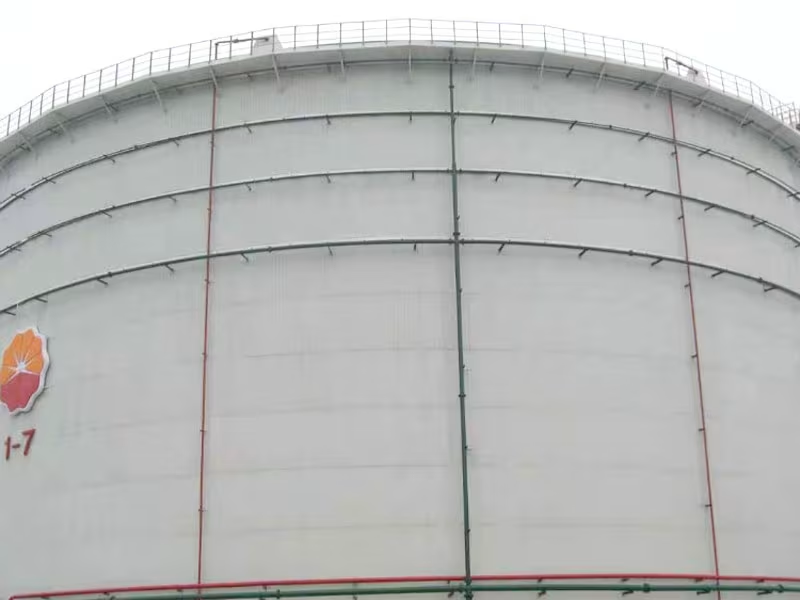
Introduction
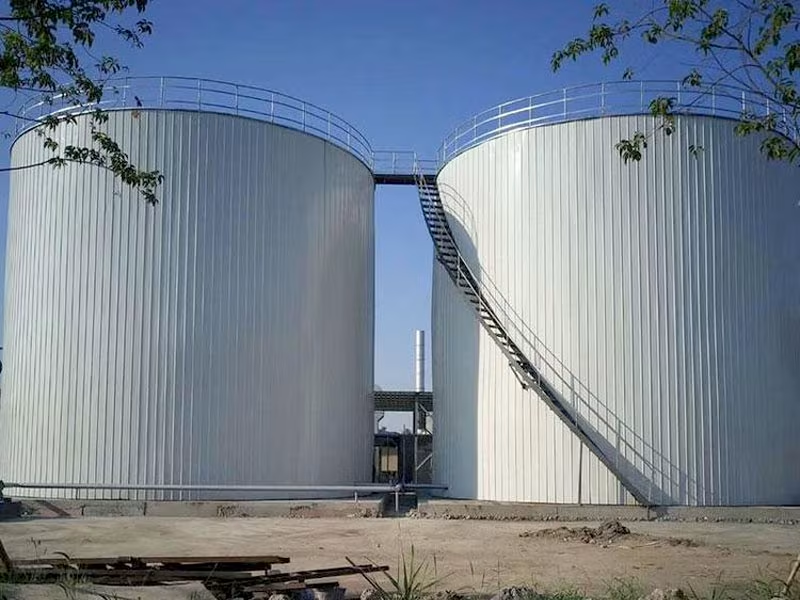
In industrial systems, liquid handling is never just a supporting function—it is part of the core infrastructure that keeps production stable and predictable. Whether the operation involves chemicals, water treatment, fuel distribution, or food-grade processing, the storage stage often determines how efficiently the entire system performs.
A liquid storage tank is more than a container. In real applications, it acts as a buffer, a safety barrier, and a coordination point between upstream supply and downstream processing. When the selection is not properly aligned with the working environment, issues tend to appear later in the form of corrosion, leakage risk, or unstable flow performance.
This guide is structured from a manufacturing and engineering perspective, focusing on how industrial buyers and project teams typically evaluate storage systems in real projects.
What a Liquid Storage Tank Actually Does in Industrial Systems
In practice, storage systems rarely operate in isolation. A liquid tank is usually connected to pipelines, pumps, valves, and processing equipment, forming a continuous flow network.
Instead of simply “holding liquid,” the system is responsible for:
- Balancing production fluctuations between processes
- Stabilizing pressure and flow variations
- Preventing direct exposure of sensitive liquids to external conditions
- Acting as a safety buffer during shutdowns or maintenance cycles
- Supporting emergency containment in abnormal situations
This is why tank selection is often treated as a system engineering decision rather than a standalone equipment purchase.
Why Tank Design Varies So Much Between Industries
One of the most common misunderstandings in procurement is assuming all storage tanks follow a similar structure. In real engineering environments, design differences are significant because each industry defines its own constraints.
For example:
- Chemical environments require resistance to aggressive media
- Water treatment systems prioritize large-volume stability and cleanliness
- Energy-related systems focus heavily on structural reinforcement and sealing control
- Food and beverage applications require hygienic surfaces and contamination control
- Pharmaceutical environments demand strict control over microbial influence and material purity
The design logic changes depending on what is stored, not just how much is stored.
Material Selection Is the Core Engineering Decision
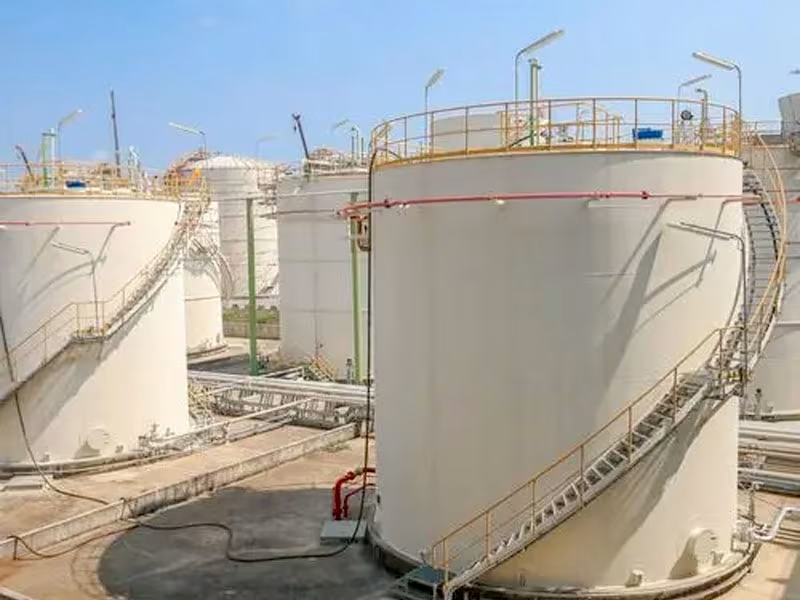
Material selection is usually the first major technical decision in tank design, and it directly affects long-term performance.
In industrial applications, commonly used materials include:
- Stainless steel for environments requiring corrosion resistance and hygienic conditions
- Carbon steel for structurally demanding applications with controlled environments
- Polymer-based materials for chemical resistance in specific media
- Composite structures for lightweight and specialized installations
What is often overlooked is that material performance is not only about strength. It is also about how the material reacts over time under constant exposure, temperature changes, and internal pressure cycles.
Surface treatment, internal lining, and anti-corrosion protection are often applied to extend lifecycle stability, especially in chemically active environments.
Structural Design Choices That Affect Real Operation
Tank geometry is not chosen for appearance—it directly affects flow behavior, maintenance access, and pressure distribution.
Common structural layouts include:
- Vertical cylindrical configurations, often used where space efficiency is important
- Horizontal layouts for installations with height limitations
- Underground systems where environmental exposure needs to be minimized
- Modular systems designed for scalable industrial expansion
In real engineering projects, structural selection is often influenced by installation space, piping layout, and maintenance accessibility rather than theoretical capacity alone.
The Role of Engineering Standards in Real Projects
Industrial storage systems are typically designed under internationally recognized engineering frameworks. These standards are not just documentation—they define minimum expectations for safety and reliability.
Key engineering focus areas include:
- Structural load validation under operating conditions
- Welding quality and fabrication consistency
- Material traceability across production stages
- Pressure tolerance and safety margins
- Environmental containment and leakage prevention requirements
In most industrial projects, compliance is also closely linked to operational approval and long-term system acceptance.
Where Liquid Storage Tanks Are Actually Used in Industry
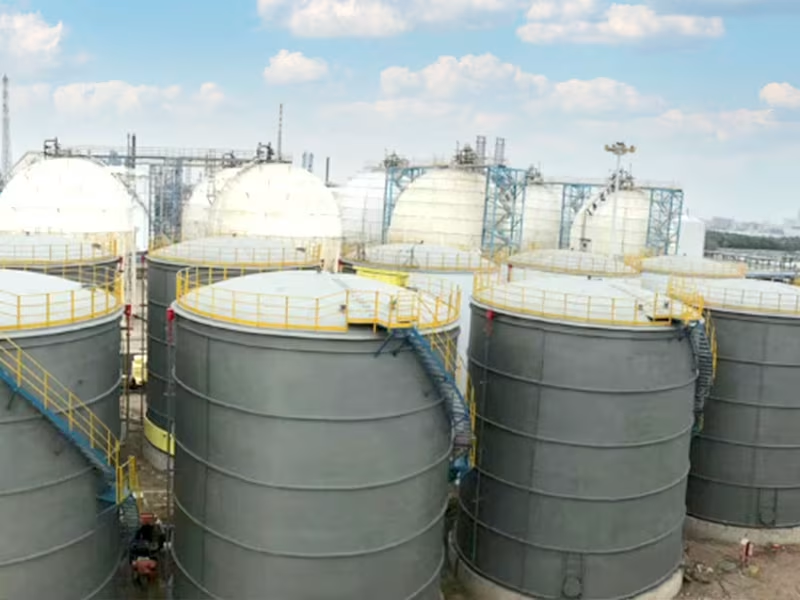
Rather than listing industries in a general way, it is more practical to understand how storage systems function within each environment.
In chemical processing, tanks often act as controlled containment zones for reactive liquids. In water treatment systems, they stabilize inflow and outflow variations across filtration stages. In fuel-related applications, they support safe buffering between supply and consumption systems.
In food and pharmaceutical environments, the emphasis shifts toward contamination control, cleanability, and material neutrality. Even minor surface or sealing issues can affect product integrity.
Each application creates a different engineering priority, even if the tank looks similar externally.
Why Operational Failures Usually Happen Over Time
Most storage system issues do not appear immediately after installation. They develop gradually through operational cycles.
Common long-term risks include:
- Gradual corrosion caused by material and medium interaction
- Seal degradation from repeated pressure variation
- Structural stress accumulation from thermal changes
- Improper installation leading to uneven load distribution
- Maintenance delays causing undetected deterioration
The important point is that these issues are often predictable if the design phase is properly executed. Many failures are not sudden—they are the result of long-term mechanical and chemical exposure.
What Makes Manufacturing Quality So Critical
From a manufacturing perspective, liquid storage tanks are highly sensitive to production accuracy. Small deviations in welding, alignment, or material treatment can affect long-term stability.
Key production control areas include:
- Welding consistency and penetration quality
- Dimensional accuracy across large structures
- Surface finishing and internal treatment uniformity
- Structural reinforcement alignment
- Pressure testing before delivery
Unlike standard mechanical components, storage systems operate under continuous load conditions, which makes manufacturing consistency a critical factor in reliability.
Custom Engineering Is Becoming the Default Requirement
In modern industrial projects, standard tank configurations are often not enough. Site conditions, process design, and safety requirements increasingly demand customized engineering.
Custom design may involve:
- Adjusted dimensions based on installation constraints
- Reinforced structures for high-load or high-volume systems
- Specialized coatings for chemical compatibility
- Integration with piping and control systems
- Multi-unit configurations for distributed operations
This shift reflects a broader trend in industrial engineering where systems are designed around process requirements rather than standardized equipment models.
A Practical Way to Evaluate a Storage Tank Before Selection
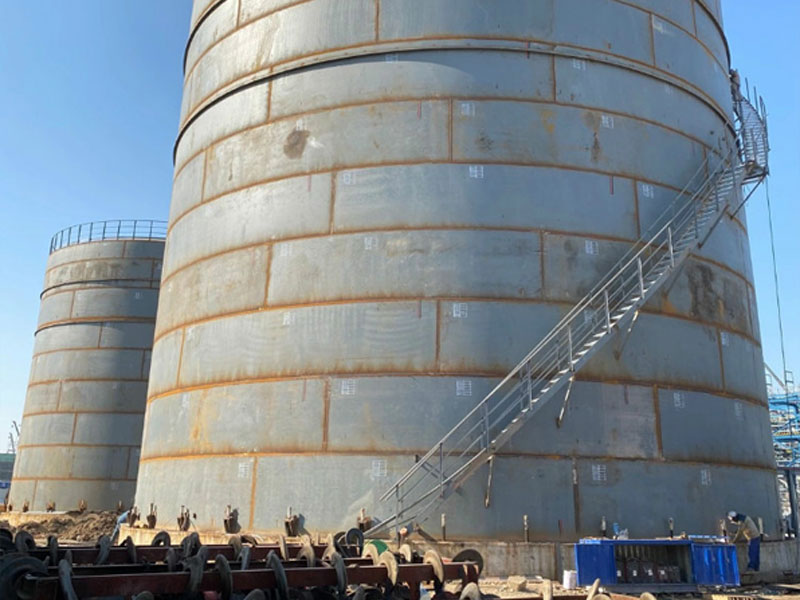
Instead of focusing on product specifications alone, a more reliable evaluation method is to look at the system as a whole:
- What liquid will be stored, and how stable is it chemically
- What operational conditions will the system face daily
- How accessible is the installation environment
- What level of maintenance is realistically achievable
- How the tank integrates with the broader process system
When these factors are evaluated together, selection becomes more accurate and long-term performance becomes more predictable.
Conclusion
A liquid storage tank should not be treated as a simple equipment purchase. It is a structural and operational component that influences safety, efficiency, and system stability over time.
Material selection, structural design, engineering standards, and manufacturing quality all contribute to how the system performs in real-world conditions. When these elements are aligned with the actual industrial environment, storage systems tend to operate more consistently and require fewer unexpected interventions.
For industrial users, the most reliable approach is not only choosing a tank based on capacity or appearance, but ensuring that the engineering logic behind the system matches the operational reality it will serve.
FAQ
What is a liquid storage tank used for in industrial systems?
It is used to store and regulate liquids such as water, chemicals, fuel, or process fluids, ensuring stable flow and safe handling within industrial operations.
What materials are commonly used for liquid storage tanks?
The most common materials include stainless steel, carbon steel, and polymer-based materials, each selected based on chemical compatibility, strength requirements, and operating conditions.
How do I choose the right liquid storage tank for my project?
Selection depends on liquid type, required capacity, installation environment, temperature conditions, and system integration requirements within the overall process.
What industries commonly use liquid storage tanks?
They are widely used in chemical processing, water treatment, food and beverage production, pharmaceutical manufacturing, and energy-related applications.
What are the main factors affecting liquid storage tank performance?
Key factors include material selection, structural design, manufacturing quality, corrosion resistance, and proper installation and maintenance practices.
Continue reading
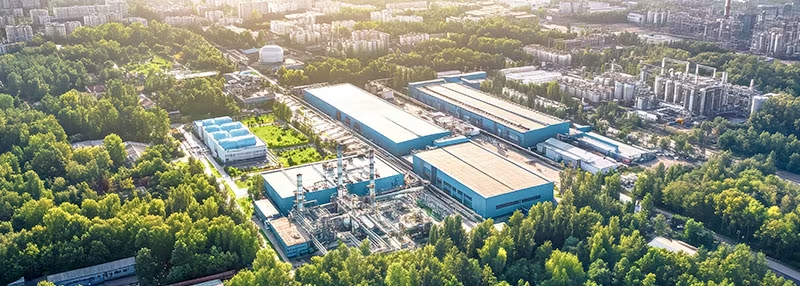
Shandong No.7 Construction Engineering Co., Ltd. is a large-scale modern construction enterprise integrating R&D, design, production, construction and general contracting of steel structures, with business covering both domestic and international markets.