Roof Steel Truss Manufacturer Guide: What Buyers Should Know Before Ordering
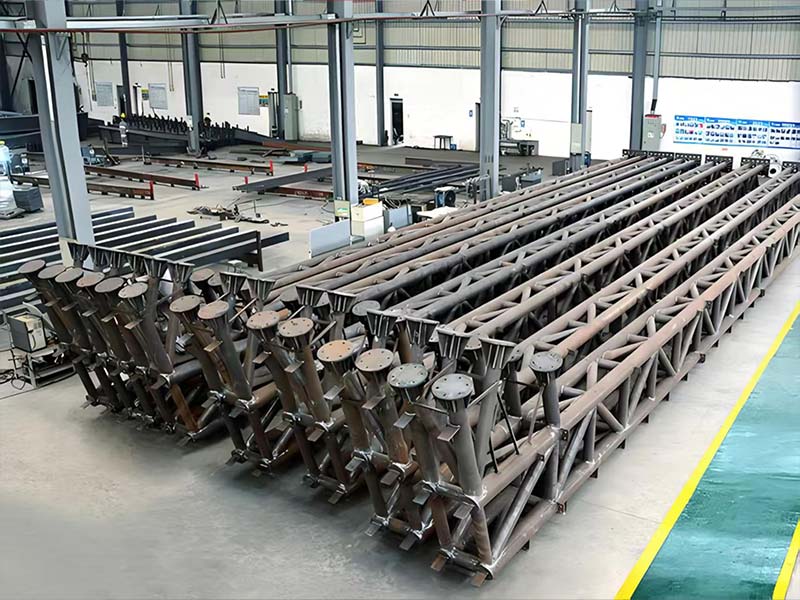
In today’s construction landscape, the right roofing system can make or break a project’s efficiency. For industrial buildings, warehouses, or large commercial facilities, roof steel trusses have become the backbone of modern structural design. They offer long-span coverage, excellent load distribution, and flexibility that traditional roofing structures simply can’t match.
As a manufacturer, we’ve seen firsthand how the right design, fabrication, and installation approach transforms a simple roof into a reliable, long-lasting structural solution. In this guide, we’ll walk you through everything you need to know when planning, designing, or sourcing a steel roof truss system.
Why Roof Steel Trusses Are the Go-To Choice
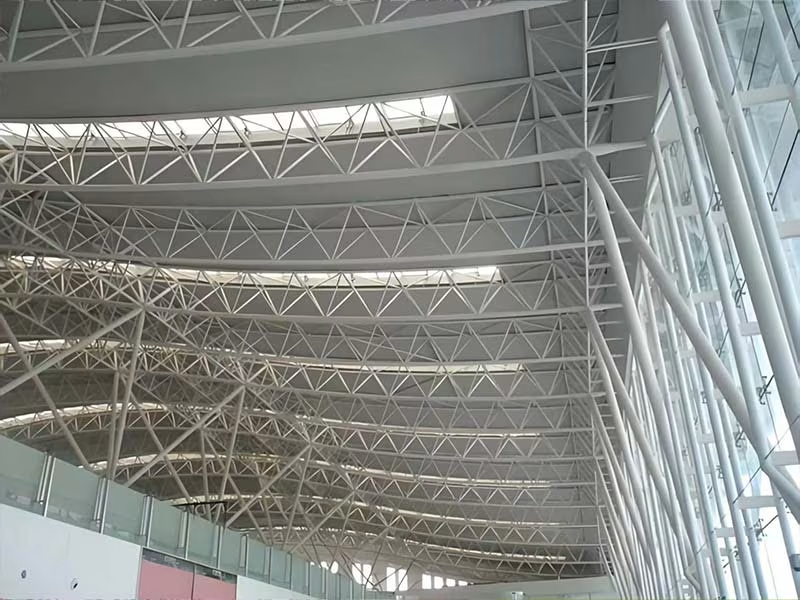
Think of a roof steel truss as a skeletal system for your building. Instead of relying on heavy beams, it uses a network of steel members arranged in triangles, distributing weight efficiently across the entire structure. The benefits aren’t just technical—they’re practical:
- Open, column-free spaces allow more flexibility for operations.
- Durable and adaptable design withstands environmental challenges like wind, snow, and seismic activity.
- Reduced material use without compromising strength.
This combination makes steel trusses ideal for warehouses, factories, sports facilities, and public structures where space and safety are top priorities.
How Steel Trusses Work: Engineering Simplified
At first glance, a roof steel truss might look like a collection of random beams—but every piece has a role. Here’s how engineers think about them:
- Load management: Triangular geometry ensures tension and compression are balanced.
- Span support: Trusses allow wide spans without additional columns.
- Material efficiency: Steel grades and thickness are selected based on anticipated loads.
- Environmental resilience: Designs account for wind uplift, snow accumulation, and seismic movement.
A well-designed truss isn’t just strong—it’s smart engineering optimized for your specific project.
Truss Types and When to Use Them
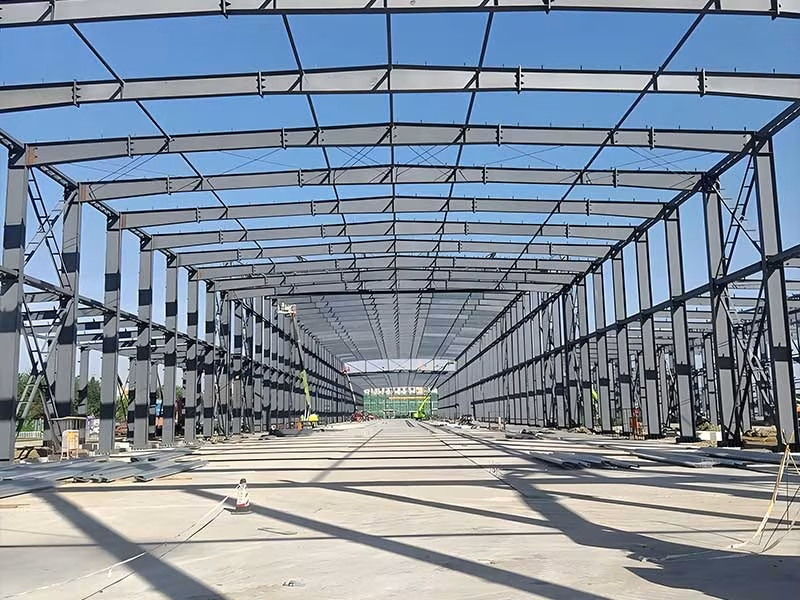
Not all trusses are created equal. The shape, material, and assembly method all depend on the project’s purpose:
- Pitched roof trusses – Common for industrial and commercial buildings; simple design, reliable performance.
- Long-span trusses – Perfect for stadiums, exhibition halls, or warehouses needing open space.
- Lightweight prefabricated trusses – Reduce overall roof weight, ideal for modular and fast-assembly projects.
- Hybrid trusses – Combine traditional truss elements with space-frame structures for complex architectural forms.
Understanding the right truss type can save time, prevent structural problems, and optimize material use.
Real-World Applications
Here’s where roof steel trusses shine in practical construction:
- Warehouses and logistics hubs: Long spans and high load-bearing capacity.
- Factories: Flexible interiors for heavy machinery and operations.
- Sports arenas and exhibition halls: Column-free design for clear sightlines.
- Agricultural buildings: Durable structures for storage and livestock.
- Airports and transportation terminals: Large coverage areas with minimal support interruptions.
Each application brings unique requirements, from ventilation to crane integration, and steel trusses adapt to all of them.
Behind the Scenes: How We Make Steel Trusses
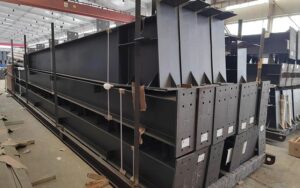
Manufacturing a roof steel truss isn’t just welding beams together. It’s a precise workflow designed for quality and longevity:
- Material selection: High-strength steel inspected for consistency and durability.
- Cutting and forming: CNC machinery ensures perfect dimensions.
- Welding and assembly: Techniques tailored to maximize joint strength.
- Surface protection: Anti-corrosion treatments to extend lifespan.
- Quality checks: Load tests, visual inspections, and alignment verification.
Each step ensures the final product performs exactly as designed once installed.
Installation: From Factory to Roof
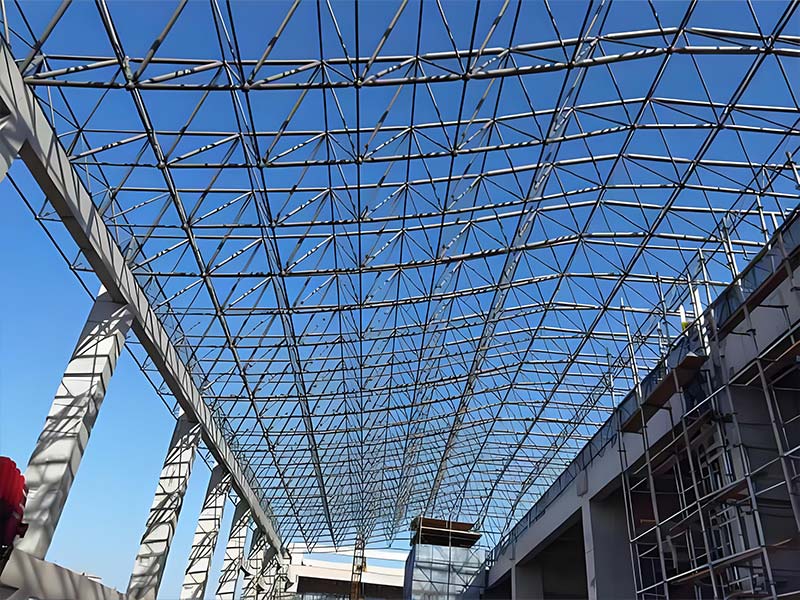
Even the best truss can underperform if installation isn’t done properly. Key practices include:
- Proper site preparation and alignment
- Lifting and assembly of modular sections
- Connection using bolts or welds depending on design
- Real-time measurement and adjustments for accuracy
- Final structural inspection before handover
Attention to detail during installation prevents long-term maintenance issues and ensures the roof performs under all conditions.
Comparing Steel Trusses to Other Roof Options
Steel trusses aren’t just strong—they’re efficient. Compared to other roofing systems:
- Concrete roofs offer mass but are heavier and take longer to construct.
- Space frame structures distribute loads multidirectionally but are more complex to design.
- Timber roofs are less durable and can’t span as far without extra support.
For most industrial and large-span applications, steel trusses balance performance, efficiency, and ease of assembly.
Choosing the Right Manufacturer
When selecting a supplier, consider more than just product availability:
- Design engineering support for your specific project
- Production capabilities to handle large-scale structures
- Experience with similar building types
- Quality assurance and testing processes
- Ability to customize trusses for unusual spans or loads
A manufacturer who combines engineering expertise with reliable production will save time, reduce project risk, and ensure structural performance.
Avoiding Common Pitfalls
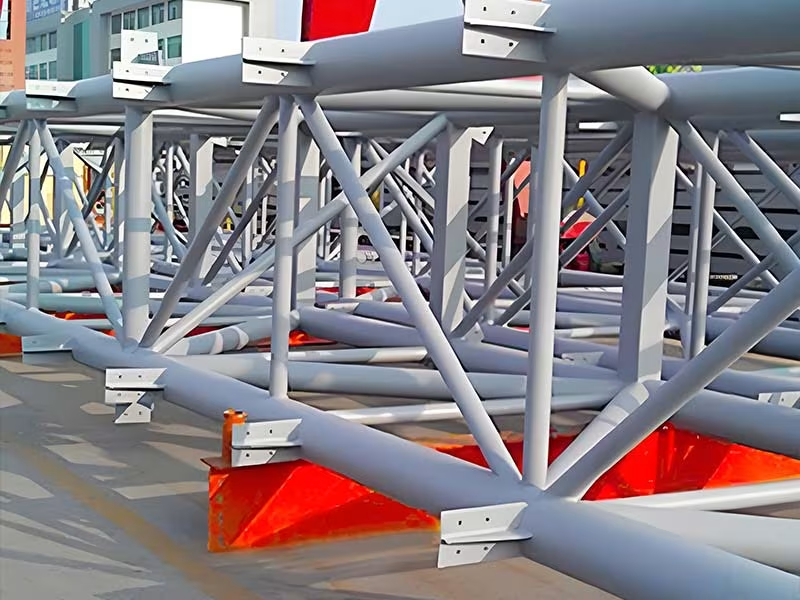
Even experienced teams can run into issues without careful planning:
- Misalignment during installation
- Welding inconsistencies affecting joint strength
- Corrosion from environmental exposure
- Overlooking load calculations for large spans
- Insufficient long-term maintenance planning
Proper engineering oversight, quality control, and planning can prevent these problems before they arise.
Conclusion
Steel trusses are more than a roofing solution—they’re a structural strategy. They allow buildings to span wide distances, withstand environmental challenges, and maintain operational flexibility.
As a roof steel truss manufacturer, our focus is delivering durable, high-strength, and custom solutions that meet modern construction demands. From design to fabrication and on-site installation, every stage is engineered for performance and reliability.
For industrial, commercial, and large public structures, choosing the right steel truss system—and the right manufacturer—ensures your project stands the test of time.
FAQ
Q1: What is a roof steel truss and why is it used?
A1: A roof steel truss is a structural framework made of interconnected steel members arranged in triangles. It efficiently distributes load, allows long spans without columns, and is ideal for warehouses, factories, and large commercial buildings.
Q2: How do I choose the right roof steel truss for my project?
A2: Selecting the right truss depends on span length, building type, load requirements, and environmental conditions. Working with a manufacturer ensures you get a design optimized for strength, durability, and installation efficiency.
Q3: What are the common types of roof steel truss systems?
A3: Common types include pitched roof trusses, long-span trusses, lightweight prefabricated trusses, and hybrid systems. Each type suits different building sizes and load requirements.
Q4: What is involved in the manufacturing and installation of roof steel trusses?
A4: Manufacturing includes material selection, cutting, welding, surface protection, and quality inspection. Installation involves proper alignment, modular assembly, secure connections, and final structural inspection.
Q5: How do roof steel trusses compare to other roofing systems?
A5: Steel trusses are lighter, faster to install, and more flexible than concrete or timber roofs. They also allow larger spans with fewer columns and offer long-term durability under environmental stresses.
Continue reading
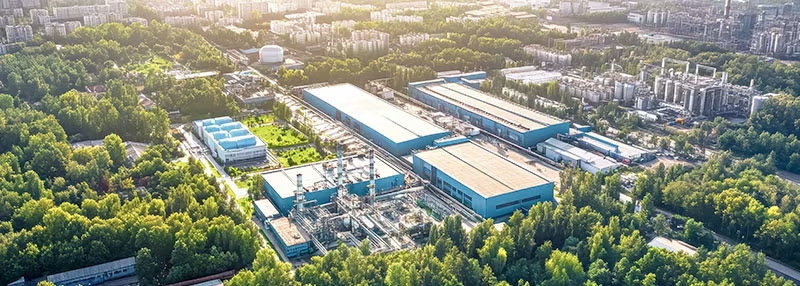
Shandong No.7 Construction Engineering Co., Ltd. is a large-scale modern construction enterprise integrating R&D, design, production, construction and general contracting of steel structures, with business covering both domestic and international markets.