Custom Space Frame Steel Structure: A Complete Guide
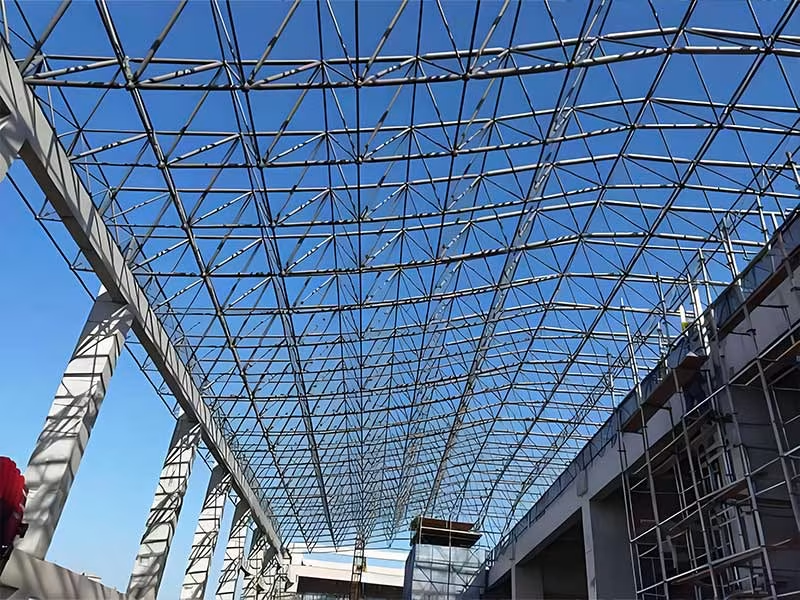
In modern construction, large-span buildings require more than ordinary steel support. They need a structural system that is strong, efficient, flexible, and suitable for complex architectural designs. This is why the space frame steel structure has become a popular choice for stadiums, warehouses, exhibition halls, airport terminals, coal storage sheds, industrial plants, and many other large-scale buildings.
As a professional space frame steel structure manufacturer, we understand that every project has different requirements. Building span, load capacity, roof shape, climate conditions, surface treatment, installation method, and budget all affect the final solution. A custom space frame steel structure is not only a product; it is an engineered system designed to meet the actual needs of each project.
This guide explains what a space frame steel structure is, how it works, where it is used, what advantages it offers, how it is manufactured, and what buyers should consider before ordering.
What Is a Space Frame Steel Structure?
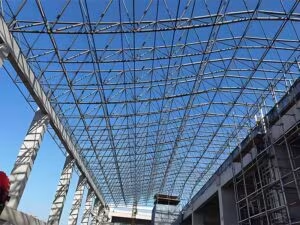
A space frame steel structure is a three-dimensional structural system made from steel tubes, nodes, bolts, supports, and other connecting components. Unlike a traditional flat beam structure, a space frame distributes loads in multiple directions. This makes it especially suitable for large-span roof structures where open space, high strength, and stable performance are required.
In simple terms, a steel space frame works like a network of connected triangular units. These units help transfer loads evenly across the structure, reducing stress concentration and improving overall stability. Because of this special design, a space frame steel structure can cover wide areas with fewer internal columns.
This type of structure is commonly used in:
- Stadium roofs
- Sports halls
- Exhibition centers
- Industrial workshops
- Logistics warehouses
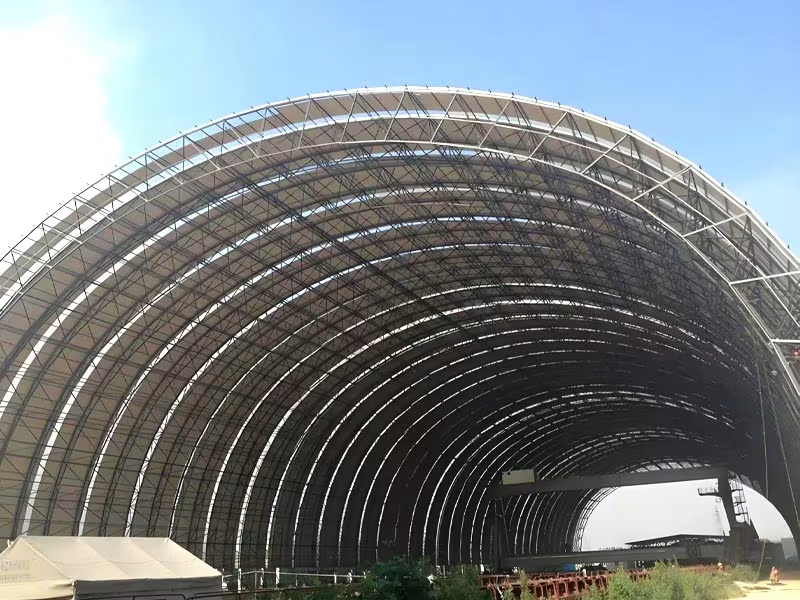
- Coal storage sheds
- Airport terminals
- Railway stations
- Shopping mall atriums
- Gas station canopies
- Large public buildings
For projects that require a wide, open, and durable roof system, the space frame steel structure is often a practical and cost-effective solution.
Why Choose a Custom Space Frame Steel Structure?
Every building project is different. A warehouse may need a simple and economical large-span roof, while a stadium may require a curved roof with strong visual impact. A coal storage shed may need corrosion resistance and dust control, while an airport terminal may require both structural performance and architectural beauty.
This is where custom design becomes important.
A custom space frame steel structure allows the manufacturer to adjust the structure according to the project’s real conditions. These may include span size, roof shape, wind load, snow load, seismic requirements, surface treatment, installation environment, and cladding materials.
For buyers, customization brings several important benefits.
First, it improves structural suitability. The design can match the exact project size and usage requirements instead of forcing the project to adapt to a standard structure.
Second, it helps control cost. A properly designed space frame can reduce unnecessary steel consumption while maintaining safety and strength.
Third, it improves construction efficiency. Factory-prefabricated components can be produced, marked, packed, and delivered according to the installation sequence, making site assembly faster and more organized.
Finally, customization gives the project greater design flexibility. Whether the roof is flat, arched, curved, circular, or irregular, a space frame steel structure can be engineered to support different architectural forms.
Main Components of Space Frame Steel Structure
A complete space frame steel structure is made of several key components. Each component plays an important role in strength, stability, safety, and installation quality.
Steel Tubes
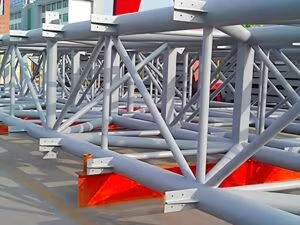
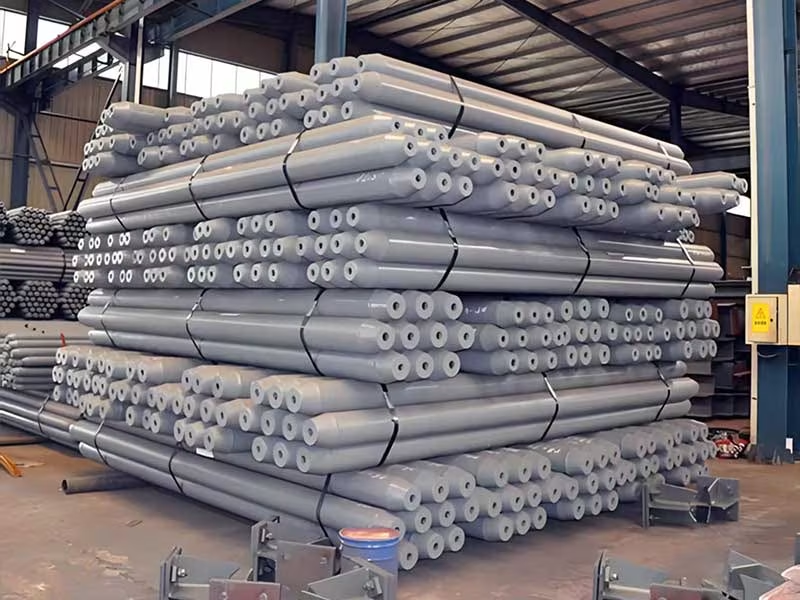
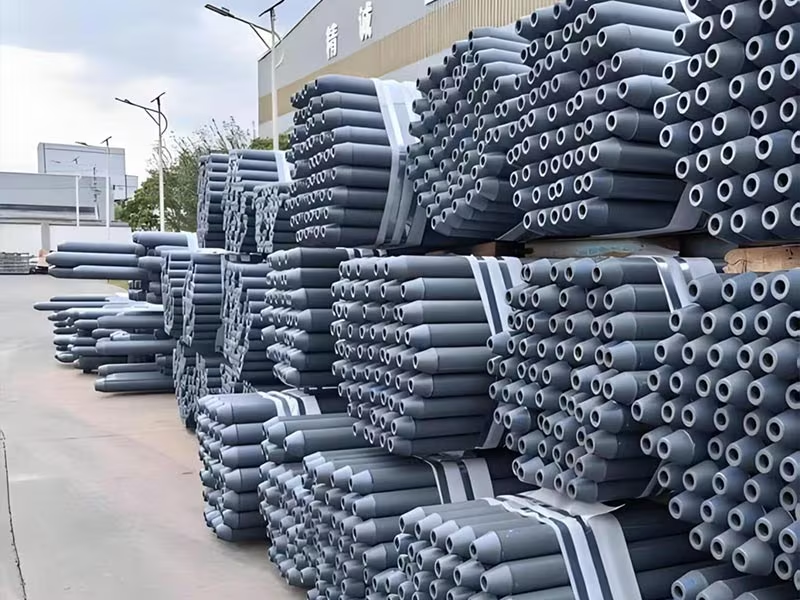
Steel tubes are the main load-bearing members of the structure. They connect with nodes to form the three-dimensional space frame system. The diameter, thickness, and steel grade of the tubes are selected according to the span, load, and design requirements.
High-quality steel tubes help improve structural strength, reduce deformation, and ensure long-term service life.
Nodes and Connectors
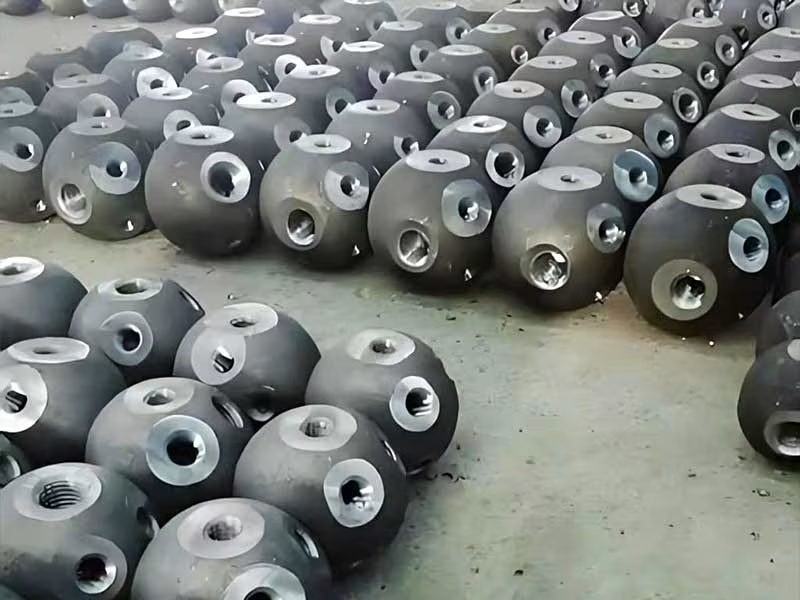
Nodes are the connection points of the space frame. Common types include bolted ball nodes and welded ball nodes. These nodes connect multiple steel tubes at different angles, allowing the structure to transfer loads effectively.
Bolted ball space frame systems are widely used because they are convenient for factory production and site installation. Welded ball systems are often used when higher integral strength or special design requirements are needed.
High-Strength Bolts
High-strength bolts are used to connect steel tubes and nodes securely. Their quality directly affects the stability and safety of the whole structure. During production and installation, bolt specifications, tightening quality, and connection accuracy must be carefully controlled.
Support System
The support system transfers the load from the space frame roof to columns, concrete foundations, or other supporting structures. Good support design is essential for structural stability, load transfer, and installation accuracy.
Roof Panels and Cladding
The space frame is often combined with roof panels, insulation panels, skylight sheets, aluminum-magnesium-manganese panels, color steel sheets, or sandwich panels. The choice depends on building function, insulation needs, appearance, climate conditions, and budget.
Common Types of Space Frame Steel Structure
Different projects require different space frame systems. Understanding the main types can help buyers choose the right solution.
Bolted Ball Space Frame Steel Structure
The bolted ball space frame is one of the most widely used systems. It uses steel balls with threaded holes as nodes, and steel tubes are connected by high-strength bolts.
This type is suitable for large-span buildings, roofing systems, warehouses, stadiums, exhibition halls, and industrial buildings. It offers high precision, convenient assembly, and good adaptability.
Welded Ball Space Frame Steel Structure
The welded ball space frame uses hollow steel balls as nodes, and the steel tubes are welded to the balls. This structure is often selected for projects with special strength requirements or complex shapes.
It provides strong integral performance, but the production and welding quality requirements are higher.
Double-Layer Space Frame Structure
A double-layer space frame has upper and lower chord members connected by diagonal web members. It offers excellent stability and is commonly used in large-span roof structures.
This type is suitable for stadiums, airports, industrial plants, warehouses, and public buildings.
Curved Space Frame Roof Structure
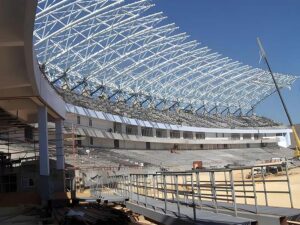
A curved space frame roof is suitable for buildings that require both strength and architectural appearance. It is often used in stadiums, exhibition centers, transportation hubs, and cultural buildings.
The curved shape provides a modern appearance while maintaining strong structural performance.
Applications of Space Frame Steel Structure
One major advantage of a space frame steel structure is its wide application range. It can be used in many industries and building types.
| Application Area | Common Project Type | Main Requirements | Space Frame Advantage |
|---|---|---|---|
| Stadiums | Sports hall roof, stadium canopy | Large span, open view, safety | Fewer columns and flexible roof shape |
| Warehouses | Logistics warehouse, storage building | Wide indoor space, fast construction | Large-span coverage and efficient assembly |
| Coal Storage Sheds | Coal yard, material shed | Dust control, corrosion resistance | Enclosed large-span roof system |
| Exhibition Halls | Convention center, display hall | Open interior, modern appearance | Flexible design and wide span |
| Airports | Terminal roof, waiting hall | Large public space, durability | Strong structure with architectural style |
| Industrial Buildings | Factory, workshop, power plant | Heavy-duty use, long service life | Stable performance and custom design |
| Gas Stations | Canopy roof | Light structure, clean appearance | Fast installation and attractive design |
| Railway Stations | Platform roof, waiting area | Long span, safety, weather protection | Efficient roof coverage |
Space Frame Steel Structure for Stadium Roofs
Stadiums and sports halls usually require large open spaces without many internal columns. A space frame steel structure is ideal for this type of building because it can cover wide spans while keeping the interior space open and flexible.
For stadium projects, the structure must consider wind load, snow load, roof shape, lighting, drainage, acoustic requirements, and long-term safety. A custom steel space frame roof can be designed to match both functional and architectural requirements.
Space Frame Steel Structure for Warehouses
Warehouses need practical, economical, and efficient structural systems. A space frame steel structure can provide large-span coverage, which improves storage efficiency and allows better movement of forklifts, trucks, and equipment.
For logistics warehouses, industrial storage buildings, and large distribution centers, this structure helps create a spacious indoor environment with fewer obstacles.
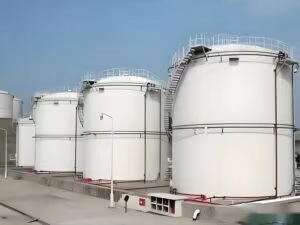
Space Frame Steel Structure for Coal Storage Sheds
Coal storage sheds, mineral storage yards, and material sheds often require large enclosed spaces. These projects may face corrosion, dust, wind, rain, and complex environmental conditions.
A space frame steel structure can be combined with proper cladding and anti-corrosion treatment to create a durable enclosed storage system. Hot-dip galvanizing, anti-corrosion painting, and suitable roof panels can help improve service life in harsh environments.
Space Frame Steel Structure for Exhibition Halls
Exhibition halls and convention centers need wide, open, and flexible indoor areas. A space frame roof allows large spans and attractive shapes, making it suitable for buildings that require both practical function and visual appeal.
Because exhibitions often need flexible layouts, fewer internal columns can improve space usage and visitor experience.
Advantages of Space Frame Steel Structure
A well-designed space frame steel structure offers many advantages for large-span buildings.
Large Span Capacity
The most important advantage is large-span capability. The three-dimensional structural system distributes loads efficiently, allowing the roof to cover wide areas with fewer supports.
This is especially valuable for stadiums, warehouses, exhibition halls, coal sheds, and transportation buildings.
Lightweight and High Strength
Compared with some traditional structures, the steel space frame can achieve strong load-bearing performance with relatively lighter weight. This may help reduce foundation pressure and improve material efficiency.
Flexible Design
A space frame steel structure can be designed into flat, curved, arched, circular, or irregular shapes. This makes it suitable for both simple industrial buildings and complex architectural projects.
Fast Installation
Many components can be prefabricated in the factory, including steel tubes, nodes, bolts, supports, and other parts. After delivery to the site, workers can assemble the structure according to drawings and component numbers.
This helps shorten construction time and improve installation efficiency.
Good Seismic and Wind Resistance
Because the structure transfers loads in three dimensions, it has good overall stability. With proper engineering design, it can meet wind resistance, seismic resistance, and local building code requirements.
Long Service Life
With proper material selection, surface treatment, and regular maintenance, a space frame steel structure can provide long-term performance. Anti-corrosion coating, hot-dip galvanizing, and fireproof coating can be selected according to project conditions.
Key Factors in Space Frame Steel Structure Design
Professional design is essential for safety, performance, and cost control. Before production, engineers need to evaluate several important factors.
Building Span and Layout
The span, length, width, height, column spacing, and building shape all affect the structure design. Large-span projects usually require accurate calculation and optimized member arrangement.
Load Requirements
The design must consider dead load, live load, wind load, snow load, seismic load, roof panel load, suspended equipment load, and maintenance load. In some projects, local climate conditions can greatly influence the final design.
Material Selection
The choice of steel grade, tube size, wall thickness, node type, bolt specification, and support system affects strength, durability, and cost.
A reliable manufacturer should select materials based on engineering requirements rather than using the same specification for every project.
Surface Treatment
Surface treatment is important for long-term durability. Common options include:
- Anti-rust painting
- Hot-dip galvanizing
- Sandblasting and primer coating
- Fireproof coating
- Anti-corrosion coating for special environments
Projects in coastal areas, chemical plants, mining areas, or humid climates usually require stronger corrosion protection.
Roof and Cladding System
The roof system should match the building’s function. For example, a warehouse may use color steel sheets, while an industrial plant may require insulated sandwich panels. Exhibition halls and airports may need skylight panels or decorative roof materials.
Installation Method
The design should also consider how the structure will be installed. Common methods include ground assembly with lifting, high-altitude assembly, block installation, and sliding installation. The best method depends on site conditions, equipment availability, span size, and construction schedule.
Space Frame Steel Structure Manufacturing Process
As a manufacturer, production quality is one of the most important parts of a successful project. A good space frame steel structure is not only designed correctly but also manufactured with precision.
Engineering Design and Shop Drawings
The process usually starts with project information, architectural drawings, structural requirements, and local standards. Engineers prepare structural calculations, detailed drawings, shop drawings, and installation drawings.
Clear drawings help ensure accurate production and smooth site assembly.
Material Preparation
Steel tubes, steel plates, balls, bolts, supports, and other materials are selected according to the design. Material quality should be checked before processing.
Cutting and Processing
Steel tubes are cut according to required length and angle. Accurate cutting is important because even small errors may affect assembly quality.
Node Fabrication
Bolted balls or welded balls are processed according to design requirements. Node accuracy affects connection quality and installation efficiency.
Welding
Welding quality is critical for structural safety. Welders should follow production procedures, and important welds should be inspected according to project requirements.
Surface Treatment
After fabrication, components may undergo rust removal, painting, galvanizing, or other surface treatment. The treatment method depends on the project environment and customer requirements.
Quality Inspection
Before shipment, components should be inspected for size, quantity, surface quality, welding quality, connection accuracy, coating thickness, and marking. For large or complex projects, trial assembly may also be arranged.
Packing and Delivery
Components are marked, packed, and loaded according to the installation sequence. For export projects, proper packing helps reduce transportation damage and makes site sorting easier.
Space Frame Steel Structure Installation Process
Installation quality directly affects the final performance of the structure. Even if the design and manufacturing are correct, poor installation can create risks.
Site Preparation
Before installation, the foundation, supports, embedded parts, and site conditions should be checked. The installation team should confirm drawings, equipment, safety measures, and construction sequence.
Component Sorting
All steel tubes, nodes, bolts, and accessories should be sorted according to labels and drawings. Good organization helps reduce errors and improve installation speed.
Assembly Method Selection
For some projects, the space frame can be assembled on the ground and lifted into place. For other projects, high-altitude assembly or sectional lifting may be more suitable.
The installation method should be selected based on span size, site space, crane capacity, safety requirements, and construction schedule.
Roof Panel Installation
After the main space frame is installed and inspected, roof panels, purlins, skylights, gutters, flashing, and drainage systems can be installed.
Final Inspection
Final inspection should include structural dimensions, bolt tightening, node connections, support position, coating condition, roof sealing, drainage performance, and overall safety.
How Much Does a Space Frame Steel Structure Cost?
Many buyers want to know the price of a space frame steel structure before starting a project. However, because this is a custom-engineered product, the cost depends on many factors.
The main cost factors include:
- Building length, width, and height
- Span size
- Steel consumption
- Node type
- Load requirements
- Roof material
- Surface treatment
- Project location
- Design standard
- Installation method
- Packing and shipping
- Additional accessories
For example, a simple warehouse roof and a curved stadium roof may both use space frame steel structure, but their design complexity, steel usage, surface treatment, and installation requirements can be very different.
To get an accurate quotation, buyers should provide basic project information such as building size, usage, location, drawings, roof material requirements, wind load, snow load, and any local design standards.
Space Frame Steel Structure vs Traditional Steel Structure
A space frame steel structure and a traditional steel structure can both be used in construction, but they are suitable for different project needs.
Traditional steel structures, such as portal frames and trusses, are common in many industrial buildings. They are practical and economical for certain spans and simple layouts.
However, when a project requires a very large span, fewer internal columns, complex roof shape, or strong architectural appearance, a space frame structure may offer better advantages.
Compared with traditional systems, a steel space frame roof can provide better three-dimensional load distribution, higher design flexibility, and more efficient large-span coverage.
For buyers, the best choice depends on project size, function, budget, design style, and engineering requirements. A professional manufacturer can help compare different options and recommend a suitable solution.
How to Choose a Reliable Space Frame Steel Structure Manufacturer
Choosing the right manufacturer is very important. A space frame steel structure is not a simple standard product; it requires design ability, manufacturing equipment, quality control, and project experience.
Check Engineering Capability
A reliable manufacturer should be able to provide structural design support, shop drawings, material selection, and technical guidance.
Review Manufacturing Capacity
Buyers should check whether the factory has the ability to process steel tubes, nodes, bolts, supports, welding parts, and surface treatment according to project requirements.
Confirm Project Experience
Experience matters. A manufacturer with stadium, warehouse, coal shed, exhibition hall, airport, and industrial building projects can better understand different application needs.
Evaluate Quality Control
Quality control should cover raw material inspection, cutting accuracy, welding quality, node processing, coating quality, trial assembly, packing, and final inspection.
Ask About Customization
A good manufacturer should not only sell standard products. It should be able to adjust design, structure type, surface treatment, roof system, and packing according to the project.
Consider Export Support
For international buyers, export experience is also important. The manufacturer should provide proper packing, clear component marking, loading plans, English drawings, and installation guidance if needed.
Information Buyers Should Provide Before Ordering
To help the manufacturer provide a suitable design and accurate quotation, buyers should prepare as much project information as possible.
Useful information includes:
- Building length, width, and height
- Required span
- Project location
- Building use
- Roof shape
- Roof panel type
- Wind load and snow load
- Seismic requirements
- Surface treatment requirements
- Local design standards
- CAD drawings or reference photos
- Installation method preference
- Delivery destination
Even if complete drawings are not available, basic dimensions and project usage can help the manufacturer make an initial proposal.
Maintenance Tips for Space Frame Steel Structure
A space frame steel structure is designed for long-term use, but regular maintenance can help extend its service life.
The surface coating should be checked regularly, especially in humid, coastal, chemical, or mining environments. If paint damage, rust, or coating cracks are found, they should be repaired in time.
Bolts and nodes should also be inspected to ensure connections remain stable. Roof drainage systems should be kept clear to prevent water accumulation, which may affect roof panels and structural components.
For industrial projects, maintenance plans should be based on the actual environment and building use. Regular inspection is a simple but effective way to protect structural safety.
Why Work Directly With a Space Frame Steel Structure Manufacturer?
Working directly with a manufacturer can bring several advantages.
First, communication is more efficient. Buyers can discuss technical details directly with the engineering and production team.
Second, customization is more flexible. A manufacturer can adjust design, material, node type, surface treatment, and packing based on project requirements.
Third, quality control is easier to manage. From raw material selection to fabrication, surface treatment, inspection, and delivery, the manufacturer can control each step.
Fourth, project cost may be more competitive because buyers can reduce unnecessary middle steps and receive a more direct quotation.
For buyers who need custom space frame steel structure solutions, working with an experienced manufacturer can make the project more efficient, reliable, and easier to manage.
Conclusion
A custom space frame steel structure is an efficient and reliable solution for large-span roofing and modern construction projects. It combines high strength, lightweight design, flexible appearance, fast installation, and long service life. Whether used for stadiums, warehouses, coal storage sheds, exhibition halls, airport terminals, industrial buildings, or transportation facilities, it can provide a practical structural system for different project needs.
For buyers, the key to a successful project is choosing the right space frame steel structure manufacturer. A professional manufacturer can provide design support, material selection, fabrication, surface treatment, quality inspection, packing, delivery, and installation guidance based on real project requirements.
If you are planning a new large-span building or looking for a custom steel space frame roof solution, preparing your project drawings, building size, roof requirements, load information, and installation conditions will help you receive a more accurate design and quotation. A well-designed space frame steel structure can improve building performance, optimize construction efficiency, and create long-term value for your project.
FAQ
What is a space frame steel structure?
A space frame steel structure is a three-dimensional steel system made of steel tubes, nodes, bolts, and supports. It is widely used for large-span roofs, stadiums, warehouses, exhibition halls, and industrial buildings.
What are the advantages of space frame steel structure?
Space frame steel structure offers large-span capacity, high strength, lightweight design, flexible shape, fast installation, and good stability. It is suitable for projects that need wide open space with fewer internal columns.
Where is space frame steel structure commonly used?
Space frame steel structure is commonly used in stadium roofs, coal storage sheds, airport terminals, railway stations, logistics warehouses, factory buildings, exhibition halls, shopping malls, and gas station canopies.
How much does a space frame steel structure cost?
The cost of a space frame steel structure depends on span size, steel usage, node type, roof material, surface treatment, design standards, installation method, and shipping requirements. A project drawing helps provide a more accurate quotation.
How do I choose a space frame steel structure manufacturer?
Choose a manufacturer with engineering design ability, stable production capacity, quality inspection systems, customization experience, and export project support. A direct manufacturer can provide better technical communication and project-based solutions.
Continue reading
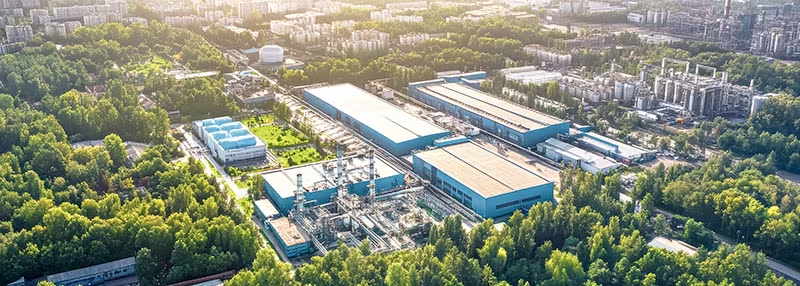
Shandong No.7 Construction Engineering Co., Ltd. is a large-scale modern construction enterprise integrating R&D, design, production, construction and general contracting of steel structures, with business covering both domestic and international markets.