How to Choose the Best Steel Space Frame Structures for Your Construction Project
Introduction
Definition and Key Features of Steel Space Frame Structures
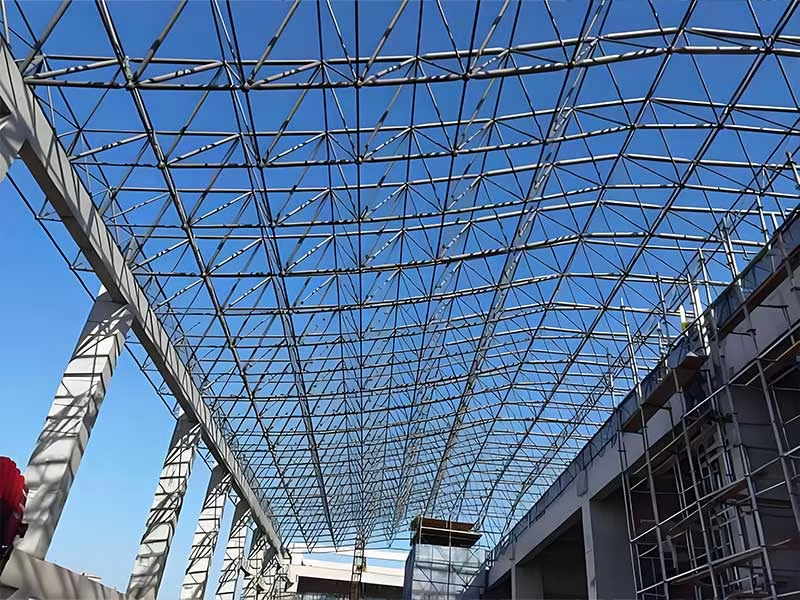
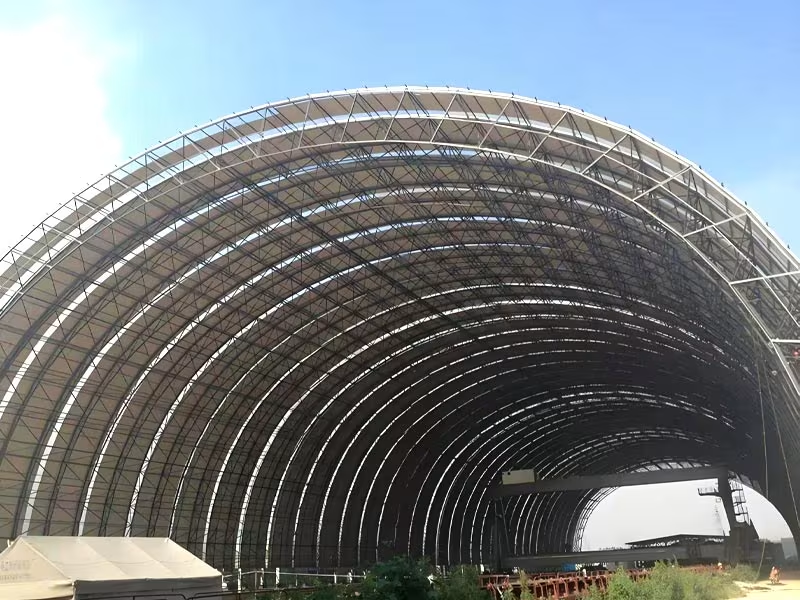
Steel space frame structures represent a revolutionary approach to modern construction, characterized by three-dimensional frameworks composed of interconnected steel tubes or beams arranged in geometric patterns, typically utilizing triangles as their fundamental building blocks. These structures distribute loads evenly across all members, creating a lightweight yet incredibly strong system capable of spanning large distances without internal supports.
The key features that distinguish steel space frame structures include:
- Geometric Efficiency: The triangular configuration provides exceptional structural stability while minimizing material usage
- Three-Dimensional Load Distribution: Unlike traditional two-dimensional truss systems, space frames distribute forces in multiple directions
- Modular Construction: Prefabricated components enable rapid assembly and installation
- Architectural Flexibility: Supports complex, curved, and innovative designs that would be impossible with conventional construction methods
- Exceptional Strength-to-Weight Ratio: Capable of supporting heavy loads with minimal dead weight
Applications in Modern Construction
Steel space frame structures have become essential across various construction sectors due to their versatility and performance advantages. Primary applications include:
- Industrial Buildings: Large-span warehouses, manufacturing facilities, and logistics centers benefit from the open floor space and rapid construction capabilities
- Stadiums and Sports Arenas: The ability to create column-free spaces with expansive roof coverage makes space frames ideal for sports venues requiring unobstructed views and weather protection
- Airports and Transportation Hubs: Terminal buildings and hangars utilize space frames for their aesthetic appeal and efficient long-span capabilities
- Commercial Centers: Shopping malls and exhibition centers leverage the design flexibility and natural lighting integration possibilities
- Cultural and Public Buildings: Museums, libraries, and conference halls often feature space frames for their architectural expression and functional benefits
Why Steel Space Frames Are Preferred Over Other Structural Systems
The preference for steel space frames stems from several compelling advantages over traditional structural systems:
- Superior Span Capabilities: Can achieve spans exceeding 100 meters without intermediate supports, whereas conventional systems typically require additional columns
- Reduced Construction Time: Prefabrication and modular assembly can reduce construction timelines by 30-50% compared to traditional methods
- Lower Lifecycle Costs: Despite potentially higher initial costs, reduced maintenance requirements and extended lifespan provide superior long-term value
- Environmental Sustainability: Steel is highly recyclable (95%+ recovery rate), and the efficient use of materials minimizes environmental impact
- Seismic Performance: Lightweight nature and ductility enhance earthquake resistance compared to heavier concrete structures
- Architectural Freedom: Enables innovative designs that serve both structural and aesthetic functions
Types of Steel Space Frame Structures
Single-Layer Space Frames
Single-layer space frames consist of a single layer of interconnected structural members, typically arranged in triangular or square grid patterns. These systems are ideal for medium-span applications where aesthetic considerations and natural light integration are priorities. The simplicity of single-layer designs results in:
- Reduced material requirements and lower costs for appropriate applications
- Excellent for shallow dome or barrel vault configurations
- Provides unobstructed interior spaces with minimal structural depth
- Well-suited for canopies, covered walkways, and smaller exhibition spaces
However, single-layer systems have limitations in span capacity and load-bearing compared to multi-layer alternatives, making them best suited for applications with moderate spanning requirements.
Double-Layer Space Frames
Double-layer space frames feature two parallel layers of structural members interconnected by vertical web elements, creating additional depth and enhanced load-bearing capacity. This configuration represents the most commonly used space frame system in modern construction and offers:
- Superior Load Distribution: The double-layer arrangement provides exceptional stiffness and the ability to support heavier loads across larger spans
- Versatile Applications: Ideal for sports arenas, airport terminals, industrial warehouses, and commercial centers requiring extensive column-free spaces
- Optimal Material Efficiency: The geometric configuration maximizes structural performance while minimizing steel usage
- Enhanced Aesthetics: The three-dimensional depth creates visually striking ceiling patterns and architectural interest
Double-layer systems can span distances from 30 to 150+ meters depending on design requirements and are compatible with various roofing materials, including metal decking, membrane structures, and glazing systems.
Triple-Layer and Complex Modular Space Frames
For demanding applications requiring exceptional spanning capacity or specialized architectural requirements, triple-layer and modular space frame systems provide enhanced performance. These advanced configurations offer:
- Extended Span Capabilities: Can achieve spans beyond 200 meters for specialized applications like aircraft hangars and mega-structures
- Custom Geometric Configurations: Supports complex geometries including hyperbolic paraboloids, free-form surfaces, and parametric designs
- Integrated Systems: Can incorporate mechanical, electrical, and plumbing systems within the structural depth
- Specialized Applications: Used in space facilities, large-scale exhibition halls, and signature architectural projects
These advanced systems typically require sophisticated engineering analysis and specialized fabrication capabilities, making them suitable for high-budget projects where performance justifies the investment.
Examples of Prefabricated Steel Space Frame Structures
Prefabricated space frame systems demonstrate the efficiency and versatility of modern construction methods. Notable examples include:
- Modular Industrial Warehouses: Complete building systems delivered in pre-assembled sections, reducing on-site construction time by up to 70%
- Sports Facility Roofing: Custom-designed space frame systems for stadiums and arenas, manufactured off-site to precise specifications
- Airport Terminal Structures: Large-scale canopies and roof systems featuring complex geometries fabricated as modular units
- Educational Facilities: Rapidly deployable sports halls and multipurpose spaces utilizing standardized space frame components
Prefabricated solutions offer consistent quality control, reduced weather-related delays, and streamlined installation processes that benefit projects with tight schedules or remote locations.
Benefits of Using Steel Space Frame Structures
Strength and Load-Bearing Capacity
The exceptional strength of steel space frame structures derives from their geometric configuration and material properties. Key aspects include:
- Uniform Load Distribution: The three-dimensional framework spreads forces evenly across all structural members, eliminating stress concentrations
- High Strength-to-Weight Ratio: Typical space frame structures use 20-50% less steel than conventional steel trusses for equivalent performance
- Redundancy: The statically indeterminate nature provides multiple load paths, enhancing safety and resilience
- Seismic Performance: Lightweight construction reduces seismic forces while steel's ductility enables energy absorption during earthquakes
Engineered steel grades such as Q235B and Q355B provide excellent mechanical properties, allowing space frames to support substantial dead and live loads while maintaining structural integrity under extreme conditions.
Lightweight Design for Cost Efficiency
The lightweight nature of steel space frame structures contributes significantly to overall project cost efficiency through:
- Reduced Foundation Requirements: Lower dead weight translates to smaller, less expensive foundations, often reducing foundation costs by 30-40%
- Material Optimization: Efficient geometric design minimizes steel usage while maximizing structural performance
- Transportation Savings: Reduced weight decreases transportation costs for both materials and handling equipment
- Equipment Requirements: Smaller cranes and lifting equipment can be used, reducing equipment rental and mobilization costs
The combination of these factors makes space frame structures particularly economical for large-span applications where conventional systems would require significantly more material and substantial foundations.
Flexibility and Aesthetic Appeal
Steel space frame structures offer unparalleled design freedom, enabling architects to realize ambitious visions while meeting functional requirements:
- Architectural Expression: The structural system itself becomes a design element, with visible geometric patterns creating visual interest
- Form Freedom: Supports complex curved surfaces, domes, and free-form geometries that define iconic architecture
- Natural Light Integration: The open framework facilitates incorporation of skylights, glazing, and daylight harvesting strategies
- Adaptive Spaces: Column-free interiors allow flexible layouts that can be modified as building uses evolve
This combination of structural efficiency and architectural flexibility has made space frames the preferred choice for landmark projects where form and function must be integrated seamlessly.
Longevity and Low Maintenance
Steel space frame structures offer exceptional durability and minimal maintenance requirements throughout their service life:
- Corrosion Resistance: Hot-dip galvanizing, powder coating, and other protective treatments provide decades of corrosion protection
- Extended Lifespan: Properly maintained space frame structures can exceed 50 years of service life
- Minimal Maintenance: The static nature and redundancy of the system reduces maintenance requirements compared to other structural types
- Weather Resistance: Engineered to withstand extreme wind loads, snow accumulation, and temperature variations
The combination of durable materials, protective finishes, and robust engineering ensures long-term performance with minimal intervention, reducing lifecycle costs significantly.
Factors to Consider When Choosing Steel Space Frame Structures
Project Scale and Building Type
The selection of appropriate space frame systems must be carefully matched to project requirements and scale:
| Project Type | Recommended Space Frame Type | Typical Span Range | Key Considerations |
|---|---|---|---|
| Industrial Warehouses | Double-layer with simple geometry | 30-100m | Cost efficiency, rapid construction, load capacity |
| Sports Arenas | Double or triple-layer custom design | 50-150m | Acoustics, lighting integration, spectator sightlines |
| Airport Terminals | Double-layer complex geometry | 40-120m | Wayfinding, natural light, signage integration |
| Exhibition Centers | Double-layer with open grid | 30-80m | Flexible partitioning, HVAC integration |
| Aircraft Hangars | Triple-layer heavy-duty systems | 80-200m | Clear height requirements, heavy equipment access |
Understanding specific project requirements including occupancy, loading conditions, and operational needs is essential for selecting the optimal space frame configuration.
Material Quality and Steel Grades
The selection of appropriate steel grades and material quality significantly impacts structural performance and longevity:
- Common Steel Grades: Q235B (equivalent to ASTM A36) for general applications, Q355B (similar to S355) for higher strength requirements
- Corrosion Protection: Hot-dip galvanization (Zinc coating 80-120μm) for exterior applications, powder coating for interior or architectural applications
- Quality Standards: Compliance with ASTM, ISO, or local standards ensures material consistency and performance
- Certification Requirements: Third-party material testing and certification provide assurance of quality and traceability
Investing in higher-grade materials and protective treatments often yields superior lifecycle performance and reduced maintenance costs, particularly in corrosive environments or demanding applications.
Design Flexibility and Architectural Requirements
The integration of architectural vision with structural requirements demands careful consideration of design flexibility:
- Geometric Constraints: Some space frame configurations support certain shapes more efficiently than others
- Interface Integration: Connections to supporting structures, cladding systems, and building services must be coordinated early
- Manufacturing Tolerances: Complex geometries require precise fabrication capabilities and quality control
- Regulatory Compliance: Local building codes and standards may impose restrictions on certain designs or applications
Collaborative design processes involving architects, engineers, and manufacturers from project inception ensure optimal outcomes that balance aesthetic, functional, and performance requirements.
Budget and Lifecycle Costs
Comprehensive cost evaluation must consider both initial investment and long-term operational expenses:
- Initial Cost Factors: Material quality, complexity, fabrication precision, and installation requirements all impact upfront costs
- Construction Timeline: Faster construction can reduce interim financing costs and enable earlier revenue generation
- Maintenance Expenses: High-quality materials and protective treatments reduce long-term maintenance requirements
- Energy Efficiency: Space frame structures often enable effective daylighting and natural ventilation strategies, reducing operational energy costs
Life cycle cost analysis that accounts for these factors typically demonstrates the economic advantage of well-designed steel space frame structures over their service life.
How Steel Space Frame Structures Are Designed and Engineered
Structural Analysis and Load Calculations
The engineering of steel space frame structures requires sophisticated analysis and precise calculations:
- Load Modeling: Dead loads, live loads, wind loads, snow loads, seismic loads, and temperature effects must be accurately calculated
- Finite Element Analysis: Advanced computer modeling simulates structural behavior under various loading conditions
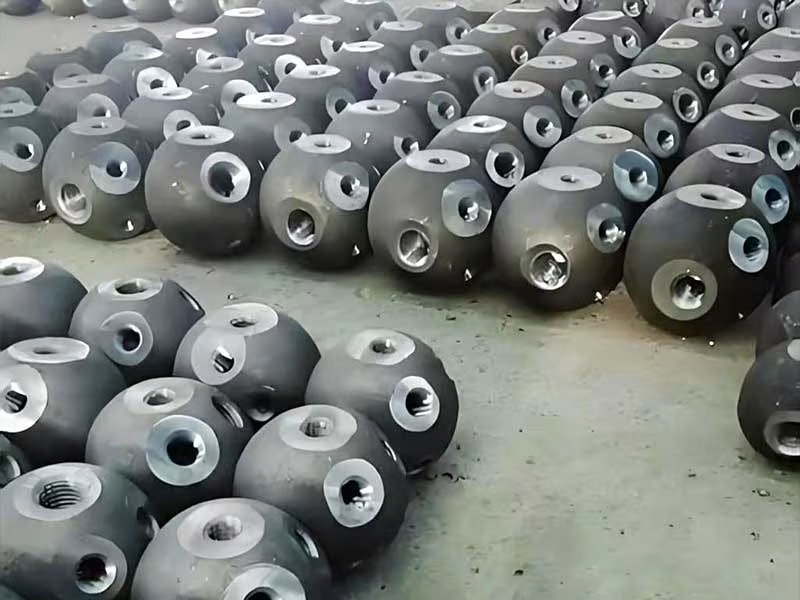
- Connection Design: Critical nodes require detailed engineering to ensure load transfer and structural integrity
- Deflection Control: Serviceability requirements necessitate careful analysis of deflection and vibration characteristics
Professional engineering with appropriate software tools and expertise ensures structural safety while optimizing material usage and construction efficiency.
Customization Options for Industrial or Commercial Needs
Steel space frame structures can be customized to meet specific application requirements:
- Span Modifications: Module size and configuration can be adjusted to meet specific spanning requirements
- Loading Adaptations: Member sizes and spacing can be optimized for particular loading conditions
- Integration Features: Pre-engineered attachment points for lighting, signage, HVAC equipment, and other building systems
- Cladding Compatibility: Systems can be designed to work with various roofing and wall materials
Collaboration between manufacturers and project teams enables development of customized solutions that address unique project challenges while maintaining cost efficiency and constructability.
Integration With Other Steel Structures
Successful projects often require integration of space frame systems with other structural elements:
- Supporting Structures: Columns, walls, and foundation systems must be designed to accommodate space frame loads and reactions
- Roofing Systems: Metal decking, membrane structures, glazing systems, and other roofing materials must be properly integrated
- Secondary Systems: Purlins, girts, bracing, and other secondary framing must coordinate with the primary space frame
- Expansion Joints: Large structures require proper detailing for thermal expansion and seismic movement
Comprehensive detailing and coordination ensure seamless integration of all building systems, optimizing performance and construction efficiency.
Prefabricated vs On-Site Construction
Advantages of Prefabricated Steel Space Frame Modules
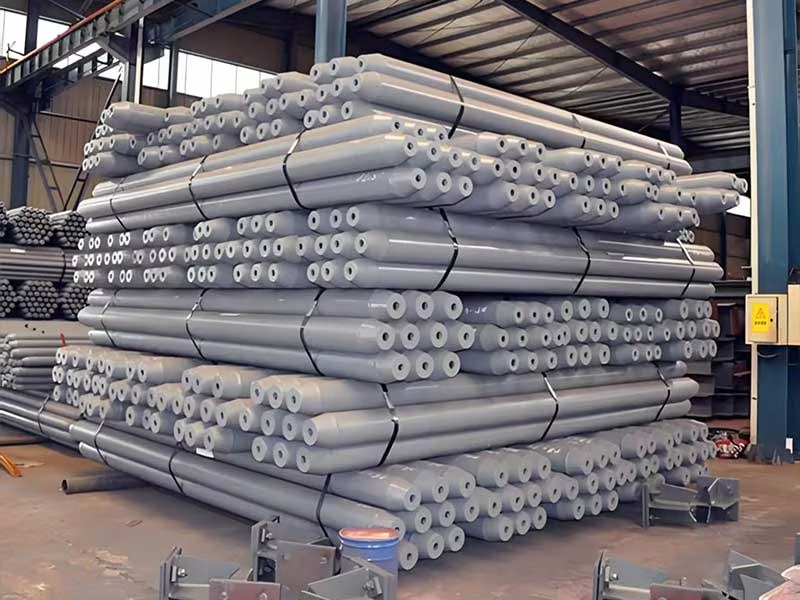
Prefabrication offers numerous advantages for steel space frame construction:
- Quality Control: Factory conditions ensure consistent fabrication quality and dimensional accuracy
- Weather Independence: Manufacturing proceeds regardless of on-site weather conditions
- Reduced On-Site Labor: Minimizes labor requirements and associated costs for skilled trades
- Faster Installation: Pre-assembled modules can be erected quickly, reducing construction timelines
- Material Waste Reduction: Precision manufacturing minimizes material waste and optimizes resource utilization
These advantages make prefabricated space frames particularly attractive for projects with tight schedules, remote locations, or challenging site conditions.
Installation Process and Time Efficiency
The installation process for prefabricated space frame systems demonstrates significant efficiency advantages:
- Site Preparation: Foundation and supporting structure preparation occurs concurrently with module fabrication
- Module Delivery: Pre-assembled sections delivered to site according to installation sequence
- Assembly Coordination: Large cranes or specialized equipment lift modules into position
- Connection Completion: Bolted connections typically used for on-site assembly, requiring minimal welding
- Integration Work: Roofing, cladding, and building services installed following structural completion
Typical installation timelines for prefabricated space frame systems range from 2-4 weeks for medium-sized projects, compared to 2-4 months for conventional steel construction.
Reducing Construction Costs and Risk
Prefabricated space frame systems significantly reduce construction costs and project risks:
- Predictable Scheduling: Factory fabrication reduces weather-related delays and schedule uncertainty
- Reduced Labor Requirements: Fewer on-site workers decrease labor costs and safety risks
- Lower Financing Costs: Faster construction reduces interim financing requirements and carrying costs
- Improved Safety: Factory working conditions and reduced on-site activity improve overall safety performance
- Quality Assurance: Consistent fabrication quality reduces risk of defects and rework
These benefits make prefabricated space frame systems an attractive option for risk-averse owners and developers seeking predictable project outcomes.
Choosing a Reliable Steel Space Frame Manufacturer
Factors to Look for in a Manufacturer (experience, certifications, portfolio)
Selecting the right manufacturer is critical for project success:
- Industry Experience: Minimum 10+ years of specialized space frame experience demonstrates proven capability
- Technical Expertise: In-house engineering capabilities and advanced design software systems
- Quality Certifications: ISO 9001, CE marking, and other relevant quality management system certifications
- Project Portfolio: Similar successful projects demonstrating relevant experience and capability
- Production Capacity: Sufficient manufacturing capacity to meet project schedules and quality requirements
- Technical Support: Engineering support during design, fabrication, and installation phases
Thorough evaluation of potential manufacturers through reference checking, facility visits, and technical discussions ensures selection of a qualified partner.
Importance of After-Sales Support and Installation Guidance
Comprehensive after-sales support ensures successful project completion:
- Installation Supervision: Experienced technicians provide on-site guidance during erection
- Technical Documentation: Detailed assembly drawings, connection details, and installation procedures
- Training Programs: Training for installation crews on proper assembly techniques and safety procedures
- Warranty Support: Clear warranty terms and responsive support for any issues that arise
- Maintenance Guidance: Recommendations for inspection, maintenance, and lifecycle care
Manufacturers offering comprehensive support throughout the project lifecycle contribute significantly to successful outcomes and long-term performance.
Case Studies of Successful Projects
Examining successful projects provides valuable insights into manufacturer capabilities:
- Industrial Warehouse Project: 50,000 m² distribution center completed in 4 months using prefabricated double-layer space frame system
- Sports Arena Renovation: Replacement stadium roof featuring custom-designed space frame with integrated lighting and sound systems
- Airport Terminal Expansion: Terminal extension with complex curved space frame geometry achieving 90m clear span
- Cultural Center: Multi-purpose facility with architectural space frame serving as primary design element
These case studies demonstrate successful application of steel space frame solutions across various project types and scale.
Cost Considerations and ROI
Pricing Per Square Meter for Different Steel Grades and Frame Types
Understanding cost factors helps in budgeting and decision-making:
| System Type | Steel Grade | Price Range (USD/m²) | Typical Applications |
|---|---|---|---|
| Single-Layer Simple Grid | Q235B | $25-40 | Canopies, walkways, small warehouses |
| Double-Layer Standard | Q235B | $35-55 | Industrial buildings, commercial centers |
| Double-Layer Heavy Duty | Q355B | $45-65 | Sports arenas, exhibition centers |
| Triple-Layer Custom | Q355B | $60-90+ | Aircraft hangars, mega-structures |
Prices vary significantly based on project complexity, location, quality requirements, and market conditions. Obtaining detailed quotations from qualified manufacturers is essential for accurate budgeting.
Comparing Costs With Other Structural Systems
Comprehensive cost comparison reveals the economic advantages of space frame structures:
- Initial Cost: Typically 10-30% higher than conventional steel truss systems for equivalent spans
- Foundation Savings: 30-40% reduction in foundation costs due to reduced dead weight
- Construction Time: 30-50% faster construction reduces interim financing and carrying costs
- Lifecycle Costs: 20-30% lower lifecycle costs due to reduced maintenance and longer service life
- Value Engineering: Total project costs often competitive or favorable when all factors are considered
The economic case for space frame structures strengthens as project scale and span requirements increase.
Long-Term Benefits and Return on Investment
The long-term value proposition of steel space frame structures includes:
- Extended Service Life: 50+ year service life with proper maintenance versus 25-35 years for many alternatives
- Reduced Maintenance: Minimal maintenance requirements compared to other structural types
- Energy Efficiency: Opportunities for daylighting and natural ventilation reduce operational costs
- Adaptability: Flexible interior spaces accommodate changing uses without structural modification
- Resale Value: Quality construction and architectural appeal enhance property value
Total cost of ownership analysis typically demonstrates favorable returns on investment over 20-30 year periods, particularly for large-scale projects.
Common Mistakes to Avoid
Ignoring Structural Load Requirements
Inadequate consideration of loading conditions is a common and potentially serious error:
- Underestimating Live Loads: Failing to properly account for equipment, storage, or occupancy loads
- Neglecting Environmental Loads: Inadequate consideration of wind, snow, seismic, or thermal effects
- Overlooking Dynamic Loads: Forgetting to account for vibration, impact, or cyclic loading conditions
- Improper Load Path Analysis: Failure to properly trace loads through the structure to foundations
Comprehensive load analysis performed by qualified structural engineers with space frame expertise is essential for safe and efficient design.
Overlooking Material Quality and Steel Grade
Compromising on material quality can have serious consequences:
- Inadequate Steel Grades: Using lower-grade steel to reduce initial costs may compromise structural performance
- Insufficient Corrosion Protection: Inadequate galvanizing or coating leads to premature deterioration
- Non-Compliant Materials: Using materials that don't meet required standards or specifications
- Quality Verification Failure: Failing to verify material quality through testing and inspection
Investing in appropriate material quality and verification processes ensures structural integrity and long-term performance.
Choosing the Cheapest Option Without Assessing Manufacturer Reliability
Selecting manufacturers solely based on lowest price often proves costly:
- Quality Compromise: Lower prices may reflect inferior materials, fabrication quality, or engineering expertise
- Schedule Risk: Inexperienced manufacturers may miss deadlines, causing project delays and additional costs
- Limited Support: Inadequate technical support and after-sales service creates problems during installation and operation
- Liability Issues: Manufacturers with inadequate insurance or financial stability create risk exposure
Comprehensive evaluation of manufacturer capabilities, experience, and financial stability typically yields better long-term value than selecting solely on price.
Conclusion
Choosing the right steel space frame structures for your construction project requires careful consideration of technical requirements, economic factors, and manufacturer capabilities. The benefits of space frame systems—including exceptional spanning capabilities, rapid construction, design flexibility, and lifecycle cost efficiency—make them an excellent choice for a wide range of applications.
Key success factors include proper material selection, thorough engineering analysis, appropriate system configuration, and selection of a qualified manufacturer with proven experience and comprehensive support capabilities. By avoiding common mistakes and investing in quality throughout the project lifecycle, owners can realize the full benefits of steel space frame technology.
As a leading manufacturer of steel space frame structures, our company offers extensive experience, advanced fabrication capabilities, and comprehensive technical support for projects of all scales and types. We invite you to consult with our engineering team to develop customized steel space frame solutions optimized for your specific project requirements, ensuring successful outcomes that deliver value throughout the building lifecycle.
FAQ
What are steel space frame structures?
Steel space frame structures are three-dimensional structural systems composed of interconnected steel tubes or beams arranged in geometric patterns, typically using triangles. They distribute loads evenly across all members, creating lightweight yet incredibly strong frameworks capable of spanning large distances without internal supports. These structures are commonly used in stadiums, airports, warehouses, and exhibition centers where column-free spaces and efficient load distribution are essential.
How much do steel space frame structures cost?
Steel space frame structures typically range from $25-90+ per square meter, depending on the system type and steel grade. Single-layer systems with Q235B steel cost approximately $25-40/m², while double-layer standard systems range from $35-55/m². Heavy-duty applications using Q355B steel or complex custom designs can cost $60-90+ per square meter. While initial costs may be 10-30% higher than conventional systems, reduced foundation requirements, faster construction, and lower lifecycle costs often make them economically advantageous over the long term.
What are the main benefits of steel space frame structures compared to traditional construction?
Steel space frame structures offer several key advantages: exceptional spanning capabilities (up to 200+ meters without intermediate supports), 30-50% faster construction through prefabrication, 30-40% reduction in foundation costs due to lighter weight, superior seismic performance, and design flexibility for complex architectural forms. They also provide 95% recyclable materials, minimal maintenance requirements, and service lives exceeding 50 years when properly maintained. The open framework enables natural lighting integration and flexible interior layouts that can adapt to changing needs.
What types of buildings are steel space frame structures best suited for?
Steel space frame structures are ideal for large-span projects requiring column-free spaces. Common applications include sports arenas and stadiums (50-150m spans), airports and transportation terminals (40-120m spans), industrial warehouses and manufacturing facilities (30-100m spans), exhibition centers and convention halls, aircraft hangars (80-200m spans), and cultural buildings like museums and concert halls. They are particularly advantageous where architectural expression, natural light integration, and flexible interior spaces are priorities.
How long does it take to install prefabricated steel space frame structures?
Prefabricated steel space frame structures can typically be installed in 2-4 weeks for medium-sized projects, compared to 2-4 months for conventional steel construction. The rapid installation process involves delivering pre-assembled modules to the site, lifting them into position using cranes, and completing bolted connections on-site. This efficiency results from factory quality control, weather-independent manufacturing, and reduced on-site labor requirements. Large-scale projects or complex geometries may require additional time, but still typically complete 30-50% faster than traditional construction methods.
Continue reading
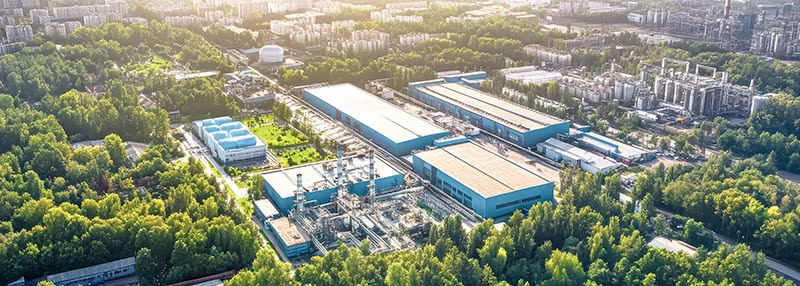
Shandong No.7 Construction Engineering Co., Ltd. is a large-scale modern construction enterprise integrating R&D, design, production, construction and general contracting of steel structures, with business covering both domestic and international markets.