Steel Structure Supplier Selection Guide: How to Choose the Right Partner for Industrial and Commercial Projects
introduction
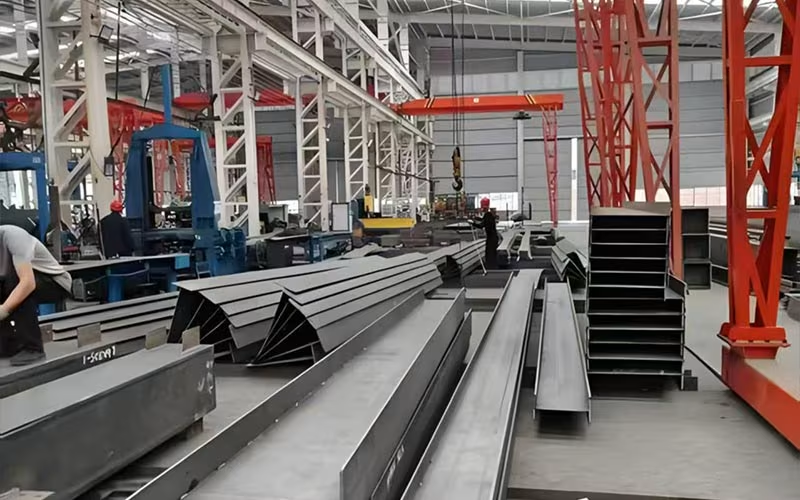
Choosing a steel structure supplier is not only about buying steel components. For industrial, commercial, and large-span projects, the supplier can influence design safety, fabrication accuracy, construction speed, installation efficiency, long-term maintenance, and even whether the building can support future expansion.
Many project owners compare suppliers only by basic drawings or a simple material list. That approach can create serious hidden risks. A steel structure building is a complete engineering system. Columns, beams, bracing, purlins, roof panels, wall panels, bolts, welds, coatings, foundations, cranes, doors, ventilation, and site installation all need to work together.
A reliable steel structure supplier should understand both manufacturing and engineering. The right partner should be able to support structural design coordination, steel fabrication, quality inspection, packing, delivery, installation guidance, project management, and after-sales service.
Shandong No.7 Construction fournit une intégration Solutions de structure en acier for industrial buildings, warehouses, workshops, commercial steel structures, space frames, steel trusses, storage tanks, and gas station construction projects.
Why Supplier Selection Matters in Steel Structure Projects
Steel structure projects often look simple at the quotation stage, but they become complex during execution. A project may involve structural calculation, drawing review, material procurement, cutting, welding, drilling, coating, trial assembly, packing, transportation, foundation coordination, installation sequence, and final inspection.
If the supplier lacks engineering experience, the project may face drawing conflicts, delayed fabrication, wrong hole positions, poor welding quality, coating problems, missing components, unclear installation drawings, or expensive site modifications.
A strong steel structure supplier helps reduce these risks by controlling the full process before the steel reaches the site.
For example, a warehouse project needs column spacing that matches racking and forklift movement. A workshop may need crane beams and stronger foundations. A commercial steel structure may need more coordination with floors, stairs, façades, and fire protection. A large-span roof may require a space frame or truss system instead of a standard portal frame.
That is why supplier selection should begin with project capability, not only product price.
Understand What Type of Supplier You Actually Need
Not every steel structure supplier provides the same level of service. Some companies only sell steel components. Some focus on fabrication. Some provide design support. Others can manage a full engineering project from planning to installation.
Before selecting a supplier, clarify which type of partner your project needs.
| Supplier Type | Main Role | Best-Fit Project Situation |
|---|---|---|
| Component supplier | Supplies steel members or accessories | Small projects with complete engineering support from others |
| Fabrication factory | Manufactures steel according to drawings | Projects with finished design and local installation team |
| Design-fabrication supplier | Supports drawings and production | Customized warehouses, workshops, industrial buildings |
| Engineering contractor | Coordinates design, production, construction, and management | Complex industrial, commercial, or overseas projects |
| One-stop solution provider | Integrates consulting, design, manufacturing, construction, and after-sales | Buyers needing lower coordination risk and stronger project control |
For many B2B buyers, especially overseas project owners, an integrated supplier is more practical. It reduces communication gaps between design, production, shipping, and installation.
Shandong No.7 Construction services page presents a one-stop service model covering R&D and design, production and manufacturing, engineering construction, project management, overseas project services, equipment sales, and after-sales service.
Check Whether the Supplier Understands Your Application
A steel structure supplier should not offer the same building solution for every project. The correct structure depends on building use.
An industrial warehouse may require large open storage areas, loading docks, forklift routes, and future expansion. A manufacturing workshop may need overhead cranes, ventilation, equipment foundations, and safe material flow. A commercial steel structure may require multi-story framing, floor deck coordination, architectural appearance, and stricter serviceability control. A stadium, terminal, exhibition hall, or coal shed may need a large-span space frame or steel truss roof.
Before discussing final specifications, ask the supplier whether they have experience with your application.
Les applications courantes comprennent :
Industrial warehouses, manufacturing workshops, logistics centers, commercial buildings, office buildings, steel structure factories, stadium roofs, exhibition halls, airport or railway station roofs, gas station canopies, storage tank projects, and large-span industrial sheds.
Shandong No.7 Construction provides multiple structural systems, including structure commerciale en acier, Cadre d'espace, and structure en treillis d'acier solutions for different project types.
Evaluate Engineering and Design Support
A strong steel structure supplier should be able to communicate with engineers, understand project loads, review drawings, and identify possible design conflicts before production begins.
Design support is especially important when the project involves:
Large spans, high eaves, overhead cranes, mezzanine floors, heavy equipment, seismic requirements, high wind areas, snow loads, complicated roof systems, multi-story buildings, or overseas installation.
The supplier should understand key design factors such as dead load, live load, wind load, snow load, seismic load, crane load, roof equipment load, bracing arrangement, deflection limits, connection details, and corrosion protection.
For steel design knowledge, project teams often refer to resources from the American Institute of Steel Construction. For metal building system topics, the Metal Building Manufacturers Association also provides useful design resources.
A good supplier will not replace the role of a qualified local engineer when local approval is required. However, it should provide accurate drawings, clear technical communication, and practical design coordination.
Review Fabrication Capacity and Quality Control
Fabrication quality directly affects site installation. Even small errors in cutting, drilling, welding, or labeling can delay the project.
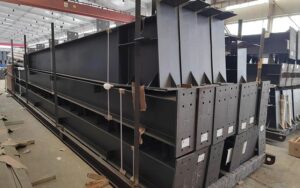
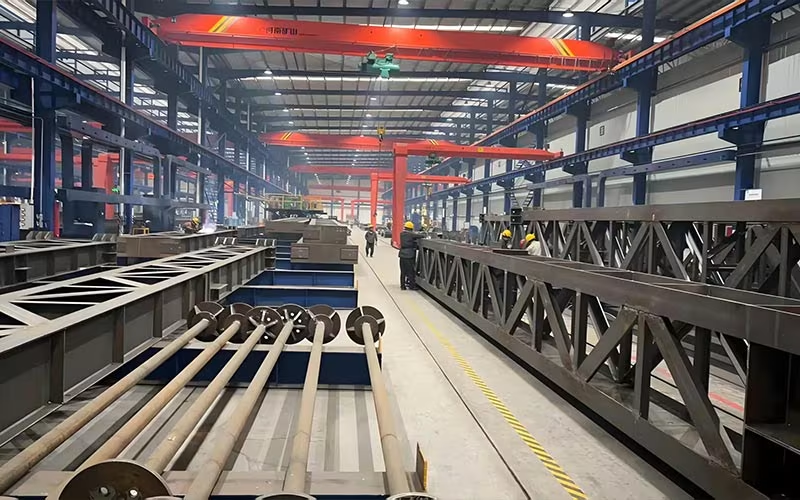
When evaluating a steel structure manufacturer, buyers should check whether the factory has suitable production lines, trained welding teams, inspection procedures, surface treatment capability, and packing control.
Important fabrication quality points include:
Material traceability, steel grade confirmation, cutting accuracy, welding procedure control, weld inspection, hole position accuracy, member straightness, surface preparation, coating thickness, bolt matching, trial assembly when needed, and clear component labeling.
For international projects, labeling and packing are especially important. Components may travel a long distance before reaching the site. If the packing list is unclear or components are not marked properly, the installation team may lose time identifying parts.
Shandong No.7 Construction produits page shows a broad product range, including light steel, heavy steel, space trusses, pipe trusses, metal roof panels, truss floor decks, CZ-shaped steel, storage tanks, steel silos, and gas station structures.
Ask About Surface Treatment and Corrosion Protection
Steel structure durability depends heavily on the operating environment. A dry inland warehouse, a coastal workshop, a chemical plant, a humid storage facility, and a gas station canopy may require different surface protection strategies.
A supplier should help buyers choose a suitable anti-corrosion system based on project use and environment.
Common factors include:
Humidity, coastal salt air, chemical exposure, industrial dust, temperature changes, indoor or outdoor use, maintenance access, coating system, galvanizing requirements, and expected service conditions.
Surface treatment should not be decided at the end of the project. It should be part of early specification planning because it affects fabrication process, delivery schedule, installation method, and long-term maintenance.
Steel is also widely recycled. The World Steel Association explains steel’s role in circular material use, which makes durability, reuse, and efficient design important for long-term sustainability.
Confirm Project Management and Delivery Capability
A steel structure supplier must manage more than manufacturing. For many projects, the bigger challenge is coordination.
The supplier should have a clear process for:
Technical communication, drawing approval, production scheduling, inspection, packing, shipping, installation guidance, issue tracking, and after-sales response.
For overseas steel structure projects, communication becomes even more important. Time zones, language, local code requirements, customs documents, transportation conditions, and site installation teams can all affect the final result.
Before ordering, buyers should ask:
Who is responsible for drawing communication? How are revisions controlled? How is production progress reported? What inspection documents can be provided? How are components labeled? What installation drawings are included? Is technical support available during erection? How are missing or damaged parts handled?
A supplier with strong project management can help reduce uncertainty and improve execution efficiency.
Check Whether the Supplier Can Support Installation
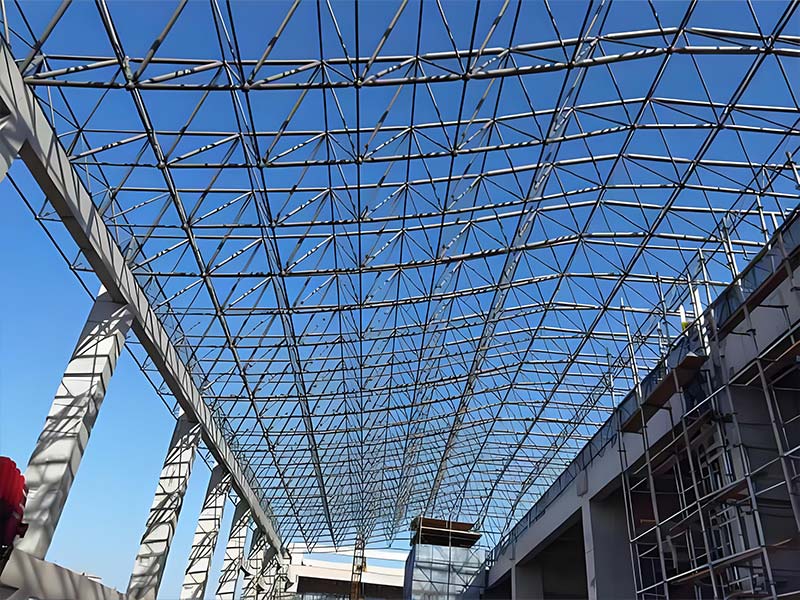
Steel installation is a safety-critical stage. The supplier does not always perform the local erection work, but it should provide clear drawings, installation guidance, component lists, connection details, and technical support.
A practical installation package should include:
General arrangement drawings, anchor bolt layout, column and beam installation sequence, bracing arrangement, purlin and girt layout, bolt specifications, roof and wall panel installation guidance, accessory details, and inspection points.
For workplace safety, project teams can review guidance from the Occupational Safety and Health Administration on steel erection topics. Local safety regulations should always be followed according to the project location.
Installation support is especially important for large-span structures, crane workshops, multi-story steel buildings, gas station canopies, and overseas projects where local teams may need additional technical coordination.
Compare Structural System Options, Not Just Suppliers
A good supplier should help buyers choose the right structural system instead of pushing one standard solution.
Different systems serve different project needs:
| Structural System | Applications courantes | principal avantage |
| Portal frame steel structure | Warehouses, workshops, industrial buildings | Efficient layout and fast installation |
| Heavy steel structure | Crane workshops, heavy industrial plants, multi-story buildings | Higher load-bearing capability |
| Commercial steel structure | Offices, commercial buildings, mixed-use projects | Flexible multi-story structural solution |
| Steel truss structure | Large-span roofs, industrial halls, bridges, public buildings | Strong span performance |
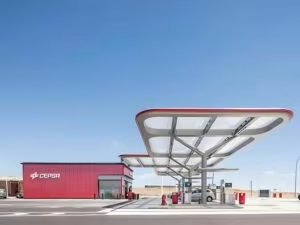
| Space frame structure | Stadiums, terminals, exhibition halls, coal sheds, gas station roofs | Three-dimensional stability for large-span roofs |
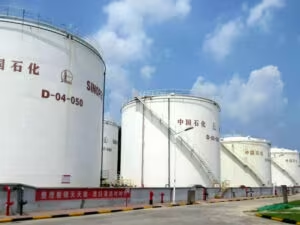
| Storage tank structure | Oil, chemical, water, grain, and industrial storage | Designed for storage performance and corrosion control |
The right structural system should match the span, load, height, function, climate, code requirements, installation condition, and future expansion plan.
Evaluate Experience with Similar Projects
Project experience matters because steel structure projects often involve practical problems that are not obvious in a brochure.
A supplier with similar project experience is more likely to understand common risks such as:
Foundation coordination, crane beam alignment, roof drainage, large door reinforcement, high wind bracing, long-span roof installation, site access limitations, shipping sequence, and future expansion planning.
Buyers should review project cases and ask for examples that are close to their own building type.
Shandong No.7 Construction Cas Qijian page includes examples across steel structure buildings, industrial facilities, public structures, transportation-related projects, overseas projects, and large-span applications.
When reviewing cases, do not only look at photos. Ask what the project required, what structural system was used, what challenges were solved, and whether the supplier provided design, fabrication, installation, or full project service.
Red Flags When Choosing a Steel Structure Supplier
Some warning signs should make buyers cautious.
One red flag is a supplier that provides a quotation without asking about building use, local loads, roof and wall system, crane requirements, foundation conditions, or installation plan.
Another red flag is unclear drawings. If drawings are incomplete or inconsistent, fabrication and installation problems may follow.
A third red flag is weak documentation. For professional projects, buyers may need material certificates, inspection records, coating reports, packing lists, and installation documents.
A fourth red flag is poor communication. If a supplier cannot respond clearly during the quotation stage, communication may become worse during production and installation.
A fifth red flag is no application knowledge. A supplier that treats a warehouse, workshop, commercial building, truss roof, and gas station canopy as the same type of structure may not be suitable for complex projects.
What Information Buyers Should Prepare Before Requesting a Proposal
A steel structure supplier can provide a more accurate and useful solution when the buyer provides clear project information.
Prepare the following before requesting a proposal:
Project location, building use, approximate length and width, required clear height, local wind and snow conditions, seismic requirements, crane requirements, door and window layout, roof and wall panel preference, insulation needs, surface treatment expectation, foundation status, project schedule, installation method, and future expansion plan.
For storage-related projects, also prepare tank medium, capacity, material requirements, operating conditions, and corrosion protection expectations. For fuel station projects, prepare canopy size, station layout, tank system requirements, civil work scope, and equipment integration needs.
Buyers can send project requirements through the Contactez-nous page for technical communication.
Why One-Stop Service Can Reduce Project Risk
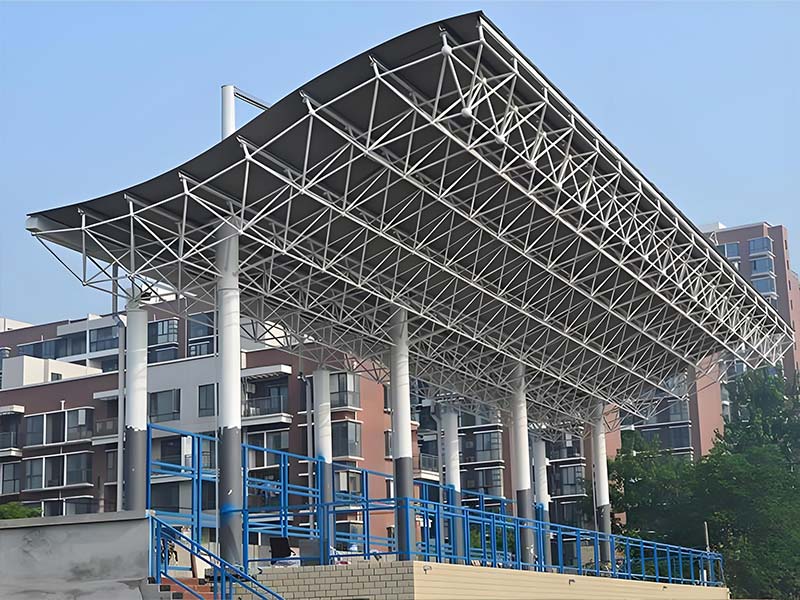
Many steel structure problems are caused by disconnected responsibilities. One company designs the structure, another fabricates it, another ships it, and another installs it. When coordination is weak, small conflicts can become serious site problems.
A one-stop service provider can reduce this risk by connecting design, manufacturing, construction, project management, overseas service, and after-sales support.
This does not mean every project needs the same service scope. Some buyers only need fabrication. Others need design support. Some overseas buyers need a complete project solution. The important point is flexibility.
For industrial owners, commercial developers, and overseas contractors, working with a steel structure supplier that understands the whole project process can improve schedule control and reduce communication pressure.
Conclusion
Choosing a steel structure supplier is a strategic project decision. The right supplier should not only provide steel components but also understand engineering, fabrication, quality control, delivery, installation, and long-term project performance.
Before selecting a supplier, buyers should evaluate application experience, design support, production capacity, quality inspection, surface treatment, project management, delivery planning, installation guidance, and after-sales service.
Shandong No.7 Construction provides steel structure products and integrated engineering services for industrial buildings, commercial buildings, warehouses, workshops, space frames, steel trusses, storage tanks, and gas station construction projects. For buyers planning a new steel structure project, early technical communication can help turn a basic idea into a safer, more practical, and more efficient building solution.
FAQ
What does a steel structure supplier do?
A steel structure supplier provides steel columns, beams, bracing, purlins, roof and wall systems, connection parts, and related technical support. Some suppliers also provide design, fabrication, delivery, installation guidance, and project management.
How do I choose a steel structure supplier?
Choose a supplier based on engineering ability, fabrication quality, project experience, quality control, delivery planning, installation support, and communication. Do not judge only by a basic quotation.
What information should I provide before requesting a steel structure quotation?
You should provide project location, building use, size, clear height, local load requirements, crane needs, door layout, roof and wall preferences, insulation needs, surface treatment requirements, and construction schedule.
What is the difference between a steel structure supplier and a steel structure contractor?
A supplier may focus on materials or fabrication, while a contractor may also support engineering, construction, site coordination, project management, and installation. Some companies provide both supplier and contractor services.
Can a steel structure supplier handle overseas projects?
Yes, some suppliers support overseas projects with design coordination, export packing, shipping documents, installation drawings, technical guidance, and project communication. Buyers should confirm overseas experience before ordering.
Why is fabrication quality important for steel structures?
Fabrication quality affects installation accuracy, structural safety, construction speed, and long-term performance. Cutting, welding, drilling, coating, labeling, and packing must be controlled carefully.
Can one supplier provide steel buildings, trusses, space frames, and storage tanks?
Some integrated steel structure companies can provide multiple product systems, including steel buildings, steel trusses, space frames, storage tanks, steel silos, and gas station structures. Buyers should confirm the supplier’s actual production and project experience.
Should I choose a one-stop steel structure supplier?
A one-stop supplier can reduce coordination risk when the project involves design, fabrication, delivery, installation support, and project management. This is especially useful for industrial, commercial, large-span, and overseas projects.
Continuer la lecture
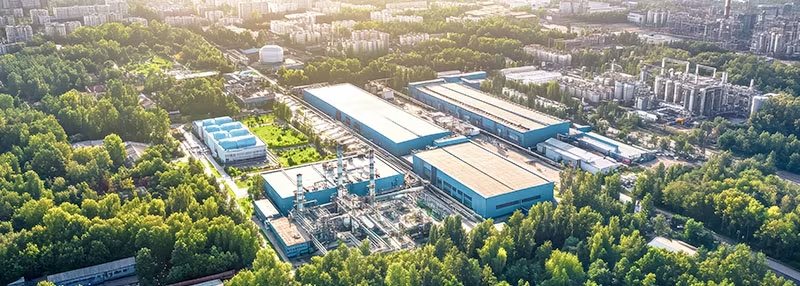
1TP2 T est une entreprise de construction moderne à grande échelle intégrant la R & D, la conception, la production, la construction et la passation de contrats généraux de structures en acier, avec des activités couvrant à la fois les marchés nationaux et internationaux.