Large Span Steel Structure Design Guide: How to Plan Strong, Open, and Efficient Roof Systems
introduction
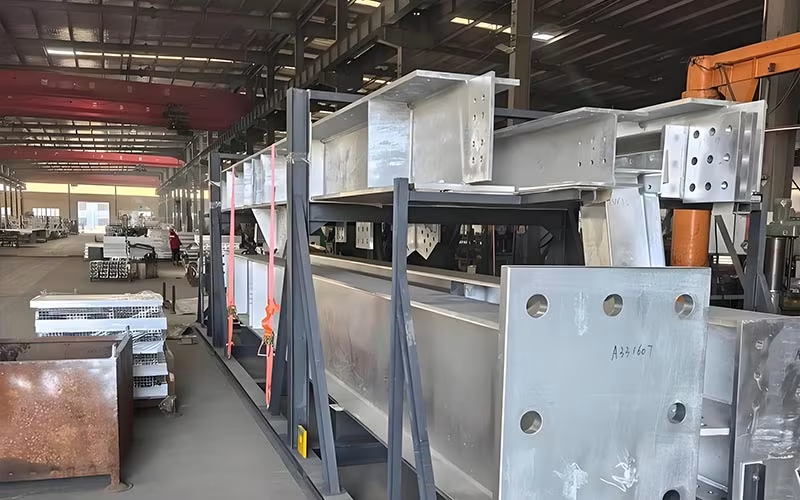
A large span steel structure is used when a building needs wide open space with fewer internal columns. This type of structure is common in stadiums, exhibition halls, industrial plants, coal sheds, logistics centers, airport terminals, railway stations, gas station canopies, and large public buildings.
For project owners, the biggest value of a large span structure is not only the impressive appearance. It is the ability to create open functional space. A warehouse may need wide forklift routes. A coal shed may need unobstructed stockpiling space. A stadium may need clear visibility. An exhibition hall may need flexible booth layouts. An industrial roof may need to cover equipment, conveyors, or production areas without internal supports blocking operations.
However, large span projects are more complex than standard steel buildings. Span length, wind load, snow load, roof weight, deflection control, drainage, installation method, corrosion protection, and maintenance access all need careful planning.
Shandong No.7 Construction fournit une intégration Cadre d'espace, structure en treillis d'acier, and structure d'acier solutions for industrial, commercial, public, and large-span engineering projects.
What Is a Large Span Steel Structure?
A large span steel structure is a structural system designed to cover a wide distance without many intermediate supports. Instead of relying on closely spaced columns, it uses steel frames, trusses, space frames, arches, or other structural systems to transfer loads efficiently.
In practical projects, “large span” does not refer to only one fixed size. The span requirement depends on the building type, local design standards, roof loads, structural form, and project function. For some industrial buildings, a wide portal frame may already be considered large span. For stadiums, terminals, exhibition centers, and coal sheds, the span can be much larger and may require space frame or truss systems.
Common large span applications include:
Industrial workshops, logistics warehouses, coal storage sheds, stadium roofs, exhibition halls, airport terminals, railway station roofs, convention centers, gymnasiums, gas station canopies, dry bulk storage buildings, and public roof systems.
The right design should match the building’s real use, not just the desired span number.
Why Large Span Steel Structures Are Popular in Modern Projects
Large span steel structures are popular because they help buildings become more flexible and more useful. In many projects, columns are not just structural elements; they can become obstacles. They may block storage, equipment movement, seating views, exhibition layouts, truck routes, or crane operation.
Steel is suitable for large span projects because it has high strength, predictable performance, factory fabrication advantages, and flexible connection design. Components can be prefabricated, transported to site, and assembled according to the approved erection plan.
A well-designed large span steel structure can provide:
Open interior space, flexible layout, fast construction, lighter roof systems compared with some traditional alternatives, strong architectural expression, easier future modification in some applications, and efficient prefabrication.
For projects that need both structural performance and construction efficiency, steel is often a practical choice. Technical resources from the American Institute of Steel Construction are useful for understanding structural steel design principles and industry practices.
Main Types of Large Span Steel Structures
Different large span projects require different structural systems. Choosing the correct system is one of the most important decisions in early planning.
| Type de structure | Suitable Applications | principal avantage |
|---|---|---|
| Steel truss structure | Industrial roofs, halls, bridges, stadium roofs, warehouses | Strong span performance with efficient material use |
| Space frame structure | Stadiums, terminals, exhibition halls, coal sheds, gas station canopies | Three-dimensional stability and wide roof coverage |
| Portal frame structure | Warehouses, workshops, industrial buildings | Fast fabrication and practical layout |
| Arch steel structure | Coal sheds, storage buildings, sports halls | Efficient curved load transfer and wide coverage |
| Pipe truss structure | Public buildings, transportation hubs, architectural roofs | Good appearance and strong spatial performance |
| Châssis en acier lourd | Multi-story or high-load industrial buildings | Forte capacité de charge verticale et latérale |
For many large-span roof projects, the final choice is often between a steel truss structure and a space frame structure. Both can perform well, but they solve different project problems.
Space Frame vs Steel Truss: How to Choose
A space frame is a three-dimensional structural system. It distributes loads in multiple directions and is often used for large roof areas where wide coverage, stability, and geometric flexibility are important. It is especially common in stadiums, airport terminals, exhibition halls, railway stations, coal sheds, and gas station canopies.
A steel truss structure usually works along one main direction. It is often suitable for long-span roofs, industrial halls, bridges, workshops, and buildings where load transfer can be organized efficiently along clear structural lines.
| Comparison Item | Cadre spatial | Structure en treillis d'acier |
| Load transfer | Three-dimensional | Mainly directional |
| Best use | Wide roof coverage and complex roof geometry | Long-span roofs and linear structural layouts |
| Appearance | Strong architectural expression | Clean, practical, and efficient |
| installation | Requires careful node and sequence control | Usually easier to understand in repeated bays |
| Common projects | Stadiums, terminals, exhibition halls, coal sheds | Industrial roofs, workshops, halls, bridges |
Shandong No.7 Construction provides both Cadre d'espace and structure en treillis d'acier systems, allowing the project solution to match span, load, architecture, installation conditions, and budget logic.
Start with Function Before Span
A common mistake in large span projects is starting with the span number before understanding the building function. Span is important, but it is only one part of the design.
A stadium roof must consider audience sightlines, lighting, sound systems, drainage, wind effects, and maintenance access. A coal shed must consider storage volume, machinery movement, dust control, corrosion exposure, and ventilation. An exhibition hall must support flexible layouts, hanging loads, fire protection, and public safety. An airport or railway station roof must coordinate structure, architectural appearance, pedestrian flow, and building systems.
Before selecting the large span steel structure system, clarify:
Building use, required clear space, roof shape, local wind and snow loads, suspended equipment, maintenance access, fire safety, drainage direction, installation method, corrosion environment, future expansion, and architectural appearance.
The best structure is not always the one with the longest span. It is the one that supports the building’s function safely and efficiently.
Structural Loads That Must Be Confirmed Early
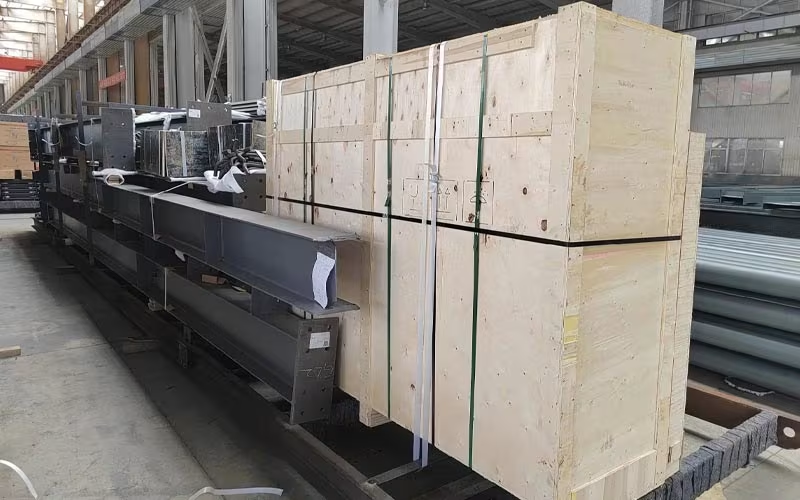
Large span steel structure design is highly sensitive to load assumptions. Small changes in roof load, wind load, snow load, suspended equipment, or maintenance load can influence member size, node design, foundation reaction, and installation method.
Important loads include:
Dead load from steel members, roof panels, insulation, skylights, ceilings, and accessories. Live load from maintenance and temporary use. Wind load based on local climate and building shape. Snow load where applicable. Seismic requirements in earthquake-prone regions. Suspended equipment loads from lighting, ventilation, conveyors, sprinklers, acoustic systems, or signage. Temperature effects and expansion requirements for large roof areas.
For code-related structural load discussions, project teams often refer to the Code international du bâtiment. Final design requirements should always be confirmed according to local regulations, project location, and qualified engineering review.
Roof System Planning for Large Span Buildings
The roof system is critical in large span buildings because a wide roof area collects more rainwater, receives more wind action, and requires more careful waterproofing and drainage planning.
Roof system decisions should include:
Roof slope, drainage direction, gutter capacity, downpipe layout, panel type, insulation, skylight position, ventilation openings, maintenance walkway, roof equipment supports, and waterproof details around penetrations.
A long-span roof with poor drainage can create serious problems. Water accumulation can increase roof load and create leakage risks. In snowy regions, snow drift and uneven snow accumulation should also be considered during structural design.
Metal building system resources from the Metal Building Manufacturers Association can help project teams understand broader design considerations for metal building envelopes and roof performance.
Deflection Control and Serviceability Matter
For large span steel structures, strength is not the only design target. Serviceability is also important. A structure may be strong enough to resist loads but still experience excessive deflection, vibration, roof movement, or visible deformation if serviceability is not properly controlled.
Deflection control affects:
Roof panel performance, waterproofing, ceiling systems, skylights, drainage slope, glass walls, suspended equipment, public comfort, and long-term appearance.
For public buildings such as exhibition halls, terminals, and stadiums, visible roof movement can create concern even when the structure is technically safe. For industrial buildings, excessive deflection may affect cranes, conveyors, doors, or roof drainage.
This is why large span structures require careful engineering review, not only a simple material quotation.
Fabrication Accuracy Is Essential for Large Span Projects
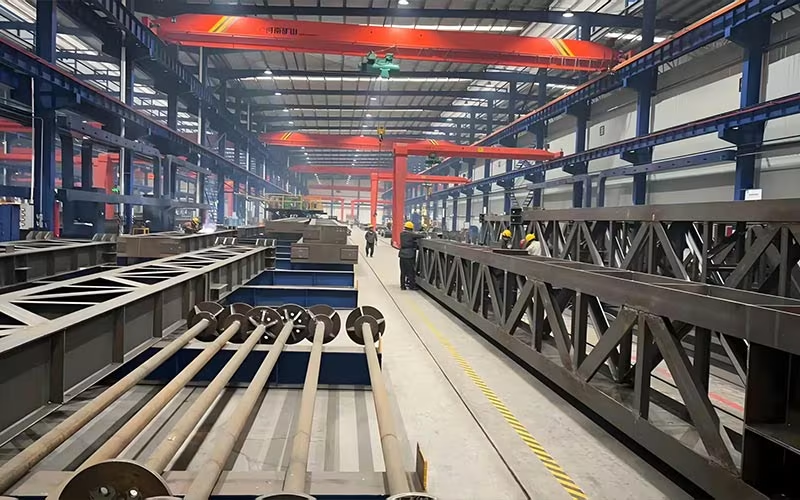
Large span steel structures usually contain many members, nodes, bolts, welds, plates, and connection details. Fabrication accuracy directly affects site assembly.
Key fabrication quality points include:
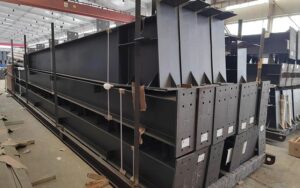
Steel grade confirmation, cutting accuracy, hole positioning, welding quality, node processing, trial assembly when needed, anti-corrosion treatment, component straightness, coating thickness, packing labels, and installation sequence marking.
Space frames and pipe trusses require especially careful node coordination. If holes, plates, or ball nodes are inaccurate, site installation can slow down significantly.
Shandong No.7 Construction Technologie et innovation page introduces its focus on intelligent manufacturing, technical development, green construction, and integrated engineering support.
Installation Planning for Large Span Steel Structures
Large span projects require careful installation planning because the components are often heavy, high, complex, and sensitive to sequence. The erection method should be considered during design, not only after fabrication.
Common installation methods may include:
Ground assembly and lifting, high-altitude assembly, sectional lifting, sliding installation, temporary support towers, crane lifting, hydraulic lifting, or a combined method depending on site conditions.
Installation planning should confirm:
Site access, crane position, lifting weight, temporary support requirements, component storage, assembly area, weather restrictions, safety protection, bolt tightening sequence, welding sequence, alignment checking, and final inspection.
For safety-related steel erection topics, project teams can review the Érection en acier Osha guidance. Local safety rules and qualified site supervision should always be followed.
Corrosion Protection for Large Span Roofs
Large span steel structures are often used in demanding environments. Coal sheds may face dust and humidity. Industrial plants may face chemical exposure. Coastal buildings may face salt air. Gas station canopies may face outdoor weather and fuel-related environmental requirements. Public buildings may require long-term appearance and low maintenance.
Corrosion protection should be selected according to the environment.
Common protection methods include:
Painting systems, hot-dip galvanizing for suitable components, surface preparation, primer and topcoat selection, coating thickness control, maintenance coating, and special anti-corrosion specifications for harsh environments.
Surface treatment should be planned before production because it affects fabrication workflow, delivery schedule, connection details, and long-term maintenance.
Large Span Steel Structure Applications
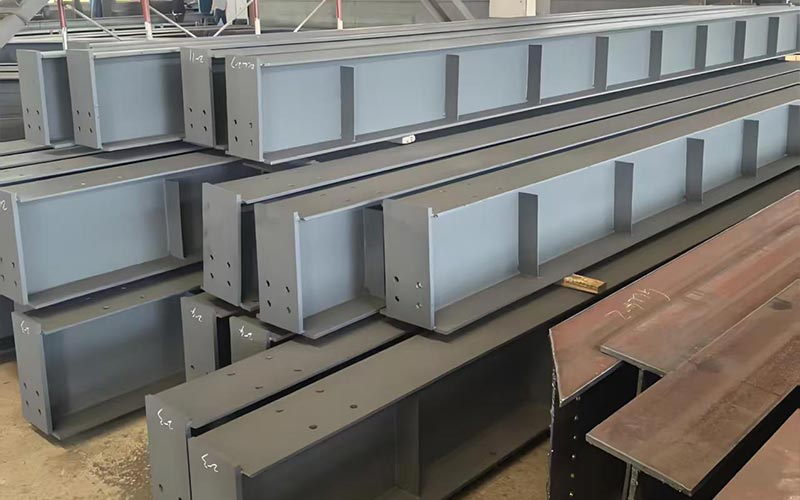
Large span steel structure systems are used across many industries and public projects.
Bâtiments industriel
Industrial buildings often need open internal space for production lines, machinery, conveyors, storage, and vehicle movement. A large span steel structure can reduce internal columns and support more flexible operations.
For industrial projects that need a complete steel building system, Shandong No.7 Construction provides structure d'acier solutions for workshops, warehouses, factories, and industrial facilities.
Coal Sheds and Bulk Material Storage
Coal sheds and dry bulk storage buildings need wide covered areas, dust control, ventilation, corrosion protection, and enough internal space for stacking and machinery movement. Space frame and arch steel structures are often considered for these applications because they can cover large areas with efficient structural forms.
Stadiums and Sports Venues
Stadium roofs need long spans, open views, strong wind resistance, lighting support, drainage, and architectural appearance. Space frames and pipe trusses are commonly used where the roof needs both strength and visual impact.
Exhibition Halls and Convention Centers
Exhibition halls require flexible space with minimal internal obstructions. A large span steel structure allows the interior layout to change for different events, booths, equipment, and public circulation needs.
Airport and Railway Station Roofs
Transportation buildings need wide open circulation areas, high roofs, architectural expression, and coordination with building systems. Space frames and pipe trusses can support these requirements when designed properly.
Gas Station Canopies
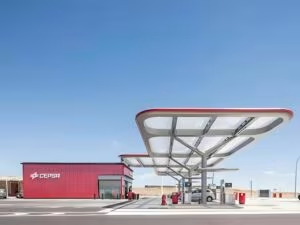
Gas station canopies need clean appearance, weather protection, lighting integration, drainage, and structural reliability. Shandong No.7 Construction provides gas station construction structure solutions covering canopy structures and related project needs.
Project Planning Checklist
Before requesting a large span steel structure proposal, prepare clear project information. This helps the engineering team recommend the right structural system and avoid repeated revisions.
| Information Needed | Pourquoi c'est important |
| Emplacement du projet | Determines wind, snow, seismic, and climate requirements |
| Utilisation du bâtiment | Affects span, load, fire safety, and layout |
| Required span and length | Defines the basic structural system |
| Forme du toit | Influences drainage, wind behavior, and fabrication |
| Local design code | Ensures compliance with project location |
| Suspended loads | Affects roof members and node design |
| Installation site condition | Determines erection method and crane planning |
| Corrosion environment | Affects surface treatment specification |
| Accès à la maintenance | Supports safe long-term inspection |
| Future expansion plan | Helps reserve structural and site flexibility |
Project owners can submit drawings, sketches, site photos, and technical requirements through the Contactez-nous Page.
Erreurs courantes à éviter
One common mistake is selecting a structure only by appearance. A roof may look impressive, but it must still meet load, drainage, installation, maintenance, and budget requirements.
Another mistake is ignoring installation conditions. Some designs are practical in theory but difficult to erect on a crowded site with limited crane access.
A third mistake is underestimating roof drainage. Large roofs collect large amounts of water. Drainage design should be coordinated with structure, roof slope, gutters, and downpipes.
A fourth mistake is not considering suspended equipment. Lighting, ventilation, fire protection, acoustic systems, and signage can add loads that affect structural design.
A fifth mistake is choosing surface protection too late. Corrosion protection must match the environment and should be planned before fabrication.
A sixth mistake is not reviewing long-term maintenance. Large span roofs need inspection access, safe walkways, and clear maintenance planning.
Pourquoi travailler avec un entrepreneur en structure métallique intégrée ?
Large span steel structure projects involve design, fabrication, logistics, installation, project management, and after-sales support. If these parts are handled separately without coordination, the risk of delays and site conflicts increases.
An integrated steel structure contractor can help connect all key stages.
Shandong No.7 Construction provides one-stop engineering services through its services system, including R&D and design, production and manufacturing, engineering construction, project management, overseas project services, equipment sales, and after-sales service.
For large-span projects, this integrated capability is especially valuable because structural design must match fabrication accuracy and installation feasibility.
Sustainability and Long-Term Value
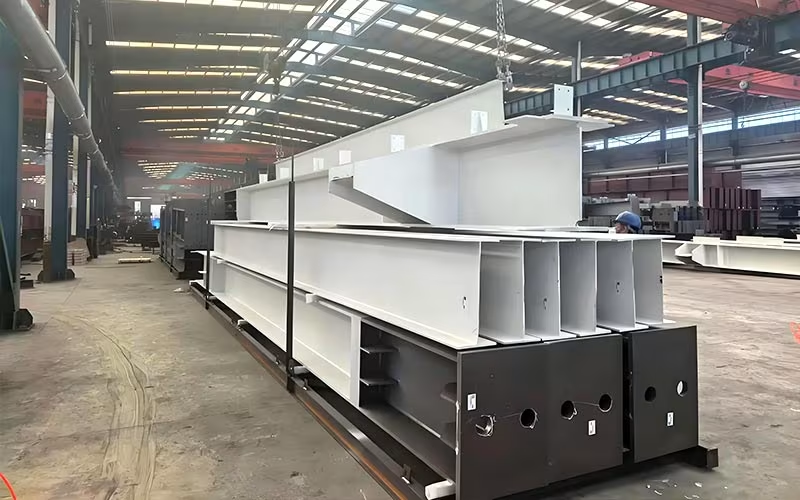
A large span steel structure should be evaluated not only by initial construction efficiency but also by long-term value. A durable, adaptable, and well-maintained steel structure can support many years of operation.
Steel is also widely recognized as a recyclable material. The World Steel Association explains steel’s role in circular material use and recycling. For project owners, sustainability can be improved through optimized design, accurate fabrication, durable coating, efficient roof systems, future adaptability, and planned maintenance.
A large span structure that is designed for durability and flexibility can reduce future modification difficulty and support longer building service life.
Conclusion
A large span steel structure is a practical solution for buildings that require wide open space, strong roof performance, flexible layout, and efficient construction. It is widely used in industrial plants, coal sheds, stadiums, exhibition halls, terminals, logistics buildings, and gas station canopies.
The success of a large span project depends on early planning. Structure type, span, load, roof system, deflection control, fabrication accuracy, corrosion protection, installation method, and maintenance access all need to be coordinated before production begins.
Shandong No.7 Construction provides space frame, steel truss, steel structure, commercial steel structure, storage tank, and gas station construction solutions for domestic and overseas projects. For project owners planning a large span steel structure, early technical communication can help create a safer, stronger, and more buildable roof system.
FAQ
What is a large span steel structure?
A large span steel structure is a steel structural system designed to cover a wide area with fewer internal columns. It is commonly used for stadiums, exhibition halls, coal sheds, terminals, industrial roofs, and large public buildings.
What is the best structure for a large span roof?
The best structure depends on span, load, roof shape, installation condition, and building use. Space frames and steel trusses are common options for large span roof systems.
What is the difference between a space frame and a steel truss?
A space frame transfers loads in three dimensions, while a steel truss usually transfers loads mainly along one direction. Space frames are often used for wide roof coverage, while trusses are practical for long-span roof layouts.
Can large span steel structures be prefabricated?
Yes. Many large span steel structures can be prefabricated in a factory, then delivered and assembled on site. Accurate fabrication, clear labeling, and installation planning are important for successful assembly.
What information is needed before designing a large span steel structure?
Useful information includes project location, building use, required span, roof shape, local wind and snow loads, seismic requirements, suspended equipment, corrosion environment, installation site condition, and future expansion plan.
Are large span steel structures suitable for coal sheds?
Yes. Large span steel structures are commonly used for coal sheds and bulk material storage because they can provide wide covered space with fewer internal supports.
How can corrosion be controlled in large span steel structures?
Corrosion can be controlled through proper surface preparation, suitable coating systems, galvanizing where appropriate, environmental assessment, coating inspection, and planned maintenance.
Why is installation planning important for large span steel structures?
Installation planning is important because large span components are often heavy, high, and complex. Crane access, lifting sequence, temporary supports, site space, and safety measures must be coordinated before erection.
Continuer la lecture
1TP2 T est une entreprise de construction moderne à grande échelle intégrant la R & D, la conception, la production, la construction et la passation de contrats généraux de structures en acier, avec des activités couvrant à la fois les marchés nationaux et internationaux.