Tank Farm Secondary Containment: Practical Industrial Guide
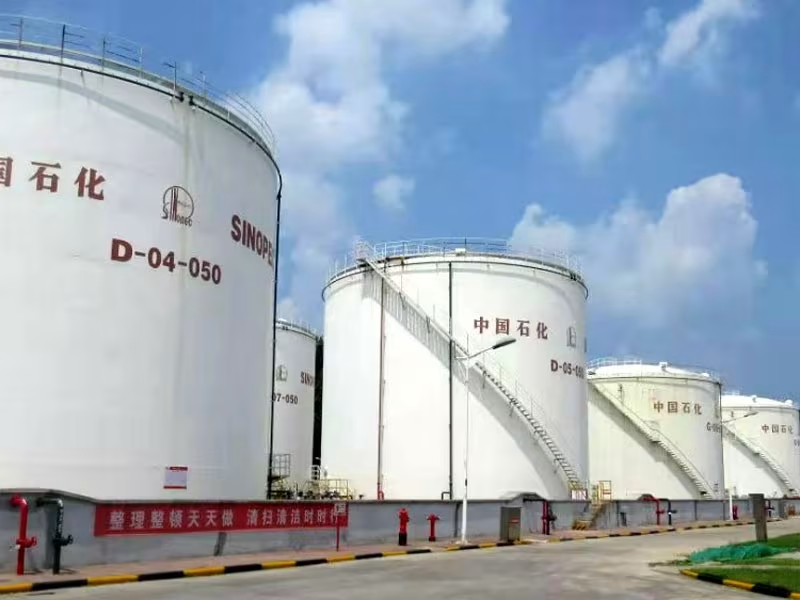
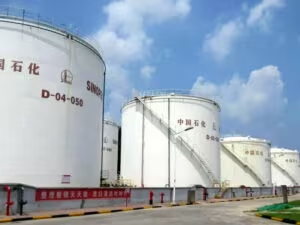
tank farm secondary containment is a coordination task, not a single product decision. Owners and engineering teams need a clear basis that connects operating conditions, structural behavior, safety, construction access, inspection evidence, and long-term maintenance. When those inputs are left implicit, scope gaps tend to surface during fabrication or site work.
This practical guide explains tank farm secondary containment for industrial projects. It provides decision criteria without inventing site data, certifications, or performance promises. Qualified professionals must establish the final design, regulatory compliance, safety controls, and acceptance criteria for the project location.
Define Containment Capacity
For tank farm secondary containment, containment capacity should be treated as a controlled project input. Record the operating case, location, units, responsible reviewer, revision, limitations, and relationship to adjacent systems. Separate confirmed requirements from preliminary allowances so that proposals, calculations, drawings, and site instructions remain comparable.
The review should ask what can deteriorate or change, how the condition will be measured, and who may approve a deviation. Consult API tank inspection information where applicable and connect the result with the site's storage tank solutions. This keeps tank farm secondary containment practical through design, construction, inspection, and maintenance.
Evaluate Bund Geometry
For tank farm secondary containment, bund geometry should be treated as a controlled project input. Record the operating case, location, units, responsible reviewer, revision, limitations, and relationship to adjacent systems. Separate confirmed requirements from preliminary allowances so that proposals, calculations, drawings, and site instructions remain comparable.
The review should ask what can deteriorate or change, how the condition will be measured, and who may approve a deviation. Consult EPA spill prevention guidance where applicable and connect the result with the site's custom industrial tanks. This keeps tank farm secondary containment practical through design, construction, inspection, and maintenance.
Coordinate Floor And Wall Integrity
For tank farm secondary containment, floor and wall integrity should be treated as a controlled project input. Record the operating case, location, units, responsible reviewer, revision, limitations, and relationship to adjacent systems. Separate confirmed requirements from preliminary allowances so that proposals, calculations, drawings, and site instructions remain comparable.
The review should ask what can deteriorate or change, how the condition will be measured, and who may approve a deviation. Consult OSHA confined-space guidance where applicable and connect the result with the site's tank inspection checklist. This keeps tank farm secondary containment practical through design, construction, inspection, and maintenance.
Detail Penetrations And Joints
For tank farm secondary containment, penetrations and joints should be treated as a controlled project input. Record the operating case, location, units, responsible reviewer, revision, limitations, and relationship to adjacent systems. Separate confirmed requirements from preliminary allowances so that proposals, calculations, drawings, and site instructions remain comparable.
The review should ask what can deteriorate or change, how the condition will be measured, and who may approve a deviation. Consult AMPP corrosion information where applicable and connect the result with the site's above-ground tank guide. This keeps tank farm secondary containment practical through design, construction, inspection, and maintenance.
Verify Drainage Isolation
For tank farm secondary containment, drainage isolation should be treated as a controlled project input. Record the operating case, location, units, responsible reviewer, revision, limitations, and relationship to adjacent systems. Separate confirmed requirements from preliminary allowances so that proposals, calculations, drawings, and site instructions remain comparable.
The review should ask what can deteriorate or change, how the condition will be measured, and who may approve a deviation. Consult API tank inspection information where applicable and connect the result with the site's contact the project team. This keeps tank farm secondary containment practical through design, construction, inspection, and maintenance.
Control Rainwater Management
For tank farm secondary containment, rainwater management should be treated as a controlled project input. Record the operating case, location, units, responsible reviewer, revision, limitations, and relationship to adjacent systems. Separate confirmed requirements from preliminary allowances so that proposals, calculations, drawings, and site instructions remain comparable.
The review should ask what can deteriorate or change, how the condition will be measured, and who may approve a deviation. Consult EPA spill prevention guidance where applicable and connect the result with the site's storage tank solutions. This keeps tank farm secondary containment practical through design, construction, inspection, and maintenance.
Inspect Access And Firefighting
For tank farm secondary containment, access and firefighting should be treated as a controlled project input. Record the operating case, location, units, responsible reviewer, revision, limitations, and relationship to adjacent systems. Separate confirmed requirements from preliminary allowances so that proposals, calculations, drawings, and site instructions remain comparable.
The review should ask what can deteriorate or change, how the condition will be measured, and who may approve a deviation. Consult OSHA confined-space guidance where applicable and connect the result with the site's custom industrial tanks. This keeps tank farm secondary containment practical through design, construction, inspection, and maintenance.
Maintain Inspection Records
For tank farm secondary containment, inspection records should be treated as a controlled project input. Record the operating case, location, units, responsible reviewer, revision, limitations, and relationship to adjacent systems. Separate confirmed requirements from preliminary allowances so that proposals, calculations, drawings, and site instructions remain comparable.
The review should ask what can deteriorate or change, how the condition will be measured, and who may approve a deviation. Consult AMPP corrosion information where applicable and connect the result with the site's tank inspection checklist. This keeps tank farm secondary containment practical through design, construction, inspection, and maintenance.
Decision Table
Use this table to turn tank farm secondary containment into traceable project decisions.
| Decision area | Questions to resolve | Evidence to retain |
|---|---|---|
| Define Containment Capacity | What project data, limits, interfaces, and responsible parties apply to containment capacity? | Approved criteria, calculations, drawings, inspection results, and revisions |
| Evaluate Bund Geometry | What project data, limits, interfaces, and responsible parties apply to bund geometry? | Approved criteria, calculations, drawings, inspection results, and revisions |
| Coordinate Floor And Wall Integrity | What project data, limits, interfaces, and responsible parties apply to floor and wall integrity? | Approved criteria, calculations, drawings, inspection results, and revisions |
| Detail Penetrations And Joints | What project data, limits, interfaces, and responsible parties apply to penetrations and joints? | Approved criteria, calculations, drawings, inspection results, and revisions |
Frequently Asked Questions
What should be confirmed before work begins?
Confirm the scope, operating data, governing requirements, responsibilities, interfaces, hold points, and change route. tank farm secondary containment should not proceed from an undocumented assumption.
Who should approve technical changes?
The contract and local rules should identify the qualified authority. Record the reason, assessment, approval, affected documents, and verification within the tank farm secondary containment file.
How should supplier proposals be compared?
Issue the same criteria and request a compliance schedule for assumptions, inclusions, exclusions, performance, documents, inspection, delivery, and maintenance within tank farm secondary containment.
What records should be retained?
Keep approved drawings, calculations, product and material data, inspection results, deviations, repairs, photographs, as-built information, restrictions, and maintenance guidance for tank farm secondary containment.
When should the plan be reviewed?
Review tank farm secondary containment after design revisions, operational changes, damage, abnormal weather, new equipment, altered loading, material substitutions, or unexpected site conditions.
Next Project Steps
Effective tank farm secondary containment connects requirements, engineering, procurement, workmanship, inspection, deviations, and maintenance. Keep the decision trail visible from the first brief through handover, and update it whenever operations or site conditions change.
Shandong No. 7 Construction can discuss project-specific structural and fabrication interfaces. Review the relevant storage tank solutions and contact the project team with confirmed drawings, service data, performance requirements, and documentation expectations for tank farm secondary containment.
Clear drawings, named responsibilities, measurable acceptance criteria, safe access, and complete records help the owner compare proposals and manage work without relying on undocumented assumptions.
Continuer la lecture
1TP2 T est une entreprise de construction moderne à grande échelle intégrant la R & D, la conception, la production, la construction et la passation de contrats généraux de structures en acier, avec des activités couvrant à la fois les marchés nationaux et internationaux.