Top Advantages of Building with Steel Frame Structures for Industrial Projects
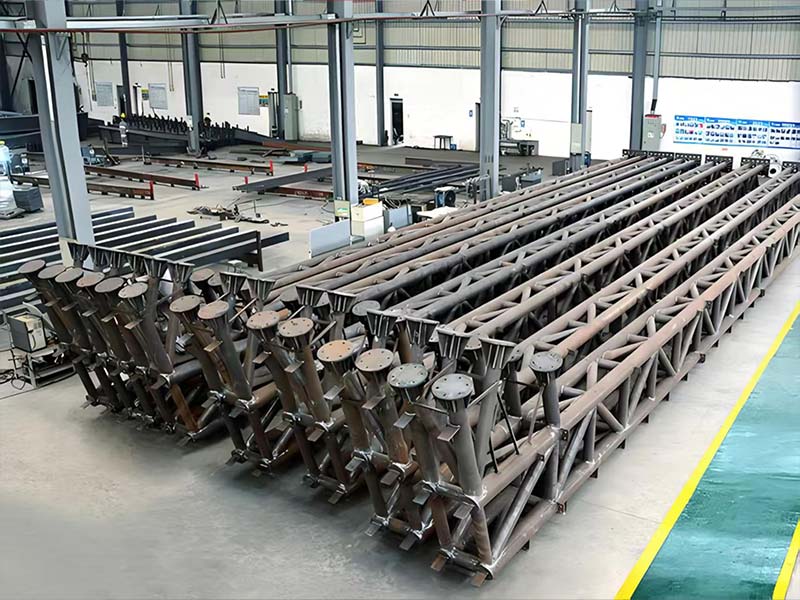
For industrial projects, the building itself is not just a shell. It affects how materials move, how equipment is installed, how workers operate, how future expansion is planned, and how quickly a project can begin serving its purpose. That is why more project owners, contractors, warehouse developers, and factory planners are paying closer attention to building with steel frame structures.
A steel frame building offers more than structural strength. It gives industrial buyers a practical way to create large open spaces, shorten on-site construction work, support customized layouts, and adapt to changing production or storage demands. For warehouses, workshops, manufacturing plants, logistics centers, agricultural buildings, and commercial facilities, steel frame structures can provide a reliable balance between engineering performance and long-term usability.
As a steel frame building manufacturer, we see one common pattern across many projects: buyers are not only asking whether steel is strong. They want to know whether the building can match their workflow, site conditions, local climate, installation schedule, insulation needs, door layout, roof system, and future growth plan. A good steel frame building should answer all of these questions before production begins.
This guide explains the key advantages of building with steel frame structures for industrial projects and what buyers should consider before requesting a custom solution.
Why Industrial Buyers Are Choosing Steel Frame Buildings
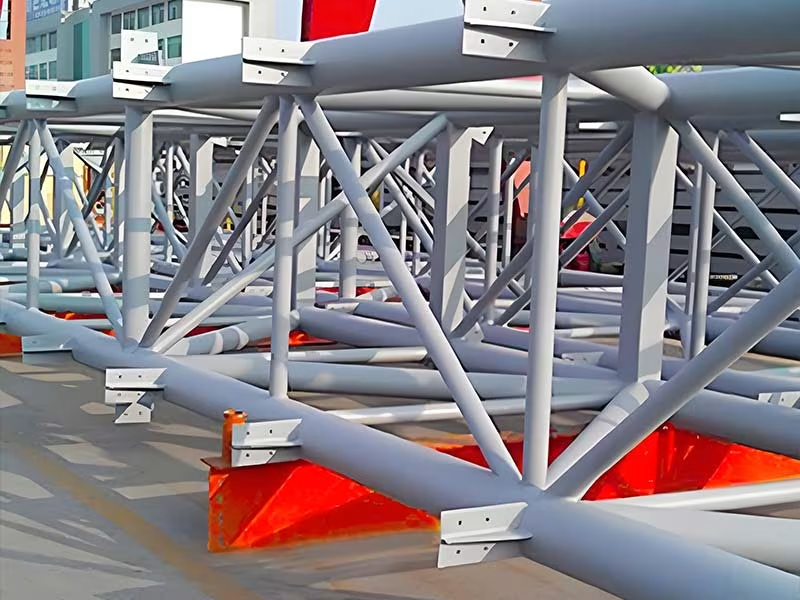
Industrial buildings need to do more than stand upright. They must serve a working environment. A warehouse needs clear movement for forklifts and storage racks. A workshop needs enough height for equipment and ventilation. A factory may need crane beams, mezzanine floors, large access doors, or future extension space.
Steel frame buildings are widely used in these environments because they can be engineered around real operating requirements. Instead of forcing the buyer to adapt the business to the building, a custom steel frame building can be designed around the project.
For many industrial buyers, the appeal comes from several practical advantages:
| Buyer Concern | How a Steel Frame Building Helps |
|---|---|
| Need for large open space | Clear span design can reduce or remove internal columns |
| Fast project delivery | Prefabricated steel components simplify on-site assembly |
| Custom workflow | Size, height, doors, panels, and layout can be adjusted |
| Future expansion | Steel frames can be planned with extension points |
| Heavy-duty use | Structural design can match wind, snow, seismic, and equipment loads |
| Long-term operation | Maintenance can be planned through protective coatings and regular inspections |
This is why steel frame buildings are especially common in warehouses, production facilities, storage centers, workshops, agricultural sheds, logistics hubs, and commercial industrial spaces.
The Real Value Is Not Only Strength
Many articles describe steel as strong, durable, and stable. These points are true, but they do not fully explain why building with steel frame structures matters for industrial buyers. The deeper value is control.
Steel frame construction gives buyers more control over:
- Building span
- Interior layout
- Eave height
- Roof slope
- Wall panel type
- Insulation system
- Door and window placement
- Ventilation planning
- Crane beam requirements
- Expansion direction
- Shipment and installation sequence
For a manufacturer, this matters because every project starts before the steel is fabricated. The correct structure depends on the building purpose, site environment, local design requirements, and the buyer’s operation plan.
A storage building for bulk materials is different from a clean workshop. A logistics warehouse is different from an agricultural machinery shed. A steel frame factory building with overhead cranes requires different structural planning from a simple storage hall. The advantage of steel frame construction is that these differences can be addressed during design and fabrication.
Clear Span Space Makes the Building Easier to Use
One of the strongest reasons to choose a steel frame building is the ability to create wide, open interior space. In many industrial projects, internal columns are a serious limitation. They can interrupt racking systems, block vehicle routes, reduce storage density, and limit equipment layout.
Clear span steel frame buildings solve this problem by transferring loads through the main structural frame, allowing the interior space to remain more open. This is especially useful for:
- Warehouses with high-density storage racks
- Logistics centers with forklift traffic
- Workshops with large machinery
- Vehicle maintenance buildings
- Agricultural storage buildings
- Production facilities that may change layout over time
- Commercial buildings requiring open display or operating areas
For buyers, clear span space is not just a design feature. It affects daily efficiency. A better layout can reduce movement conflicts, make loading easier, improve visibility, and allow future changes without major structural disruption.
When planning a steel frame warehouse building, clear span requirements should be discussed early. The buyer should confirm the desired width, internal column preference, rack height, door location, and whether future equipment or automation systems may be added.
Prefabricated Components Help Reduce On-Site Complexity
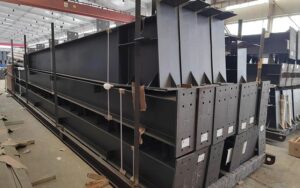
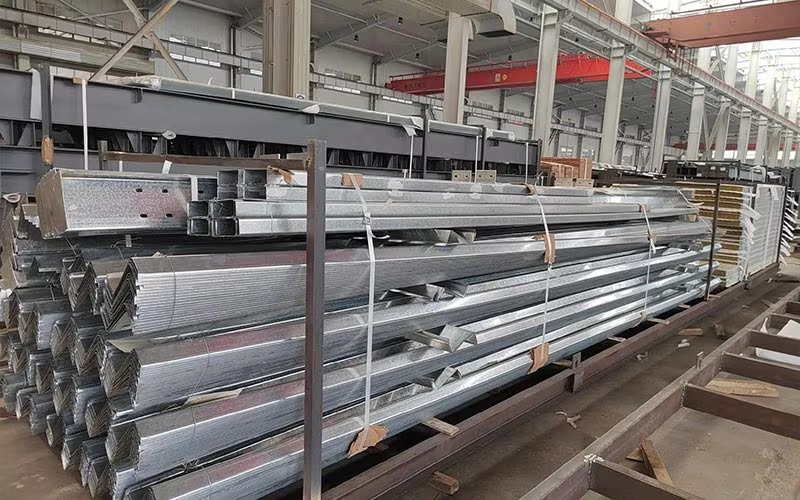
Another major advantage of building with steel frame structures is prefabrication. In a prefabricated steel frame building, major structural components are manufactured in the factory according to approved drawings. These components may include steel columns, beams, bracing, purlins, girts, connection plates, bolts, roof panels, wall panels, and accessories.
This approach helps industrial projects in several ways.
First, it reduces the amount of complex fabrication required on site. Instead of cutting, drilling, and preparing every component during construction, the site team receives components that are produced according to a planned system.
Second, it improves coordination. Each component can be marked, packed, and shipped according to installation needs. This is especially important for export projects where missing parts, unclear markings, or poor packaging can delay construction.
Third, it helps maintain consistency. Factory production allows the manufacturer to control cutting, welding, drilling, surface treatment, and dimensional checks before delivery.
For buyers, prefabrication does not mean the project is “one-size-fits-all.” A good prefabricated steel building is still customized. The difference is that customization happens through engineering and fabrication before the structure reaches the site.
Steel Frame Buildings Support Faster Project Progress
Industrial projects often have strict timelines. A warehouse may need to start receiving goods by a certain season. A factory expansion may need to connect with equipment delivery. A logistics project may be tied to lease agreements, tenant schedules, or operational deadlines.
Steel frame buildings are often preferred because the construction process can be more predictable when the design, fabrication, packaging, and installation plan are properly coordinated.
The general process usually includes:
- Project requirement collection
- Preliminary structural design
- Drawing confirmation
- Material preparation
- Cutting, welding, drilling, and surface treatment
- Trial checks and quality inspection
- Packing and loading
- Site foundation preparation
- Steel frame installation
- Roof, wall, door, and accessory installation
This sequence allows factory production and site preparation to be planned together. While the foundation is being prepared on site, the steel components can be fabricated in the workshop. That parallel workflow is one reason many buyers consider steel frame construction for time-sensitive industrial buildings.
However, speed depends on more than the material. It also depends on complete project information, accurate drawings, clear communication, and proper installation planning. A professional manufacturer should help the buyer clarify these details before production starts.
Custom Design Is a Major Advantage for Industrial Use
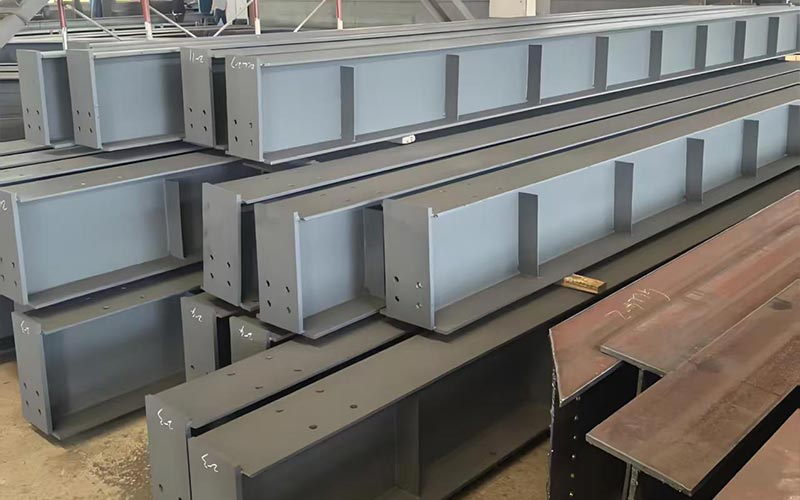
Industrial buildings rarely have identical requirements. Even two warehouses with the same floor area may need different structural designs if their storage height, door layout, wind load, insulation requirements, or expansion plan is different.
A custom steel frame building can be adjusted around the buyer’s specific project. Customization may include:
- Building length, width, and height
- Clear span or multi-span design
- Roof slope and drainage direction
- Wall and roof panel selection
- Insulated sandwich panel options
- Skylights or natural lighting systems
- Ventilation louvers or exhaust systems
- Roller shutter doors or sliding doors
- Crane beams for workshops
- Mezzanine floors for offices or storage
- Anti-corrosion surface treatment
- Fire protection requirements
- Future expansion design
This is where the manufacturer’s role becomes important. A buyer may only provide a simple drawing or project idea at the beginning. The manufacturer needs to translate that information into a buildable steel structure solution.
A good design conversation should not only ask, “What size building do you need?” It should also ask:
- What will the building be used for?
- What equipment will operate inside?
- Will forklifts, trucks, or cranes enter the building?
- What is the required clear height?
- Are there local wind, snow, or seismic requirements?
- Do you need insulation or temperature control?
- Will the building be expanded later?
- What type of wall and roof system is preferred?
- Are there special door, window, or ventilation requirements?
These questions help avoid design changes after fabrication has started.
A Steel Frame Building Can Improve Warehouse Efficiency
Warehouse projects are among the most common applications for steel frame buildings. The reason is simple: warehouses need usable space.
In a warehouse, every meter of space affects storage capacity, material flow, and daily operating efficiency. Poor column placement can reduce rack efficiency. Insufficient height can limit vertical storage. Poor door planning can slow loading and unloading. Inadequate ventilation or insulation can affect stored goods.
A steel frame warehouse building can be planned around these operational needs. For example:
| Warehouse Requirement | Recommended Design Focus |
|---|---|
| High storage racks | Higher eave height and clear internal planning |
| Forklift operation | Wider routes and fewer internal obstacles |
| Loading and unloading | Proper door size and dock position |
| Temperature-sensitive goods | Insulated panels and sealing details |
| Future storage growth | Expandable frame direction |
| Heavy roof loads | Engineering based on local snow and wind conditions |
| Long-term operation | Corrosion protection and maintenance access |
For warehouse buyers, the best steel frame building is not always the largest one. It is the one that supports the storage system, movement route, safety requirements, and future business plan.
Steel Frame Factory Buildings Need More Than a Strong Structure
Factory buildings have more technical requirements than simple storage buildings. A steel frame factory building may need to support production equipment, worker movement, ventilation systems, crane operation, and utility lines.
Before designing a steel frame factory building, buyers should consider:
- Equipment layout
- Production flow
- Raw material entry
- Finished goods exit
- Worker access routes
- Crane or lifting requirements
- Ventilation and exhaust
- Lighting requirements
- Fire safety planning
- Maintenance access
- Noise and heat control
- Office or mezzanine areas
For example, a workshop with overhead cranes requires careful structural design for crane beams, column strength, and lateral stability. A manufacturing plant with heat-producing equipment may need better roof ventilation. A facility with large machinery may require wider doors, reinforced foundations, and higher clear height.
This is why steel frame factory buildings should not be treated as generic metal buildings. They should be designed as production spaces.
Long-Term Adaptability Matters More Than Many Buyers Expect
Industrial businesses change. A warehouse may add automation. A factory may install new machines. A workshop may need more space. A storage building may later become a processing area.
Steel frame buildings are valuable because they can be planned for future adaptation. The building can be designed with extension possibilities, reserved connection points, removable wall sections, or layout flexibility.
This does not mean every steel frame building can be expanded without planning. Future expansion must be considered early. Buyers should tell the manufacturer whether they may extend the building length, add side structures, install heavier equipment, or change the internal layout later.
For long-term projects, future adaptability can be more valuable than short-term savings. A building that cannot grow with the business may become a limitation. A well-planned steel frame structure can support both current use and future changes.
Maintenance Is Easier When the Building Is Designed Correctly
Steel frame buildings are often described as low-maintenance, but this should be understood correctly. No industrial building is maintenance-free. Roof systems, wall panels, bolts, coatings, gutters, doors, and sealants all need regular inspection.
The advantage of steel frame construction is that maintenance can be planned clearly. Protective coatings, galvanized components, drainage design, corrosion-resistant fasteners, and proper ventilation all help improve long-term performance.
A practical maintenance plan should include:
- Checking roof panels and fasteners
- Inspecting gutters and drainage systems
- Looking for scratches or coating damage
- Checking bolts and connections
- Inspecting wall panel joints
- Monitoring condensation or ventilation issues
- Keeping corrosive materials away from exposed steel
- Repairing damaged paint or protective layers promptly
For coastal, chemical, agricultural, or high-humidity environments, corrosion protection should be discussed before production. The same steel frame building can perform very differently depending on surface treatment, panel selection, ventilation, and maintenance habits.
Energy Performance Depends on the Whole Building System
Some buyers assume that a steel frame building is either “hot” or “cold” by nature. In reality, energy performance depends on the complete building envelope.
A steel frame building can be designed with insulated roof panels, insulated wall panels, vapor barriers, ventilation systems, daylighting, sealing details, and reflective roof options. These elements can help improve indoor comfort and reduce energy waste.
Important energy-related design factors include:
- Roof insulation
- Wall insulation
- Thermal bridging control
- Ventilation planning
- Door sealing
- Skylight placement
- Roof color and reflectivity
- Interior temperature requirements
- Moisture and condensation control
For warehouses, insulation may protect stored goods and improve working conditions. For workshops, ventilation and heat control may matter more. For cold storage or temperature-sensitive spaces, the panel system and sealing details become critical.
A manufacturer should help buyers choose a building system based on actual use, not just appearance.
Building with Steel Frame Can Support Cleaner Project Planning
Steel frame construction can also support more efficient material use. Because components are designed and fabricated according to drawings, material planning can be more controlled than many site-built methods. Off-site fabrication can help reduce random cutting, repeated modification, and unnecessary waste at the construction site.
Steel also has strong reuse and recycling potential. In many construction discussions, steel is valued because structural components can be recycled and, in some cases, reused when design and dismantling conditions allow it. For industrial buyers, this adds another layer of long-term value.
However, sustainability should not be written as a simple slogan. A responsible steel frame building project should consider:
- Accurate design to reduce material waste
- Proper coating to extend service life
- Efficient packing to reduce transport damage
- Durable roof and wall systems
- Adaptable layouts to avoid early demolition
- Maintenance planning to extend building use
A long-lasting building is often the most responsible building. If the structure can serve the business for many years and adapt to new needs, it creates value beyond the first construction phase.
The Main Cost Factors Buyers Should Understand
Although this article does not include specific prices, buyers should understand what affects the overall investment in a steel frame building. Many project delays happen because buyers request a quote with incomplete information. A reliable quotation needs more than building length and width.
Key cost factors usually include:
| Factor | Why It Matters |
|---|---|
| Building size | Affects steel quantity, panels, foundation, and transport planning |
| Span and height | Larger spans and higher buildings may require stronger frames |
| Wind, snow, and seismic requirements | Local loads influence structural design |
| Roof and wall system | Panel type affects insulation, durability, and indoor performance |
| Surface treatment | Paint or galvanizing may be selected based on environment |
| Doors and windows | Quantity, size, and type affect usability and structure |
| Crane beam or mezzanine | Adds structural requirements |
| Insulation needs | Important for temperature control and energy performance |
| Packaging and shipping | Critical for export and long-distance projects |
| Installation support | Drawings, part markings, and technical guidance affect site progress |
The most accurate way to evaluate a steel frame building project is to provide complete project information. A low initial estimate without structural details may lead to changes later. For industrial buyers, clarity at the beginning is more valuable than a fast but incomplete quote.
Steel Frame vs. Traditional Construction: What Buyers Should Compare
The decision should not be framed as “steel is always better.” Different building methods serve different project conditions. A practical comparison should focus on the project’s use, schedule, site, span, expansion plan, and operating needs.
Steel frame buildings are often strong candidates when the project requires:
- Large open interior space
- Faster construction progress
- Flexible door and equipment layout
- Future expansion
- Factory-fabricated components
- Industrial-grade durability
- Custom roof and wall systems
- Exportable building components
- Clear installation drawings
Traditional construction may still be preferred in some projects depending on local labor, building codes, architectural requirements, or owner preference. The right choice depends on what the building needs to do.
For warehouses, workshops, logistics centers, factories, and agricultural buildings, steel frame construction is often attractive because it combines structural performance with practical adaptability.
How Manufacturers Customize Steel Frame Buildings
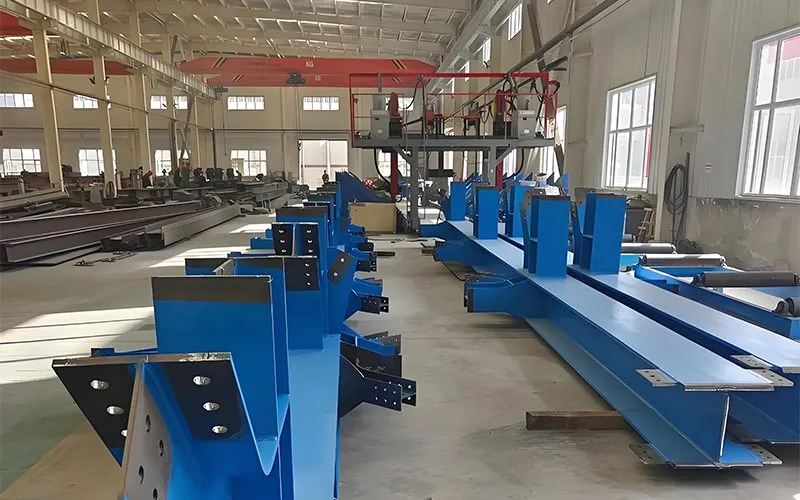
As a manufacturer, the work does not begin with cutting steel. It begins with understanding the buyer’s project. The building must be turned from an idea into a structural system that can be fabricated, packed, shipped, and assembled.
A typical customization process includes:
Requirement Review
The manufacturer collects basic project information, including building use, size, location, design load requirements, panel preference, insulation needs, door layout, and any special equipment requirements.
Structural Design
Engineers design the main frame, secondary structure, bracing system, roof system, wall system, and connection details based on project conditions.
Drawing Confirmation
The buyer reviews drawings before production. This stage helps confirm dimensions, openings, frame layout, roof slope, and important accessories.
Fabrication
Steel components are cut, welded, drilled, assembled, and surface-treated according to approved drawings.
Quality Inspection
Dimensional checks, welding checks, hole position checks, surface treatment checks, and packing checks help ensure the components match the project requirements.
Packing and Delivery
Components are marked and packed for transport. For export projects, packing must consider loading sequence, container space, protection, and easy identification during installation.
Installation Support
The manufacturer may provide installation drawings, component markings, bolt lists, layout plans, and remote technical support to help the site team assemble the building correctly.
This process is especially important for buyers who are importing steel frame buildings from overseas. Clear documents, accurate markings, and complete accessory supply can reduce delays during installation.
What Buyers Should Prepare Before Requesting a Quote
A complete inquiry helps the manufacturer provide a more accurate solution. Before requesting a steel frame building quote, buyers should prepare the following information:
- Building purpose: warehouse, workshop, factory, agricultural building, commercial building
- Building dimensions: length, width, height, and eave height
- Project location or local design standards
- Wind load, snow load, and seismic requirements if available
- Roof and wall panel preference
- Insulation requirement
- Door and window quantity, size, and position
- Crane beam or mezzanine needs
- Ventilation, skylight, or lighting requirements
- Surface treatment preference
- Foundation condition if known
- Drawings, sketches, or reference images
- Expected delivery and installation plan
If some details are not available, the buyer can still start with basic information. A professional manufacturer can help clarify the missing points step by step.
Common Mistakes to Avoid When Planning a Steel Frame Building
A steel frame building project becomes easier when planning is done correctly. Many problems can be avoided before production begins.
Choosing Only by Initial Cost
A steel frame building is a structural product, not a simple commodity. Buyers should compare design, material standards, fabrication quality, coating, accessories, packing, and support, not just the initial quote.
Ignoring Local Environmental Loads
Wind, snow, seismic conditions, and local codes can significantly affect structural design. These factors should be confirmed early.
Underestimating Height Requirements
Some buyers focus on floor area but forget clear height. Storage racks, trucks, cranes, ventilation systems, and machinery may all require additional height.
Planning Doors Too Late
Door size and position affect structure, traffic flow, loading efficiency, and wall layout. Door planning should be included in the first design stage.
Forgetting Future Expansion
If the building may be extended later, the frame direction, end wall design, and connection details should be planned in advance.
Treating Insulation as an Afterthought
For temperature-sensitive goods, working comfort, or energy efficiency, insulation should be designed with the roof and wall system, not added casually later.
Providing Incomplete Inquiry Information
Incomplete project details often lead to repeated revisions. Clear information helps the manufacturer provide better drawings, better quotations, and better production planning.
Is Building with Steel Frame Right for Your Project?
Building with steel frame structures is especially suitable for industrial buyers who need a practical, customizable, and scalable building solution. It is a strong option when the project requires wide interior space, efficient installation, flexible layout, and long-term usability.
It is particularly suitable for:
- Warehouses
- Factories
- Workshops
- Logistics centers
- Agricultural buildings
- Machinery storage buildings
- Commercial industrial spaces
- Production and assembly facilities
- Export construction projects
- Buildings requiring future expansion
The key is to work with a manufacturer that understands both fabrication and project use. A steel frame building should not be designed only on paper. It should be designed around the way the buyer will actually use the space.
Practical Buyer Checklist
Before finalizing a steel frame building order, buyers can use this checklist:
| Checklist Item | Confirmed |
|---|---|
| Building use is clearly defined | |
| Length, width, and height are confirmed | |
| Clear span requirement is confirmed | |
| Wind, snow, and seismic needs are reviewed | |
| Roof and wall panel options are selected | |
| Insulation requirement is discussed | |
| Door and window layout is planned | |
| Crane beam or mezzanine needs are confirmed | |
| Surface treatment is selected for the environment | |
| Future expansion direction is considered | |
| Installation drawings and support are included | |
| Packing and shipping plan is reviewed |
This checklist can help buyers avoid unclear requirements and reduce project revisions.
Conclusion
Building with steel frame structures is not only about using a strong material. For industrial projects, it is about creating a building that supports real operations: storage, production, movement, equipment, safety, maintenance, and future growth.
A well-designed steel frame building can provide open interior space, flexible customization, efficient installation, long-term adaptability, and better control over project planning. Whether the project is a warehouse, factory, workshop, logistics center, agricultural building, or commercial industrial facility, the right steel frame solution should begin with clear requirements and professional engineering support.
For buyers, the best result comes from working directly with a manufacturer that understands design, fabrication, packing, delivery, and installation support. With the right project information, a custom steel frame building can become more than a structure. It can become a reliable foundation for long-term business growth.
FAQ
What is building with steel frame?
Building with steel frame means using steel columns, beams, bracing, purlins, and other structural components as the main load-bearing system of a building. It is commonly used for warehouses, factories, workshops, agricultural buildings, and commercial industrial projects.
Why are steel frame buildings popular for industrial projects?
Steel frame buildings are popular because they can provide large open spaces, flexible layouts, factory-made components, efficient installation, and long-term adaptability. These advantages are especially useful for warehouses, workshops, and production facilities.
Can a steel frame building be customized?
Yes. A steel frame building can be customized by size, span, height, roof system, wall panels, insulation, doors, windows, ventilation, surface treatment, crane beams, mezzanine floors, and future expansion requirements.
What information is needed for a steel frame building quote?
Buyers should provide the building use, dimensions, project location, wind and snow load requirements, roof and wall panel preferences, door and window layout, insulation needs, and any crane beam or mezzanine requirements.
Is a steel frame building suitable for warehouses?
Yes. Steel frame buildings are widely used for warehouses because they can provide clear span space, high ceilings, flexible door placement, efficient storage layouts, and expansion possibilities.
Continue reading
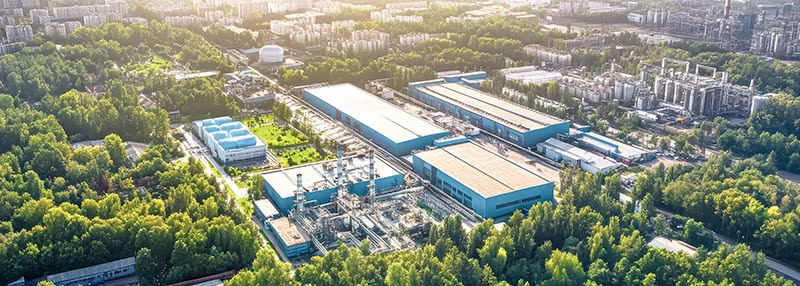
Shandong No.7 Construction Engineering Co., Ltd. is a large-scale modern construction enterprise integrating R&D, design, production, construction and general contracting of steel structures, with business covering both domestic and international markets.