Le guide ultime de la construction de châssis en acier pour un usage résidentiel et commercial
introduction
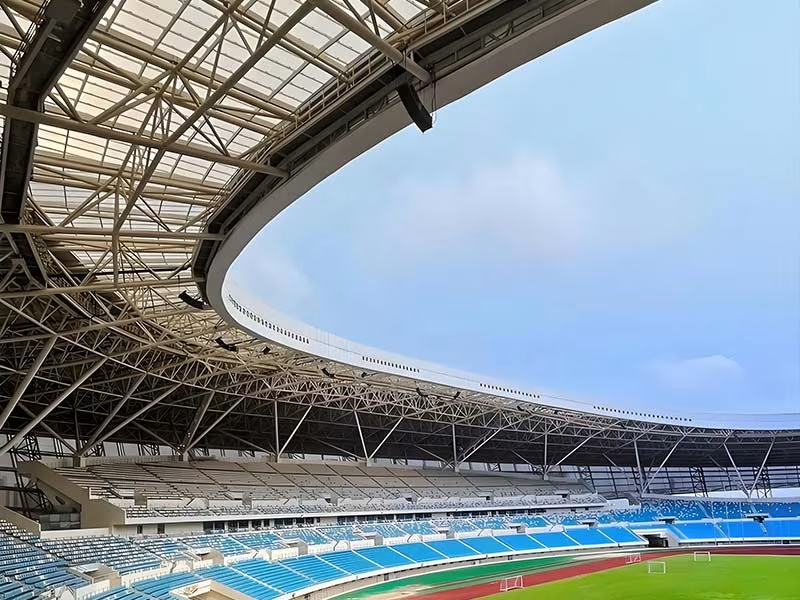
Steel frame construction has transformed the modern building industry, offering architects, contractors, and property owners a versatile structural solution that combines exceptional strength with design flexibility. Unlike conventional building materials, structural steel provides a perfect balance of durability, sustainability, and cost-effectiveness that meets the demands of today's construction projects.
From single-family homes to high-rise commercial complexes, steel frame construction has become the preferred choice for developers seeking faster project completion without compromising structural integrity. Manufacturers specializing in steel structure construction have invested heavily in advanced fabrication technologies, enabling the production of precision-engineered components that ensure consistent quality across every project.
The widespread adoption of steel framing systems stems from their ability to address critical challenges in contemporary construction: tight project timelines, stringent building codes, environmental sustainability requirements, and the growing need for resilient structures capable of withstanding extreme weather events. This comprehensive guide explores every aspect of steel frame construction, from fundamental principles to advanced manufacturing processes, helping you understand why this building method continues to dominate the industry.
What Is Steel Frame Construction and How Does It Work?
Steel frame construction is a building methodology that uses structural steel components—including steel beams, columns, and connectors—to create the primary load-bearing framework of a structure. This system transfers all building loads through a network of steel elements designed to resist various forces, including gravity, wind, seismic activity, and thermal stresses.
The working principle behind steel frame construction relies on the inherent strength of steel and its ability to be fabricated into various shapes and sizes. Engineers create detailed structural models that calculate load paths, determining the optimal placement and sizing of each steel member. Once fabricated in controlled factory environments, these components are transported to construction sites for assembly using bolts, welds, or specialized connectors.
Modern steel framing systems utilize either hot-rolled structural steel for heavy-duty applications or cold-formed light gauge steel for lighter loads. Hot-rolled steel undergoes processing at high temperatures, producing thick-walled sections ideal for columns and primary beams. Cold-formed steel, created by shaping room-temperature steel sheets through rollers, produces lighter profiles perfect for residential framing and interior partitions.
The collaboration between structural engineers, steel fabricators, and on-site construction teams ensures that every steel frame structure meets precise specifications. Quality control measures at each stage—from design calculation to final installation—guarantee that completed buildings perform as intended throughout their operational life.
Core Components of Steel Frame Structures
Structural Steel Beams
Structural steel beams form the horizontal spanning elements of a steel frame, carrying loads from floors, roofs, and walls to the vertical support members. I-beams (also called universal beams or W-sections) represent the most common beam type, featuring a cross-sectional shape that efficiently resists bending forces while minimizing material usage.
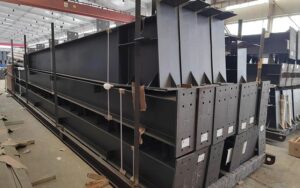
Modern beam fabrication employs computer-controlled cutting and welding equipment to create custom shapes that meet specific project requirements. Steel fabricators produce standard I-beams in various sizes, but many projects require custom-built fabricated beams with integrated plates, copes, or stiffeners for enhanced performance.
The selection of appropriate beam sizes and steel grades depends on calculated span lengths, anticipated loads, and deflection limitations. Engineers specify beams using standardized designations—such as W12x26, indicating a 12-inch depth weighing 26 pounds per linear foot—that simplify procurement and ensure consistent structural performance across different manufacturers.
Columns and Load-Bearing Elements
Steel columns serve as the vertical backbone of steel frame construction, transferring loads from beams and slabs down to the building foundation. These compression members must resist both axial loads (direct compression) and moments (bending forces) depending on their connection details and structural role.
Common column types include wide-flange columns, HSS (hollow structural sections) columns, and built-up columns fabricated from multiple steel plates. HSS columns offer advantages in architectural applications where exposed steel columns contribute to aesthetic design, while wide-flange columns provide superior moment resistance for frames subject to lateral loads.
Column base plates distribute concentrated column loads across concrete foundations, requiring careful attention to bearing stresses and anchor bolt design. Splices connect column segments when building heights exceed standard mill lengths, typically occurring at accessible floor levels where connection details can accommodate the necessary strength.
Steel Framing Systems and Connectors
Steel framing systems encompass the complete network of beams, columns, braces, and connectors that create a building's structural skeleton. Connection design significantly influences frame behavior, determining whether the structure acts as a moment-resisting frame (where beam-column connections restrain rotation) or a braced frame (where diagonal braces provide lateral stability).
Bolted connections remain the most common assembly method, allowing controlled, inspectable joints that facilitate erection and future modifications. High-strength bolts tightened to specified pretension levels develop clamp force between connected elements, transferring loads through friction or bearing mechanisms depending on connection geometry.
Welded connections provide continuous structural paths ideal for moment frames and architectural exposures. Fabricators perform welding operations in controlled shop environments using qualified procedures and certified welders, ensuring consistent joint quality that exceeds field welding standards. Common welding processes include shielded metal arc welding (SMAW), gas metal arc welding (GMAW/MIG), and flux-cored arc welding (FCAW).
Steel Frame Construction Process
Design and Engineering Planning
The steel frame construction process begins long before any steel is cut, with comprehensive design and engineering phases that establish the foundation for successful project delivery. Structural engineers work closely with architects and project stakeholders to develop designs that balance aesthetic objectives, functional requirements, and budget constraints.
Building information modeling (BIM) has revolutionized steel frame design, enabling three-dimensional visualization and coordination across all project disciplines. BIM models contain parametric information about each steel component, facilitating automated drawing generation, accurate quantity takeoffs, and seamless integration with fabrication equipment.
Design development includes detailed connection design, fire protection strategy selection, and coordination with mechanical, electrical, and plumbing systems. Engineers prepare construction documents specifying steel grades, dimensions, surface treatments, and special requirements that guide fabrication operations.
Fabrication and Prefabrication of Steel Components
Steel fabrication transforms raw steel materials into precision-engineered building components through a series of controlled manufacturing processes. Professional steel fabricators operate sophisticated equipment that cuts, shapes, drills, and joins steel elements to tolerances measured in millimeters.
The fabrication sequence typically begins with material receipt and inspection, verifying steel grades and dimensions against purchase specifications. Workers then mark component locations using automated marking systems or traditional layout techniques before cutting operations commence.
Advanced cutting technologies including laser cutting, plasma cutting, and computer numerical control (CNC) sawing produce clean, accurate cuts at production speeds impossible with manual methods. Drilling and tapping operations create bolt holes precisely positioned according to engineering specifications, while welding operations assemble individual pieces into complete structural members.
Surface treatment processes—including sandblasting, priming, and galvanizing—protect fabricated steel from corrosion during storage, transit, and construction. Quality assurance inspectors verify dimensional accuracy, weld quality, and coating coverage throughout the fabrication process, documenting results for project records.
On-Site Assembly and Installation
On-site assembly brings fabricated steel components together to form the complete structural framework. Erection crews utilize cranes, hoists, and specialized rigging to position and secure steel members according to erection drawings that indicate the planned sequence and temporary bracing requirements.
The erection sequence typically proceeds from foundations outward, with each completed section providing stability for subsequent additions. Temporary bracing maintains structural stability during construction, when incomplete frames lack the lateral resistance of final configurations. Erection engineers specify bracing locations and removal sequences to ensure worker safety throughout the process.
Connection operations—bolting or welding field splices, installing bracing members, and completing moment connections—transform individual pieces into an integrated structural system. Inspectors verify connection quality at each stage, while detailers resolve any field measurement issues that arise during erection.
Climbing systems enable steel frame construction for tall buildings, with self-climbing cores or external climbing cranes supporting continued vertical extension. These specialized techniques allow high-rise construction to proceed efficiently while maintaining safety standards appropriate for elevated work conditions.
Types of Steel Frame Construction Systems
Light Gauge Steel Frame Construction
Light gauge steel frame construction utilizes cold-formed steel sections typically ranging from 0.036 to 0.125 inches thick, creating structural members lighter than traditional hot-rolled steel. This technology originated in the residential construction industry but has expanded into commercial applications requiring cost-effective, dimensionally stable framing.
Cold-formed steel members are roll-formed from galvanized steel coils, producing consistent cross-sectional shapes including C-shaped studs, U-shaped tracks, and various specialty profiles. The zinc coating on galvanized steel provides corrosion resistance that protects steel during storage and throughout the building's service life.
Applications for light gauge steel frame construction include residential single-family homes, multi-family apartment buildings, interior partition walls, roof trusses, and floor joist systems. The dimensional stability of steel framing eliminates the warping, twisting, and shrinkage that affect wood framing, producing straighter walls and more consistent floor levels.
Prefabricated light gauge steel panels combine multiple studs, tracks, and sheathing materials into wall assemblies fabricated off-site. Panelized construction reduces on-site labor requirements and construction time while improving quality through factory-controlled manufacturing conditions.
Structural Steel Frame Construction
Structural steel frame construction employs hot-rolled steel shapes to create robust frameworks capable of supporting heavy loads across long spans. This technology dominates commercial, industrial, and high-rise construction where strength, stiffness, and construction speed justify higher material costs compared to concrete or masonry alternatives.
The fabrication process for structural steel produces members ranging from small angles and channels to massive wide-flange beams exceeding 40 inches in depth. Steel mills roll these shapes from molten steel, producing standardized profiles available from multiple manufacturers that ensure competitive pricing and reliable availability.
Multi-story commercial buildings typically employ steel moment frames or braced frames to resist lateral wind and seismic forces. Moment frames rely onrigid beam-column connections that resist building sway through the strength of welded or bolted joints. Braced frames incorporate diagonal members that form truss-like systems, often concealed within walls or architectural finishes.
Industrial facilities utilize structural steel for clear-span buildings exceeding 200 feet in width, where interior columns would obstruct operations. The inherent strength of steel allows dramatic architectural expressions while maintaining the structural efficiency necessary for economically viable construction.
Prefabricated Steel Frame Construction
Prefabricated steel frame construction represents the industry trend toward increased off-site manufacturing, combining the benefits of structural steel with the efficiency advantages of factory production. This approach fabricates complete building modules—including structural frames, wall systems, and sometimes interior finishes—in controlled factory environments.
The prefabrication process begins with detailed 3D modeling that coordinates all building systems before manufacturing commences. Computer-controlled equipment precisely cuts and assembles components, while quality systems ensure consistent output that exceeds field construction tolerances.
Transportation constraints limit prefabricated module sizes, with standard road transport allowing modules up to 16 feet wide and 70 feet long. However, these dimensions accommodate most residential room sizes and many commercial applications, with larger buildings achieved through multiple module combinations.
Prefabricated steel frame construction offers significant schedule advantages, with concurrent site preparation and module fabrication reducing overall project timelines by 30-50% compared to conventional construction. The controlled factory environment also reduces weather delays, improves worker safety, and minimizes material waste through optimized cutting and recycling programs.
Benefits of Steel Frame Construction for Modern Buildings
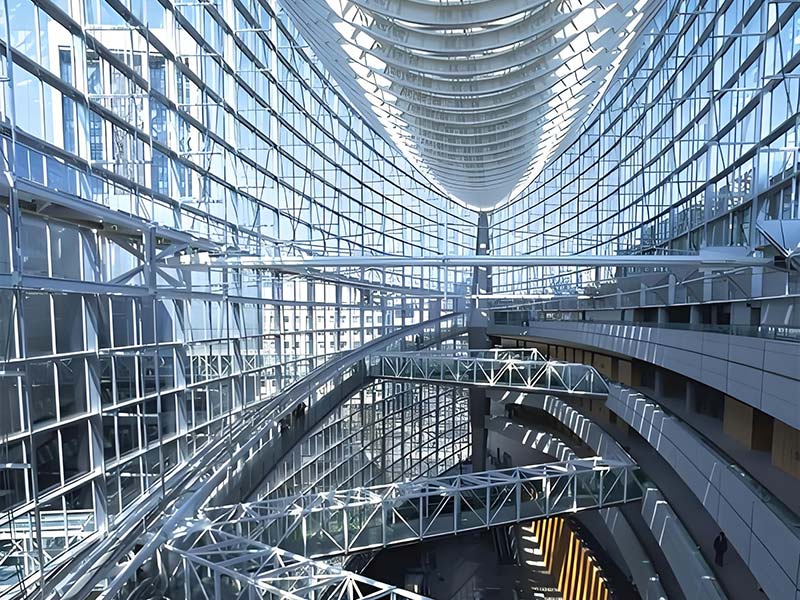
The advantages of steel frame construction extend across multiple building performance categories, making structural steel the material of choice for projects prioritizing long-term value over initial cost considerations.
Rapport résistance/poids élevé: Structural steel delivers exceptional strength while weighing approximately 60% less than equivalent concrete structures. This lightweight characteristic reduces foundation requirements, seismic forces, and transportation costs while enabling longer spans and more ambitious architectural designs.
Durability and Longevity: Steel frame construction resists the degradation mechanisms that compromise other building materials. Unlike wood, steel does not rot, warp, or crack. Unlike concrete, steel does not crack from shrinkage or chemical attack. Properly designed and protected steel structures routinely exceed 50-year service lives with minimal maintenance.
résistance au feu: Steel is a non-combustible material that does not contribute to fire spread, a critical consideration for building code compliance and insurance requirements. Fire-resistant coatings intumescent paints and spray-applied mineral fiber maintain structural integrity during fire events, with properly protected steel achieving two to four-hour fire ratings.
Pest Resistance: Steel framing eliminates termite and carpenter ant damage that threatens wood-framed structures. Property owners avoid costly pest treatments, regular inspections, and structural repairs that accumulate over the life of wood buildings.
durabilité: Structural steel achieves recycling rates exceeding 98%, with the material capable of infinite recyclability without property degradation. Steel's magnetic properties facilitate scrap separation during demolition, ensuring high recovery values that support circular economy principles.
Design Flexibility: Steel's strength enables large open spaces without intermediate columns, providing maximum flexibility for interior layout changes throughout a building's life. This adaptability proves particularly valuable for commercial spaces where tenant requirements evolve frequently.
Steel Frame Construction vs Traditional Building Methods
Steel Frame vs Concrete Construction
Concrete remains the world's most widely used construction material, offering excellent compressive strength, fire resistance, and thermal mass properties. However, steel frame construction provides compelling advantages in specific applications and project requirements.
| Comparison Factor | Steel Frame Construction | Concrete Construction |
|---|---|---|
| Material Cost | modérer | Higher |
| Construction Speed | Fast (30-50% faster) | Slow (requires curing time) |
| Structural Weight | Light (60% of concrete) | Heavy |
| Capacité d'extension | Excellent (up to 200+ ft) | Limited (typically < 40 ft) |
| résistance au feu | Requires protection | Excellent (inherent) |
| Performance sismique | Excellent (ductile) | Good (requires reinforcement) |
| Exigences de la Fondation | Lighter | Heavier |
| Usable Floor Area | 5-8% more (smaller columns) | Less (larger columns/walls) |
| Construction Weather Sensitivity | faible | flagrant |
| Future Adaptability | flagrant | faible |
Steel frame construction typically achieves 30-50% faster project completion through prefabrication and weather-independent installation. The lightweight nature of steel reduces foundation costs, while smaller structural members increase usable floor area by 5-8% compared to concrete buildings with equivalent gross areas.
Concrete excels in applications requiring thermal mass for energy management, foundations where soil conditions favor massive base structures, and buildings where the inherent fire resistance of concrete provides economic advantages over protected steel alternatives.
Steel Frame vs Wood Framing
Wood framing dominates residential construction in many markets due to its low material cost, familiar construction techniques, and renewable resource credentials. Steel frame construction offers meaningful advantages for projects prioritizing long-term value and performance.
Durability: Steel framing does not burn, rot, warp, or attract pests. Wood-framed structures require ongoing maintenance for moisture damage, termite protection, and decay prevention that steel-framed buildings avoid entirely.
Structural Performance: Steel provides consistent, predictable structural properties without the natural variations affecting wood. Steel does not shrink, expand, or twist as moisture content changes, producing straighter walls and more level floors throughout the building's life.
Seismic Response: Steel's ductility enables structures to withstand earthquake forces through controlled yielding, absorbing energy that would damage more brittle construction materials. This characteristic proves particularly valuable in regions with seismic design requirements.
Coûts du cycle de vie: While wood framing requires ongoing maintenance and eventual replacement of degraded components, properly detailed steel framing maintains its structural properties indefinitely with minimal maintenance. Total lifecycle costs frequently favor steel despite higher initial material expenses.
Sustainability Comparison: Both materials offer environmental benefits—wood stores carbon sequestered during tree growth, while steel achieves near-universal recycling rates exceeding 98%. Life cycle assessment methodologies increasingly favor steel for its durability advantages and ultimate recyclability.
Applications of Steel Frame Construction
Applications Résidentielles
Steel frame construction has expanded significantly in residential markets, driven by homeowner demand for durable, low-maintenance homes and builder interest in construction efficiency. Steel-framed homes resist the moisture damage, pest infestations, and dimensional instability that challenge wood-framed alternatives.
Light gauge steel framing dominates single-family residential construction, with cold-formed studs and tracks providing the same layout flexibility as traditional wood framing. Builders appreciate steel's consistent quality—no warped studs or twisted plates—while homeowners value the straight walls and level floors that result from dimensionally stable steel components.
Multi-story residential buildings typically employ structural steel for floors and moment frames or braced cores for lateral resistance. Steel's strength-to-weight ratio enables efficient high-rise construction, while prefabrication strategies accelerate project delivery for apartment complexes and mixed-use developments.
Modular homes increasingly utilize steel frames for their structural advantages and compatibility with factory production methods. Steel modules withstand transportation and crane handling without the splitting, cracking, or connection loosening that affect wood modular units.
Commercial Building Applications
Commercial construction represents steel frame construction's traditional stronghold, with office buildings, retail centers, and hospitality facilities achieving architectural and economic objectives through structural steel's performance capabilities.
Office buildings benefit from steel's ability to create large, open floor plates adaptable to changing tenant requirements. Steel floor systems support raised access flooring for electrical and data distribution while accommodating mechanical systems within structural depths.
Retail construction demands long spans for merchandise display and customer circulation, requirements that steel framing addresses efficiently. Steel's design flexibility also supports the distinctive architectural expressions that differentiate retail brands and create memorable customer experiences.
Hospitality projects combine steel's structural capabilities with sophisticated architectural finishes that create distinctive guest experiences. Steel's ability to span large banquet halls, support rooftop amenities, and accommodate complex mechanical systems makes it ideal for hotels and convention centers.
Industrial and Warehouse Applications
Industrial facilities represent the most economical application for steel frame construction, where functional requirements drive design decisions and structural efficiency directly impacts project economics.
Warehouses and distribution centers require maximum clear height and unobstructed floor areas for efficient product storage and handling. Steel frames with clear spans exceeding 200 feet eliminate interior columns that would obstruct forklift operations and racking systems.
Manufacturing facilities accommodate heavy equipment loads, bridge cranes, and vibration-sensitive processes through purpose-designed steel structures. Engineers specify steel grades and member sizes optimized for specific equipment loads and operational requirements.
Agricultural buildings—including barns, equipment storage, and processing facilities—benefit from steel's durability, rapid erection, and design flexibility. Pre-engineered metal buildings offer economical solutions for agricultural applications, while custom steel frames address more complex requirements.
Infrastructure and Engineering Projects
Beyond buildings, steel frame construction principles apply to bridges, towers, stadiums, and other civil engineering structures where steel's strength, stiffness, and fabrication flexibility provide unique advantages.
Bridge construction has employed steel structures for centuries, with modern fabrication techniques enabling longer spans and more sophisticated designs. Steel box girders, truss systems, and cable-stayed configurations achieve spans exceeding 3,000 feet for major water crossings.
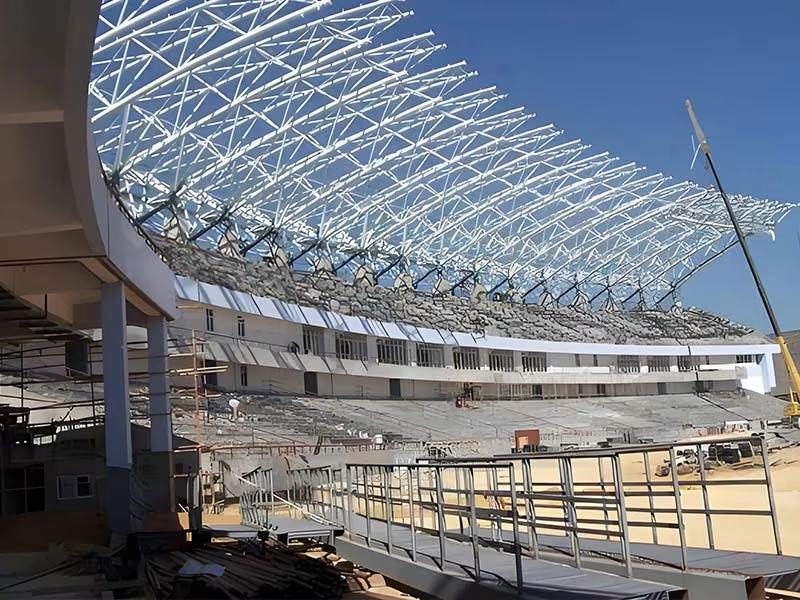
Sports stadiums and entertainment venues utilize steel for roof structures spanning thousands of seats without interior columns. Retractable roof systems, scoreboard supports, and architectural features all depend on steel's fabrication capabilities and structural performance.
Communication towers, transmission structures, and industrial platforms employ steel's strength-to-weight ratio for efficient vertical structures and elevated platforms. Galvanized steel ensures corrosion resistance in demanding environmental conditions.
Steel Frame Construction Cost Analysis
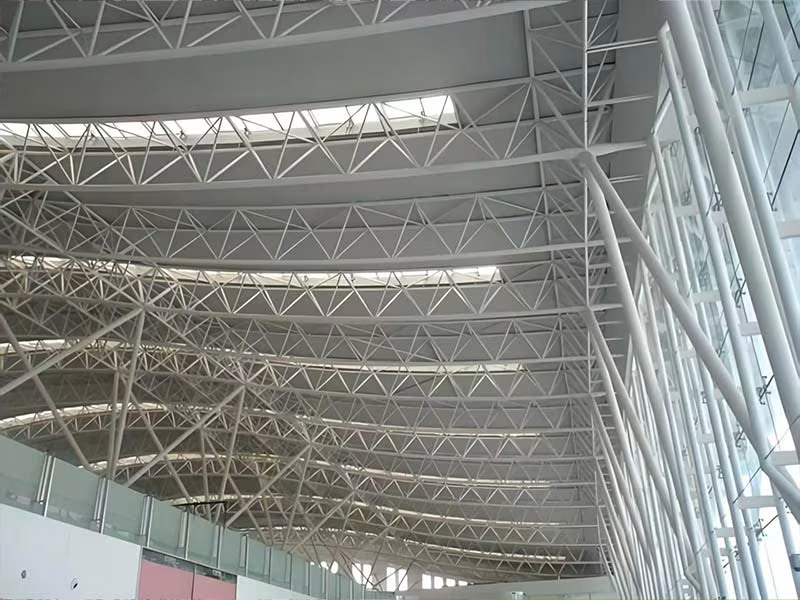
Factors Affecting Cost
Material pricing for steel frame construction tracks global commodity markets, with structural steel prices fluctuating based on supply, demand, and economic conditions. Fabricated steel pricing includes material costs plus manufacturing value, with total project steel costs typically representing 15-25% of total construction budgets.
Material Prices: Steel mill pricing responds to raw material costs (iron ore, scrap steel, alloys), energy costs, and market demand. Galvanized coatings add approximately 15-25% to base steel costs, while specialty alloys for corrosion-resistant or high-strength applications command premium pricing.
Labor and Installation: Field erection labor represents significant project cost, with skilled steel workers commanding premium wages reflecting their specialized training and safety requirements. Erection productivity varies with project complexity, site conditions, and crew experience.
Design Complexity: Complex architectural designs requiring custom fabrication, complex connections, or exposed steel details increase costs compared to simple rectangular structures with standardized components. Engineering fees for connection design and coordination increase with project complexity.
Project Scale: Economies of scale favor larger projects, where setup costs and engineering expenses distribute across more tons of steel. Small projects under 50 tons typically incur higher unit costs due to fixed overhead allocation.
Cost Optimization Strategies
Experienced steel frame construction suppliers help project teams optimize costs through value engineering, prefabrication strategies, and efficient project delivery methods.
Prefabrication: Off-site fabrication reduces field labor costs by 20-40% compared to stick-built construction while improving quality through controlled manufacturing conditions. Prefabricated wall panels, floor trusses, and complete modules maximize off-site value capture.
Standardization: Standard beam and column sizes, connection details, and building dimensions reduce engineering and fabrication costs compared to fully custom designs. Value engineering reviews identify opportunities to substitute standardized components without compromising structural performance.
Connection Optimization: Erection efficiency depends heavily on connection design, with simple bolted connections enabling faster installation than complex welded field splices. Engineering decisions significantly impact erection productivity and total project costs.
Supplier Selection: Steel fabricators vary significantly in capabilities, geographic coverage, and pricing structures. Evaluating fabricators based on total delivered cost—including transportation, field support, and quality assurance—often reveals surprising cost differences between suppliers.
Manufacturing Process of Steel Frame Construction
Raw Material Selection and Quality Control
Steel frame construction quality begins with raw material selection, as steel properties directly determine structural performance and fabrication characteristics. Professional steel fabricators establish relationships with qualified mills that consistently produce steel meeting specified mechanical and chemical properties.
Hot-rolled structural steel typically conforms to ASTM A992 standards for W-shapes or ASTM A572 for other structural profiles. These specifications establish minimum yield strengths (typically 50 ksi), tensile strengths, and chemical compositions that ensure predictable structural behavior.
Plate steel for built-up members and connection elements typically meets ASTM A36 or ASTM A572 requirements, with thickness tolerances ensuring accurate fabrication fit-up. Steel coils for cold-formed applications conform to ASTM A1008 for galvanized products or A653 for zinc-coated sheet steel.
Incoming material inspection verifies mill certifications and performs additional testing when specifications require confirmation. Ultrasonic testing detects internal flaws in thick plates, while hardness testing verifies strength properties and coating weight measurements confirm galvanized coating quality.
Advanced Fabrication Technologies
Modern steel fabrication employs computer-controlled equipment that transforms raw steel into precision-engineered components with minimal manual intervention. These technologies improve quality, reduce labor costs, and enable complex geometries impossible through traditional methods.
Laser Cutting: Fiber and CO2 laser cutting systems precisely cut steel plates and profiles at production speeds. Modern lasers cut material up to 1-inch thick with tolerances under 0.030 inches, producing clean edges requiring minimal finishing.
Plasma Cutting: Plasma systems offer economical cutting for material thicknesses exceeding laser capabilities, with automated torch height control maintaining cut quality across uneven plate surfaces.
CNC Drilling and Punching: Automated drill lines perform multiple drilling, punching, and tapping operations in single machine setups, reducing handling and improving positional accuracy. These systems produce standardized connection holes for bolted field splices and shear connections.
Welding Automation: Robotic welding cells automate repetitive welding operations, improving consistency and productivity while reducing labor costs. Automated welding proves particularly valuable for structural components with repetitive joint geometries.
Surface Treatment and Protection
Surface treatment processes protect steel from corrosion throughout the structure's service life, with treatment selection depending on exposure conditions, aesthetic requirements, and budget constraints.
Surface Preparation: SSPC (Society for Protective Coatings) standards establish surface preparation requirements ranging from hand tool cleaning (SSPC-SP2) through commercial blast cleaning (SSPC-SP10). Proper surface preparation ensures coating adhesion and long-term corrosion protection.
Hot-Dip Galvanizing: Immersing fabricated steel in molten zinc produces galvanized coatings typically 3-6 mils thick, providing 50+ year corrosion protection in most atmospheric environments. Steel fabricators coordinate galvanizing logistics, including proper vent and drain hole design for complete coverage.
Paint Systems: Multi-coat paint systems provide color options and enhanced aesthetics for exposed steel applications. Primer coats establish adhesion and corrosion resistance, while topcoats provide color stability and environmental protection.
Intumescent Coatings: Fire-rated applications employ intumescent coatings that expand during fire exposure, forming insulating chars that protect steel from temperature rise. These coatings achieve fire ratings up to four hours while maintaining desired aesthetic appearances.
Choosing the Right Steel Frame Construction Manufacturer
Key Selection Criteria
Selecting the right steel frame construction supplier significantly impacts project outcomes, influencing quality, schedule, and total project costs. Comprehensive supplier evaluation considers multiple factors beyond simple price comparison.
Experience and Track Record: Look for manufacturers with demonstrated experience in projects similar to yours in scale, complexity, and market sector. Request project references and visit completed installations when possible to assess quality firsthand.
capacité de production: Verify that prospective suppliers have sufficient manufacturing capacity to meet your project schedule, including equipment capabilities, workforce availability, and current backlog. Suppliers operating near capacity may struggle to meet accelerated schedules.
Technical Capabilities: Evaluate fabrication equipment, engineering resources, and quality systems that enable efficient production of your specific requirements. Complex projects benefit from suppliers with in-house detailers, connection designers, and project managers.
Certifications and Standards: Look for fabricators certified under AISC (American Institute of Steel Construction) certification programs, which verify quality management systems, welding procedures, and personnel qualifications. ISO 9001 certification demonstrates commitment to quality management principles.
Custom Steel Frame Construction Solutions
Many projects benefit from custom steel solutions tailored to specific architectural, structural, or functional requirements. Suppliers offering custom capabilities provide enhanced value beyond standardized product offerings.
Architectural Steel: Exposed steel applications require special attention to surface preparation, weld appearance, and connection details visible to building occupants. Architectural steel fabricators employ craftsmen skilled in producing weld seams that complement rather than detract from design intentions.
Specialized Connections: Complex loading conditions or architectural constraints may require custom connection designs beyond standard practice. Experienced detailers and connection engineers develop solutions that meet structural requirements while accommodating constructibility and aesthetic considerations.
BIM Integration: Suppliers capable of consuming BIM models and exporting CNC-ready data streamline project delivery by eliminating redundant modeling efforts. Electronic data exchange reduces errors and accelerates fabrication scheduling.
Project Support: Value-added suppliers provide field services including erection supervision, connection inspection, and technical support throughout construction. This ongoing involvement distinguishes true project partners from simple material suppliers.
Common Challenges in Steel Frame Construction and Solutions
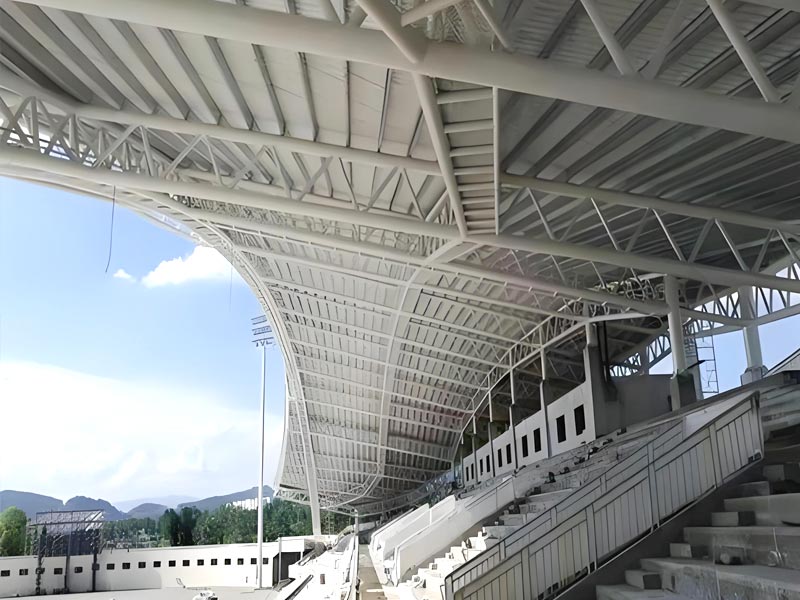
Protection contre la corrosion
While structural steel provides excellent durability, corrosion remains the primary degradation mechanism requiring attention during design, fabrication, and maintenance phases.
Hot-Dip Galvanizing: Submerging fabricated steel in molten zinc provides cathodic protection that prevents rust formation even when coatings are damaged. Galvanized steel maintains appearance and structural integrity for 50+ years in most atmospheric environments.
Paint Systems: Multi-coat paint systems with properly specified primers and topcoats provide economical corrosion protection for interior steel and architectural applications. System selection considers exposure conditions, desired appearance, and maintenance accessibility.
Weathering Steel: Uncoated weathering steel develops a stable rust patina in atmospheric conditions that inhibits further corrosion. This approach eliminates painting costs but requires careful design to prevent moisture accumulation that prevents patina formation.
résistance au feu
Structural steel loses strength at elevated temperatures, requiring fire protection measures to maintain structural integrity during fire events. Building codes establish fire resistance requirements based on occupancy type, building height, and construction classification.
Fire-Rated Intumescent Coatings: Thin-film intumescent coatings expand during fire exposure to form insulating char layers protecting underlying steel. These coatings achieve ratings up to four hours while providing aesthetic finishes suitable for exposed applications.
Spray-Applied Fireproofing: Thick spray-applied mineral fiber coatings provide cost-effective fire protection for structural steel in commercial buildings. Modern formulations reduce dust and improve adhesion compared to older products.
Concrete Encasing: Concrete encasement provides economical fire protection for columns and beams, with the added benefit of additional load capacity from composite action. This approach suits applications where added thickness does not impact architectural requirements.
Thermal Performance
Steel conducts heat efficiently, creating thermal bridging paths that can increase heating and cooling loads while potentially causing condensation problems in humid climates.
Thermal Breaks: Insulating materials interrupting steel-to-steel contact paths reduce heat flow through thermal bridges. These details prove particularly important for curtain wall systems and structural connections between conditioned and unconditioned spaces.
Continuous Insulation: Exterior insulation systems applied over steel framing provide continuous thermal barriers that minimize thermal bridging through structural members. These approaches typically prove more economical than thermal break details for wall assemblies.
Condensation Management: Vapor barriers, ventilation, and dehumidification manage condensation risks where warm, humid air contacts cold steel surfaces. Building envelope design must consider all-season conditions rather than peak winter or summer scenarios.
Conclusion
Steel frame construction has earned its position as the dominant structural system for commercial, industrial, and high-rise residential construction worldwide. The combination of exceptional strength, design flexibility, construction speed, and long-term durability creates compelling value propositions that increasingly influence building design decisions.
The continuous evolution of steel fabrication technologies—particularly advanced CNC equipment, automated welding systems, and integrated BIM workflows—improves quality, reduces costs, and expands design possibilities. Manufacturers investing in these capabilities position themselves to deliver increasing value to project teams navigating competitive construction markets.
Understanding the steel frame construction process, from initial design through final erection, enables informed decision-making throughout project delivery. Project teams that leverage prefabrication strategies, optimize connection details, and select qualified suppliers maximize the benefits that steel construction provides.
Whether constructing a modest residential addition or a landmark high-rise development, steel frame construction offers proven solutions that meet contemporary building requirements. The material's sustainability credentials—including near-universal recyclability and resource-efficient production—align with growing emphasis on environmental stewardship throughout the construction industry.
For projects prioritizing long-term value, design flexibility, construction efficiency, and structural resilience, steel frame construction delivers performance that justifies its position as the material of choice for modern building professionals.
FAQ
What is steel frame construction?
Steel frame construction is a building method that uses structural steel components—beams, columns, and connectors—to create the primary load-bearing framework. It transfers building loads through a network of steel elements, offering exceptional strength and design flexibility for both residential and commercial projects.
Why choose steel frame construction over traditional materials?
Steel frame construction provides superior strength-to-weight ratio, faster construction timelines (30-50% faster), excellent fire and pest resistance, and 98% recyclability. It enables larger open spaces without intermediate columns and requires minimal maintenance over its 50+ year service life.
Is steel frame construction more expensive than wood or concrete?
Initial material costs for steel are higher than wood but comparable to concrete. However, steel's faster construction, reduced labor costs, lower maintenance requirements, and increased usable floor area (5-8% more) often result in lower total lifecycle costs.
How long does steel frame construction take?
Steel frame construction typically reduces project timelines by 30-50% compared to traditional methods. Prefabricated steel components are manufactured off-site while site preparation occurs concurrently, enabling rapid on-site assembly within days rather than weeks.
What should I look for in a steel frame construction manufacturer?
Choose manufacturers with proven experience in similar projects, AISC certification, adequate production capacity, advanced fabrication equipment (laser cutting, CNC drilling, automated welding), and comprehensive quality control systems. Look for suppliers offering design support, BIM integration, and field services.
Continuer la lecture
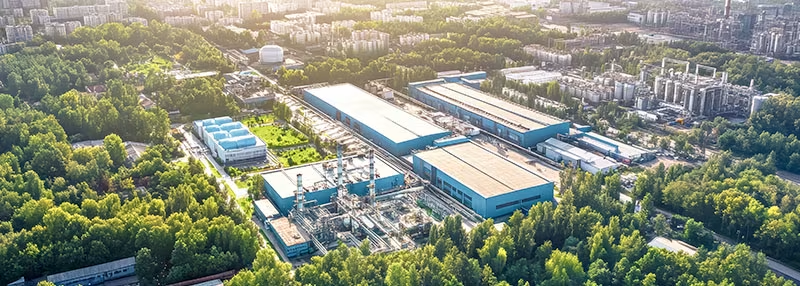
1TP2 T est une entreprise de construction moderne à grande échelle intégrant la R & D, la conception, la production, la construction et la passation de contrats généraux de structures en acier, avec des activités couvrant à la fois les marchés nationaux et internationaux.