Gas Station Canopy Structure Guide: How to Plan a Safer, Stronger, and More Practical Fuel Station Roof
введение
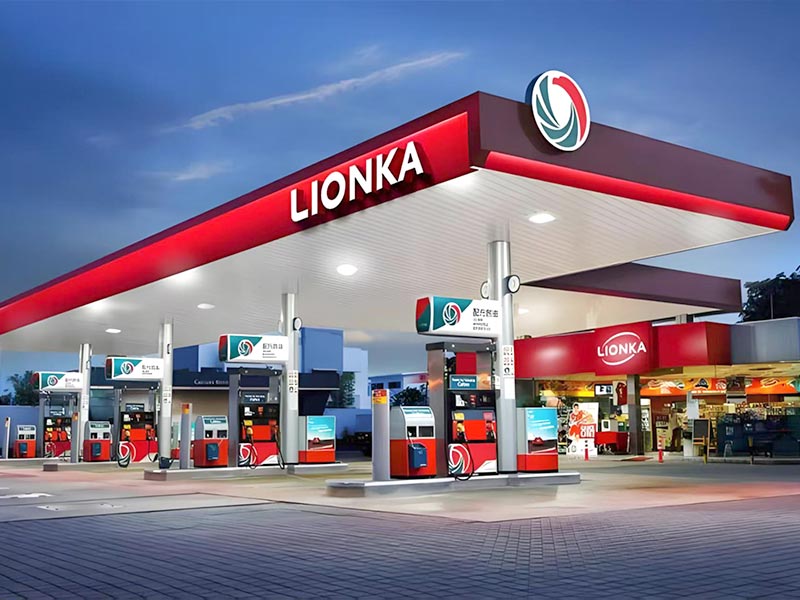
A gas station canopy structure is one of the most important parts of a fuel station project. It protects refueling areas from rain and sunlight, supports lighting and signage, improves the station’s visual identity, and helps create a safer and more comfortable experience for drivers and workers.
But a gas station canopy is not just a roof. It is a steel structure system that must coordinate with fuel dispensers, underground tank areas, vehicle circulation, drainage, lighting, fire safety, corrosion protection, electrical systems, and site construction. If the canopy is planned poorly, it may create problems in vehicle movement, water drainage, maintenance access, installation, and long-term operation.
Shandong No.7 Construction provides gas station construction structure solutions covering steel canopies, underground tank systems, station buildings, cashier booths, equipment integration, civil works, and overall project support.
What Is a Gas Station Canopy Structure?
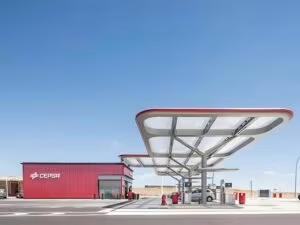
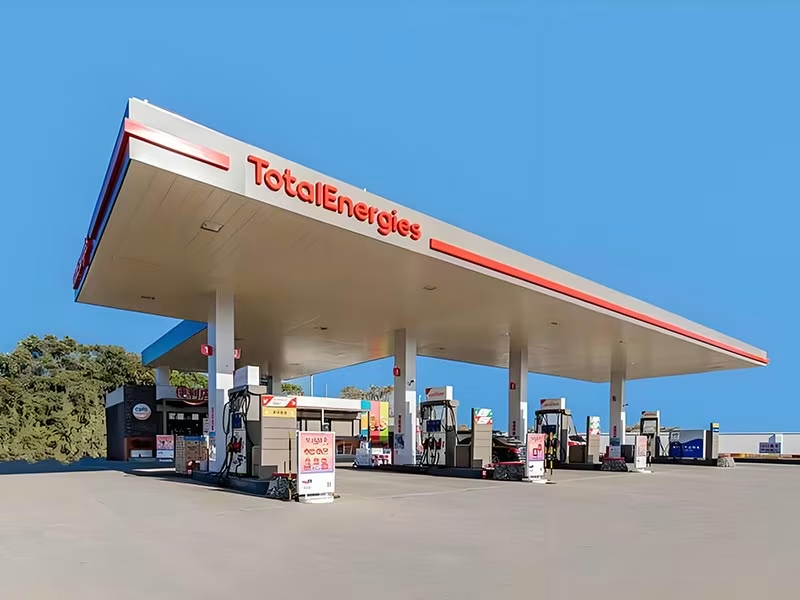
A gas station canopy structure is a steel roof system built above refueling islands. It usually consists of steel columns, beams or space frame components, roof panels, fascia panels, drainage systems, lighting supports, connection parts, and foundation anchoring.
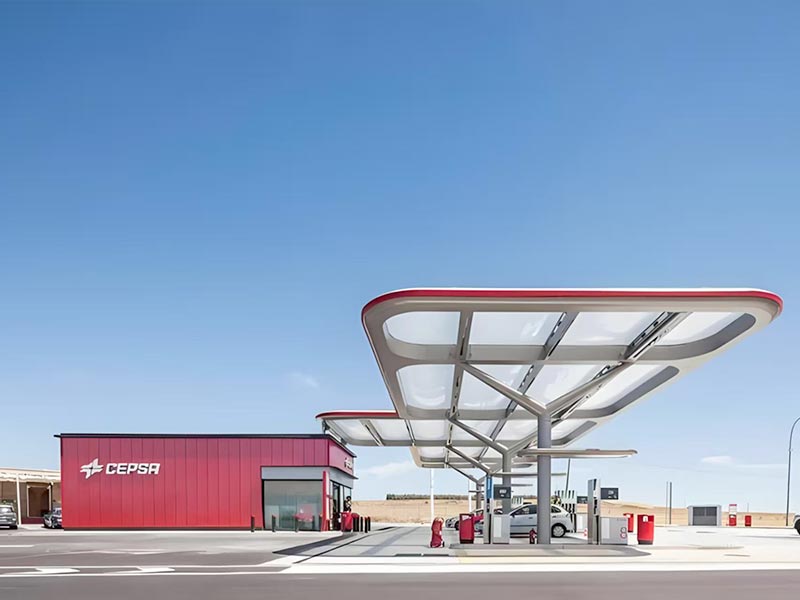
In many projects, the canopy is designed as a steel frame canopy or space frame canopy. The final structural form depends on the station layout, canopy span, local wind conditions, architectural appearance, budget logic, and installation method.
A practical gas station canopy structure should provide:
Wide coverage over fuel dispensers, safe clearance for vehicles, reliable rainwater drainage, strong wind resistance, durable corrosion protection, easy lighting integration, clean appearance, and convenient maintenance access.
For projects that require more than the canopy itself, a turnkey approach can help coordinate canopy structure, underground tanks, station rooms, civil works, and equipment layout from the beginning.
Why Canopy Planning Should Start with Station Layout
The canopy should be designed around the complete station layout, not as an isolated roof. Vehicle movement, dispenser position, entrance and exit direction, truck access, emergency routes, payment areas, and service buildings all influence canopy size and column location.
A canopy that is too small may leave vehicles exposed to rain or sunlight. A canopy that is too large without proper structural planning may increase wind load, cost, drainage demand, and installation difficulty. A column placed in the wrong position may interfere with vehicle turning, dispenser maintenance, or pedestrian movement.
Before designing the gas station canopy structure, the project team should confirm:
Site entrance and exit direction, dispenser island layout, vehicle turning radius, expected vehicle types, canopy coverage area, underground tank location, cashier booth or station building position, electrical system layout, drainage route, fire access, and future expansion needs.
A canopy works best when it is planned as part of the whole fuel station system.
Steel Structure Options for Gas Station Canopies
Gas station canopies can use different steel structure systems. The right choice depends on span, roof shape, project appearance, local load requirements, and construction conditions.
| Canopy Structure Type | Suitable Project Situation | главное преимущество |
|---|---|---|
| Steel frame canopy | Standard fuel stations and compact layouts | Practical fabrication and installation |
| Space frame canopy | Wider spans or stronger visual design needs | Good spatial stability and open appearance |
| Truss canopy | Larger roof coverage or architectural roof forms | Efficient span performance |
| Integrated station structure | Projects needing canopy, station room, tank system, and civil works | Better project coordination |
For larger or more architecturally demanding canopy projects, космический строй systems may be suitable because they can support wide roof coverage with strong three-dimensional performance. For projects that need long-span roof support, стальная ферменная конструкция solutions can also be considered.
Structural Loads and Local Conditions Must Be Confirmed Early
A gas station canopy is exposed to outdoor conditions all year. It must be designed for the actual project location rather than copied from another site.
Important design inputs include wind load, roof dead load, live load, rain load, snow load where applicable, seismic requirements, lighting and signage loads, maintenance load, temperature effects, and local code requirements.
Wind load is especially important for canopy structures because the roof is open on several sides and may experience uplift forces. The canopy fascia, roof panels, connections, anchor bolts, and foundations must all be coordinated to resist these forces.
Structural steel design resources from the Американский институт металлостроительства can help project teams understand broader steel design principles. Local engineering approval should always be confirmed according to the project location and applicable building codes.
Column Layout and Vehicle Clearance
Column layout is one of the most practical decisions in canopy design. The columns must support the roof safely while avoiding conflict with vehicles, fuel dispensers, and service paths.
Poor column placement can create daily operational problems. Drivers may find it difficult to turn. Tank trucks may have limited access. Maintenance teams may struggle to service dispensers. Columns may also increase collision risk if they are too close to traffic routes.
A good column layout should consider vehicle entry and exit, refueling island spacing, dispenser maintenance clearance, protective barriers, truck delivery access, pedestrian movement, and visibility from the road.
Vehicle clearance under the canopy is also important. The canopy height should allow safe access for expected vehicle types while maintaining efficient structural proportions and lighting performance. For stations serving trucks or buses, clearance planning must be reviewed more carefully.
Roof Drainage and Waterproofing
A gas station canopy roof must handle rainwater efficiently. Poor drainage can lead to leakage, staining, corrosion, ponding, and long-term maintenance problems.
Drainage planning should include roof slope, gutter layout, downpipe location, water discharge direction, fascia detailing, waterproof joints, and maintenance access. Rainwater should not discharge directly into areas where vehicles or pedestrians are likely to pass.
For wider canopy roofs, drainage capacity becomes more important. The design should avoid water accumulation on roof panels or near connections. In cold regions, snow and ice conditions should also be considered.
выше Ассоциация производителей металлических зданий provides useful resources related to metal building systems, roofing, and building envelope performance. These concepts are relevant when planning durable canopy roof systems.
Lighting, Signage, and Electrical Coordination
A gas station canopy usually supports lighting, signage, surveillance devices, and sometimes digital display systems. These items should be coordinated during structural design.
Lighting placement affects driver visibility, safety, station appearance, and nighttime operation. The canopy structure should provide suitable support points for lighting fixtures while keeping maintenance access practical.
Signage and fascia panels also affect wind load and appearance. They should not be added after structural design without checking their load impact. Electrical routes should be planned to avoid conflicts with structural members, roof drainage, and maintenance paths.
Electrical systems in fuel station environments require special attention because of the presence of flammable liquids and vapors. Project teams should refer to local electrical and fire safety requirements, and the NFPA provides widely referenced fire and electrical safety resources for hazardous environments.
Corrosion Protection and Surface Treatment
Gas station canopies are exposed to sun, rain, humidity, vehicle emissions, fuel-related environments, and sometimes coastal air. Proper corrosion protection is essential for long-term performance.
Surface treatment should be selected based on project location and operating environment. Common protection methods include surface preparation, primer and topcoat systems, hot-dip galvanizing for suitable components, coating thickness control, and planned maintenance.
Corrosion protection should be discussed before production because it affects fabrication workflow, connection design, delivery schedule, and installation method.
A canopy with poor surface treatment may require frequent repainting, develop rust near connections, or lose appearance quality quickly. For station operators, durability is directly linked to maintenance cost and brand image.
Fire Safety and Fuel Station Requirements
Fuel stations are sensitive environments. Canopy structure design should coordinate with fire safety, emergency access, electrical safety, fuel dispenser layout, underground tank systems, ventilation, and local authority requirements.
Important safety planning areas include emergency vehicle access, dispenser spacing, electrical routing, grounding, lightning protection, fire separation, signage visibility, safe pedestrian routes, and maintenance procedures.
The canopy itself should not block emergency movement or create hidden areas that are difficult to supervise. Drainage, lighting, and column protection should also support safer operation.
Because fuel station regulations vary by country and region, final project requirements should always be confirmed with local authorities, qualified engineers, and applicable safety codes.
Underground Tanks and Canopy Coordination
A fuel station project often includes underground storage tanks, pipelines, dispensers, station buildings, and canopy structures. These systems should be coordinated early.
The underground tank area affects site excavation, vehicle circulation, equipment installation, and civil works. If the canopy foundation, underground tanks, pipelines, and dispenser islands are designed separately, conflicts may appear during construction.
Shandong No.7 Construction gas station construction structure solution is relevant because it covers more than canopy steel. It can support a more integrated approach to steel structures, underground tank systems, office buildings, cashier booths, equipment integration, and civil works.
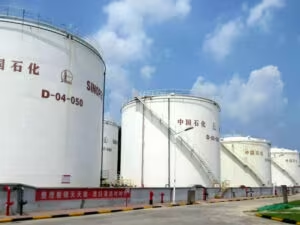
For projects involving storage tanks beyond fuel station systems, the company also provides резервуар для хранения solutions for oil, chemical, water, and other industrial storage applications.
Fabrication Quality for Steel Gas Station Canopies
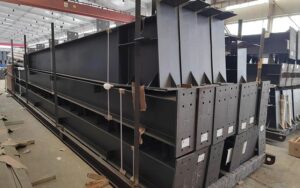
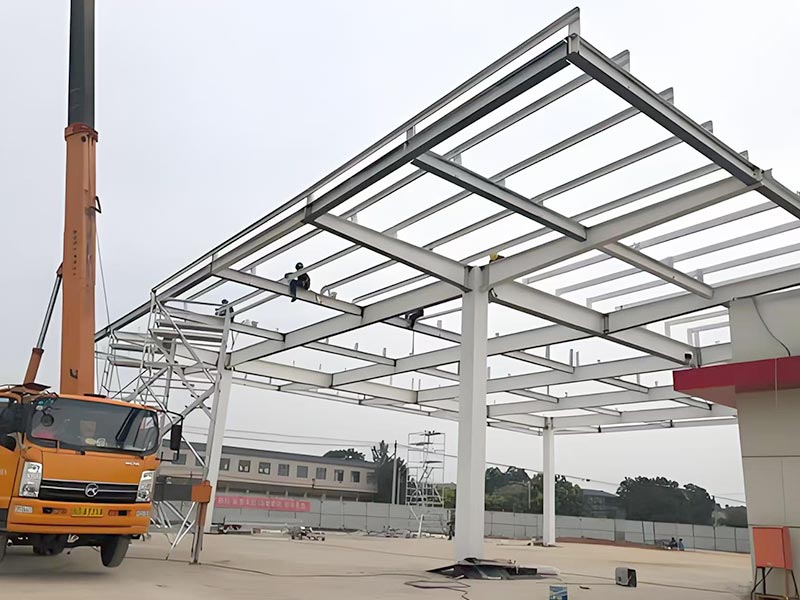
A steel gas station canopy depends on fabrication accuracy. Columns, beams, plates, bolts, fascia supports, roof members, and connection details must be produced according to approved drawings.
Important fabrication quality points include steel material confirmation, cutting accuracy, welding quality, hole positioning, component straightness, coating quality, labeling, packing, and inspection records.
Clear labeling is especially important when components are shipped to overseas project sites. If canopy parts are not marked properly, installation teams may lose time identifying members and connection locations.
Factory fabrication should also consider the final installation sequence. Components should be packed and delivered in a way that supports efficient unloading, assembly, lifting, and roof installation.
Installation Planning and Site Readiness
Gas station canopy installation should be planned before components arrive on site. The project team should confirm foundation readiness, anchor bolt accuracy, crane access, component storage space, lifting sequence, temporary bracing, roof panel installation, fascia installation, electrical coordination, and safety protection.
Site work often involves multiple activities at the same time, including civil construction, tank installation, pipeline work, electrical work, canopy erection, and building construction. Without coordination, the canopy installation may be delayed by unfinished foundations, blocked access roads, or unavailable lifting space.
For steel erection safety topics, the Оша стальной эрекция guidance provides useful reference material. Local site safety rules and qualified supervision should always be followed.
Appearance and Brand Image
A gas station canopy is one of the most visible parts of the station. It affects customer perception, roadside recognition, and the overall professional image of the project.
Canopy appearance is influenced by roof shape, fascia design, column form, surface finish, lighting layout, color scheme, panel quality, and signage integration. A clean, well-proportioned canopy can make the station easier to recognize and more attractive to customers.
However, appearance should not override structural performance. The best canopy design balances visual effect with load resistance, drainage, fabrication feasibility, maintenance access, and safety.
Turnkey Project Coordination
A gas station project usually includes more than one structure. The canopy, underground tanks, dispenser islands, station building, cashier booth, drainage, electrical systems, and civil works must be coordinated as one project.
Working with a supplier that understands turnkey gas station construction can reduce communication gaps. Instead of managing the canopy, tank system, station room, and civil work separately, project owners can coordinate the main project requirements through a more integrated process.
Shandong No.7 Construction provides one-stop engineering support through its услуги system, including design, production, construction, project management, overseas project services, equipment sales, and after-sales service.
For project references across steel structures, public buildings, industrial projects, and overseas engineering, project owners can also review the company’s Qijian Случаи паж.
Information to Prepare Before Requesting a Canopy Solution
Before requesting a gas station canopy structure proposal, prepare clear project information. This helps the engineering team recommend a practical structure and avoid repeated revisions.
Useful information includes project location, station layout, canopy length and width, required clearance height, number of dispenser islands, vehicle type, underground tank arrangement, local wind and snow conditions, preferred roof shape, fascia requirements, lighting plan, signage requirements, corrosion environment, civil work scope, project schedule, and installation conditions.
Drawings, site photos, sketches, and local code requirements can also help the supplier provide a more accurate solution.
Владельцы проектов могут предъявлять требования через Свяжитесь с нами page for technical communication.
заключение
A gas station canopy structure is not only a roof over fuel dispensers. It is a steel structure system that must support safety, weather protection, vehicle movement, lighting, drainage, appearance, and long-term operation.
Successful canopy planning begins with the station layout and continues through structural design, column arrangement, roof drainage, electrical coordination, corrosion protection, fabrication quality, and installation planning. For projects that include underground tanks, station buildings, and equipment integration, turnkey coordination can further reduce project risk.
Shandong No.7 Construction provides gas station construction structure solutions along with steel structure, space frame, steel truss, commercial steel structure, and storage tank products. For fuel station owners and project contractors, early technical planning can help create a canopy system that is safer, stronger, easier to build, and better suited for long-term operation.
ЧАСТО ЗАДАВАЕМЫЕ ВОПРОСЫ
What is a gas station canopy structure?
A gas station canopy structure is a steel roof system built above refueling islands. It protects vehicles and equipment from weather, supports lighting and signage, and helps organize the refueling area.
What materials are commonly used for gas station canopies?
Gas station canopies commonly use steel columns, beams, roof panels, fascia panels, bolts, connection plates, and protective coatings. Some projects may use space frame or truss systems for larger spans.
Why is wind load important for gas station canopy design?
Wind load is important because canopy roofs are exposed and often open on multiple sides. The structure, roof panels, fascia, connections, anchor bolts, and foundations must be designed to resist uplift and lateral forces.
Can a gas station canopy use a space frame structure?
Yes. A space frame canopy can be suitable for wider spans, stronger visual appearance, and projects requiring three-dimensional structural performance.
What should be considered when planning canopy columns?
Column planning should consider vehicle movement, dispenser spacing, truck access, pedestrian routes, protective barriers, maintenance clearance, and visibility. Poor column placement can affect daily operation and safety.
How is drainage handled on a gas station canopy?
Drainage is handled through roof slope, gutters, downpipes, waterproof joints, and proper discharge direction. Rainwater should be directed away from refueling and pedestrian areas.
Can the canopy and underground tank system be planned together?
Yes. Coordinating the canopy, underground tanks, pipelines, dispenser islands, station buildings, and civil works early can reduce construction conflicts and improve project efficiency.
How do I request a gas station canopy structure solution?
Prepare project location, station layout, canopy size, clearance height, dispenser island quantity, vehicle type, local load conditions, lighting needs, signage requirements, and available drawings or site photos before contacting the supplier.
Продолжить чтение
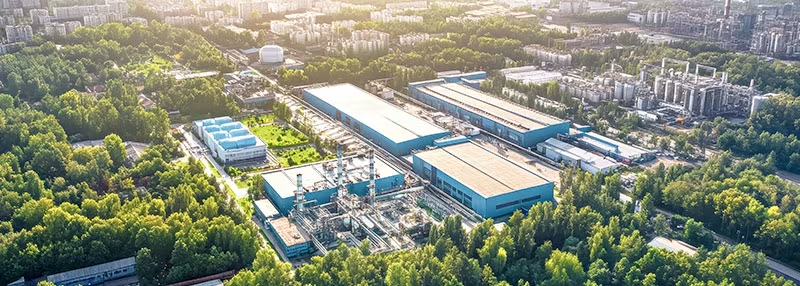
Shandong No.7 Construction Engineering Co., Ltd. - это крупномасштабное современное строительное предприятие, объединяющее НИОКР, проектирование, производство, строительство и генеральное заключение контрактов на стальные конструкции, бизнес которого охватывает как внутренний, так и международный рынки.