Storage Tank Inspection Checklist: A Practical Guide for Facility Teams
A tank that looks sound from the access road can still be developing coating failure, settlement, leakage, or corrosion at a hidden interface. A useful storage tank inspection checklist turns casual observation into a repeatable maintenance process. It tells facility teams what to examine, what evidence to record, when to restrict access, and which findings require review by a qualified tank professional.
This guide is written for owners, maintenance managers, engineers, and procurement teams responsible for above-ground industrial tanks. It supports routine planning; it does not replace the inspection intervals, methods, acceptance criteria, or personnel qualifications required by the governing design standard, local law, insurer, or site procedure.
What a Storage Tank Inspection Checklist Should Achieve
A storage tank inspection checklist should create comparable observations over time. 鈥淭ank appears acceptable鈥?is difficult to act on. 鈥淐oating blistering on the lower shell between the north nozzle and stair stringer; photographed from two positions; no visible wetness鈥?gives the next reviewer a location, condition, and baseline.
The checklist should also separate routine visual surveillance from formal inspection. Standards such as API Standard 653 address inspection, repair, alteration, and reconstruction of tanks built to relevant API requirements. Applicability depends on the tank, stored product, construction code, jurisdiction, and owner requirements. A site form can support that program, but it cannot redefine it.
- Identify the tank and current operating condition.
- Record observable change, not only pass/fail judgments.
- Use consistent locations, photographs, and terminology.
- Assign findings by urgency and responsible discipline.
- Preserve a traceable maintenance and inspection history.
Define the Tank and Inspection Scope
Start the storage tank inspection checklist with identity and service data. Record the asset number, location, tank type, nominal capacity, stored material, operating level, temperature range if relevant, construction material, roof type, foundation type, and whether the tank is anchored. Add the governing construction and inspection documents only when they are confirmed in the asset file.
Next, define the inspection mode. An external walkdown while the tank remains in service is different from an internal examination after isolation, cleaning, gas testing, and entry authorization. A focused coating survey, settlement measurement, thickness survey, or leak investigation also needs its own method and competent personnel. Facility teams evaluating a new asset can use the liquid storage tank selection guide to understand how service conditions influence the original tank configuration.
State weather, lighting, access limits, and areas not examined. These qualifications prevent a later reader from treating an incomplete walkdown as a complete condition assessment. The best storage tank inspection checklist makes uncertainty visible. Include a revision number so every team uses the current storage tank inspection checklist.
Complete Safety and Access Controls First
Inspection must not introduce a greater hazard than the condition being investigated. Before approaching the tank, confirm site authorization, operating status, restricted zones, required personal protective equipment, emergency communication, and whether nearby work could affect the inspection. Never climb, open a hatch, disconnect equipment, or enter a tank simply because an item appears on a storage tank inspection checklist.
Internal entry requires a site-specific confined-space program. The US Occupational Safety and Health Administration confined-spaces guidance explains core hazards and employer responsibilities, but local rules may differ. Isolation, atmospheric testing, ventilation, communications, rescue capability, and permit controls must be established by the responsible organization.
For external work, look upward as well as at the ground. Loose roof items, damaged stairs, unguarded edges, poor access platforms, electrical hazards, leaking product, ice, and slippery surfaces may require the inspection to stop. The storage tank inspection checklist should include a clear 鈥渘ot inspected鈥攗nsafe or inaccessible鈥?option. Put these safety gates before condition questions on the storage tank inspection checklist.
Inspect Foundations, Settlement, and Anchorage
Begin at grade and walk the full circumference where access permits. On the storage tank inspection checklist, note erosion, ponding water, vegetation, cracked concrete, displaced fill, washout, undermining, and gaps between the tank bottom edge and its support. Check whether drainage carries water away from the foundation or traps it against the shell.
Settlement is not reliably judged from one photograph. Look for circumferential distortion, localized shell buckling, tilted appurtenances, uneven bottom projection, piping misalignment, or changed stair contact. Compare survey records when they exist. Suspected settlement should be referred for measurement and engineering evaluation instead of being converted into an improvised field tolerance.
Where anchors are installed, record missing or visibly loose nuts, corrosion, bent rods, damaged chairs, cracked grout, and evidence of unintended movement. Mark the tank sector on the storage tank inspection checklist rather than relying on a general note. Do not tighten anchors during a walkdown without an approved procedure. Owners planning a replacement or expansion can review custom industrial storage tank capabilities before defining foundation and anchorage interfaces.
Examine Shell, Roof, and Bottom Indicators
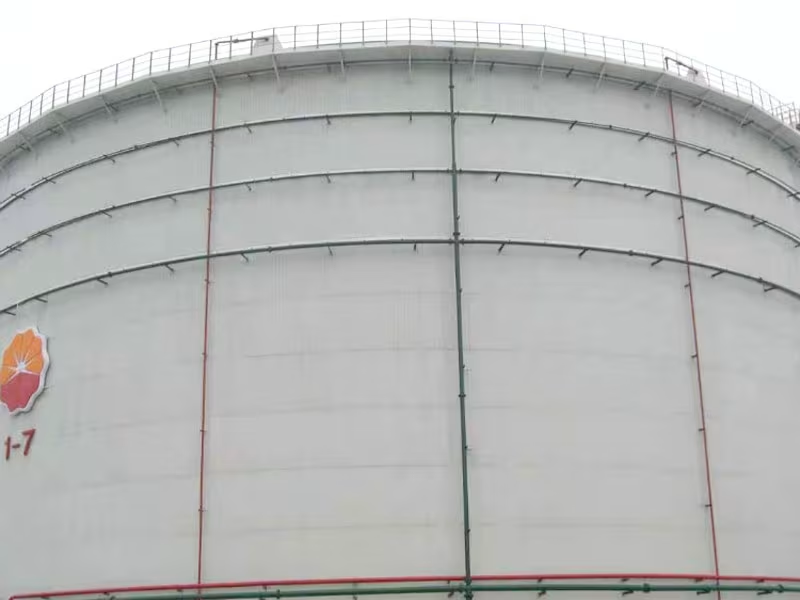
The shell portion of a storage tank inspection checklist should divide the circumference into repeatable sectors. Record dents, bulges, buckling, corrosion, coating damage, staining, wet areas, weld irregularities, temporary attachments, and impact damage. Pay attention to the lower shell, splash zones, insulation terminations, areas beneath platforms, and points where water can collect.
From an authorized safe position, observe the roof for ponding, deformation, blocked drainage, damaged seals, corrosion around penetrations, and loose or missing components. Floating-roof and fixed-roof tanks have different components and hazards, so use a tank-specific form. Do not walk on a roof unless its condition, access arrangement, loading limits, and work controls have been formally accepted.
The bottom itself may be inaccessible during routine external inspection. Evidence such as product at the tank perimeter, contaminated soil, persistent wetness, an unexplained inventory difference, or unusual corrosion near the chime should trigger the site response plan. Add the exact location, appearance, odor only when safely observable, time, and operating conditions to the storage tank inspection checklist. A recurring bottom-edge observation belongs at the same location on every storage tank inspection checklist.
Check Nozzles, Piping, and Appurtenances
Nozzles and connected piping transfer loads as well as product. Inspect visible weld areas, flange joints, gaskets, bolts, reinforcement regions, supports, flexible connections, and nearby shell surfaces. Staining, displaced supports, vibration, unusual alignment, or a piping system apparently carrying its weight through the tank nozzle should be recorded and escalated.
Extend the storage tank inspection checklist to stairs, ladders, platforms, handrails, gauges, vents, valves, sampling points, grounding connections, level alarms, and overfill equipment. Confirm only visible condition and identification during a routine walkdown; functional tests need an approved procedure and coordination with operations.
Vents deserve particular attention because blockage, unauthorized modification, or an incorrect operating configuration can create serious risk. Give each vent a unique equipment reference on the storage tank inspection checklist. The required venting arrangement depends on fill and withdrawal rates, thermal effects, emergency scenarios, product properties, and applicable standards. A checklist can identify a damaged screen or obstructed outlet, but vent adequacy requires engineering verification.
Review Coatings, Corrosion, and Leak Evidence
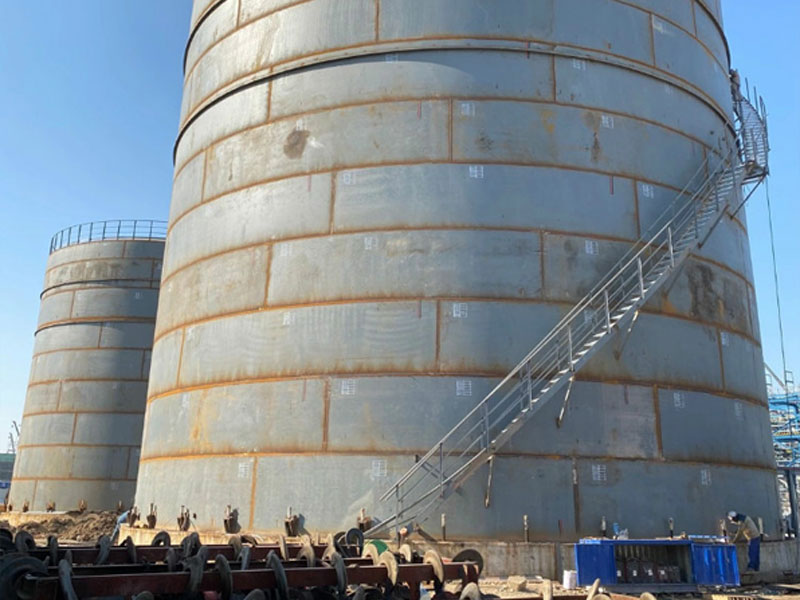
Coating condition is an early-warning section of the storage tank inspection checklist. Map rusting, blistering, peeling, cracking, chalking, impact damage, and failure around welds or edges. Include approximate dimensions and a location reference. Avoid diagnosing remaining wall thickness from appearance alone; qualified thickness measurement and evaluation may be required.
Insulated tanks need special care because water can enter through damaged jacketing, penetrations, or failed seals and remain hidden. Record loose panels, open seams, wet insulation, staining, and corrosion products. Cathodic-protection readings and internal lining inspections belong in the broader corrosion-control program. The Association for Materials Protection and Performance corrosion resource provides useful background on corrosion mechanisms and control.
If a leak or suspected release is found, follow the facility response procedure immediately. The storage tank inspection checklist should display the applicable reporting route near the top. For US facilities subject to oil pollution prevention rules, the EPA Spill Prevention, Control, and Countermeasure program is an authoritative starting point. Other countries and products have different requirements. Do not delay notification while completing the storage tank inspection checklist.
Organize Records and Escalation
A completed form is useful only when findings become controlled work. Give every observation a unique number, tank location, description, photograph, date, inspector name, and recommended next action. Link it to the work-order or engineering-review system. The storage tank inspection checklist should distinguish an observation from an approved repair instruction.
| Finding level | Typical condition | Practical response | Record needed |
|---|---|---|---|
| Immediate control | Active leak, unsafe access, unstable component, or rapidly changing condition | Follow emergency or operating procedure; isolate the area and notify responsible personnel | Time, location, operating state, photos when safe, notifications |
| Prompt specialist review | Distortion, suspected settlement, significant corrosion, damaged nozzle, or failed support | Obtain inspection or engineering evaluation and define interim controls | Dimensions, mapped location, history, relevant drawings |
| Planned maintenance | Localized coating damage, drainage defect, identification issue, or minor access deterioration | Create a prioritized work order and verify completion | Scope, owner, due date, closeout evidence |
| Monitor | Stable minor condition with an accepted monitoring basis | Photograph and compare at a defined interval | Baseline image, measurement point, review date |
Do not use color alone to define urgency; provide text labels for clarity. Closeout should include the work performed, date, responsible party, inspection result, and any revised drawing or maintenance interval. Add the closeout reference back to the original storage tank inspection checklist. Historical comparisons are one of the strongest reasons to keep a consistent storage tank inspection checklist.
Adapt the Checklist to Tank Service
A generic form must be adapted to the stored material and tank design. Water service raises questions about hygiene, internal lining, overflow, and roof condition. Petroleum service emphasizes release prevention, seals, vents, grounding, and fire-protection interfaces. Chemical service requires confirmed material compatibility, safe access, contamination controls, and a clear response to leakage. The site鈥檚 chemical storage tank guide explains why product properties should shape the original specification.
Use the following logic to tailor a storage tank inspection checklist:
- Confirm the tank configuration, service, governing documents, and inspection program.
- List credible deterioration mechanisms and vulnerable locations.
- Define what a routine observer can safely see and record.
- Assign specialist methods such as thickness testing, settlement survey, leak testing, or internal examination separately.
- Set escalation rules, record retention, and verification of completed actions.
For a broader comparison of tank configurations before replacement, consult the above-ground storage tank selection guide. It helps connect inspection findings with future design decisions without assuming that every defect requires replacement. Attach confirmed drawings and component lists to the controlled storage tank inspection checklist.
Frequently Asked Questions
How often should a storage tank be inspected?
The interval depends on tank design, governing standard, product, corrosion rate, previous findings, operating history, jurisdiction, and risk. Use the approved inspection program; do not set a universal interval from a generic storage tank inspection checklist.
Can maintenance staff complete a routine tank walkdown?
Trained maintenance or operations personnel can often record defined external observations using an approved storage tank inspection checklist. Formal inspection, testing, fitness evaluation, and repair approval may require qualified or certified personnel under the applicable program.
What photographs should be included?
Include an orientation view, a closer condition view, a scale or dimension where safe, and a consistent location reference. Photograph the same monitoring points during later rounds so the storage tank inspection checklist supports comparison.
Does an external inspection confirm the tank bottom is sound?
No. A storage tank inspection checklist for external observations may reveal warning signs, but bottom condition can require specialized leak detection, thickness assessment, internal inspection, or other approved methods.
What should happen after a defect is recorded?
Assign the finding, evaluate urgency, establish interim controls if needed, obtain qualified review, create an approved repair or monitoring action, and document closeout. The storage tank inspection checklist is the start of that workflow, not its end.
Turn Findings into a Maintenance Plan
An effective storage tank inspection checklist makes condition changes visible before they are lost in informal notes. Keep the form tank-specific, safe, location-based, and connected to accountable follow-up. Review the storage tank inspection checklist after each inspection cycle and remove questions that do not lead to useful decisions. When findings suggest replacement, alteration, or a new tank, prepare the service data, site constraints, inspection history, drawings, and required standards before contacting a supplier.
Shandong No. 7 Construction can discuss tank configuration, fabrication, delivery, and project interfaces for industrial storage needs. Contact the project team with your confirmed product data, capacity, site conditions, design requirements, and documentation expectations for a focused technical conversation.
Continuar leyendo

Shandong No.7 Construction Engineering Co., Ltd. es una empresa de construcción moderna a gran escala que integra I+D, diseño, producción, construcción y contratación general de estructuras de acero, con negocios que cubren los mercados nacionales e internacionales.